


Quick Summary:
- Inspect the windscreen for chips, cracks, and pitting in driver view.
- Test wipers at all speeds for streaks, chatter, and torn rubber.
- Spray washers to confirm strong jets, correct aim, and enough fluid.
- Photograph glass and wipers at pick-up from several clear angles.
Visibility is your first safety check when you pick up a car hire in Texas. Bright sun, sudden downpours, construction dust, and long highway distances can turn a small windscreen chip or a worn wiper blade into a real hazard. A few minutes in the car park, before you leave the rental lot, helps you spot issues early, document existing damage, and avoid interruptions to your trip.
This checklist focuses on four essentials: windscreen condition, wipers, washer system, and photo documentation. It is designed for quick use whether you are collecting near Dallas, Houston, Austin, San Antonio, or elsewhere in the state.
1) Windscreen inspection: chips, cracks, and driver sightline
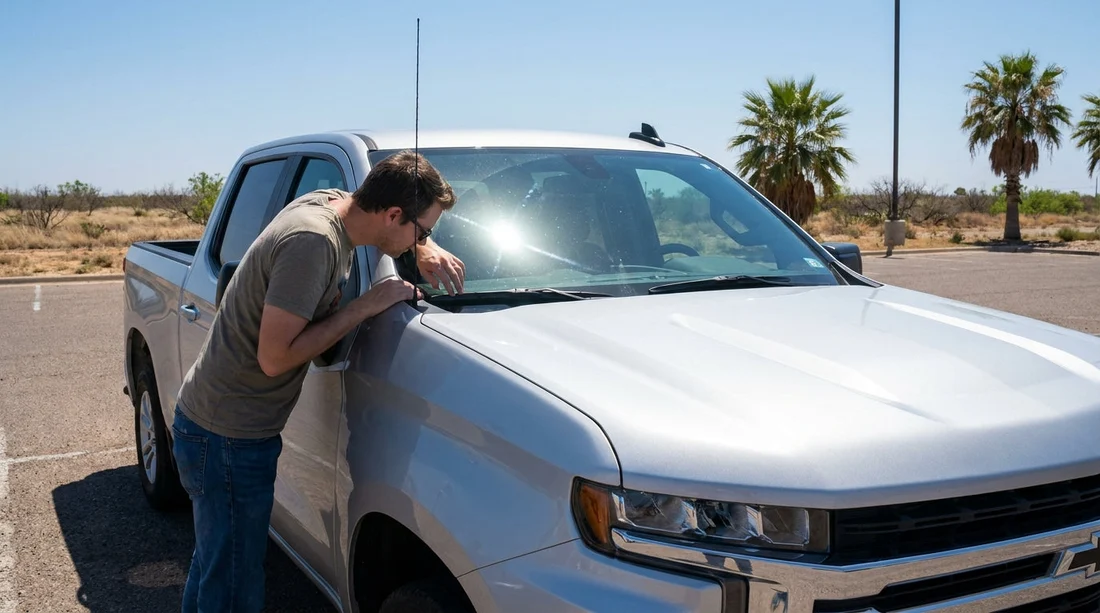
Start outside the vehicle and look through the windscreen at different angles. Texas sunlight makes small defects easier to see if you shift your position slightly. Prioritise anything in the driver’s direct line of sight, roughly the area swept by the wipers on the driver side.
Check for chips and star breaks. A chip can look like a tiny crater, a bullseye, or a starburst. Even if it feels minor, a chip can spread into a crack with temperature swings, potholes, or road vibration. If you see a chip, look for any faint lines radiating outward, which suggests it is already propagating.
Check for cracks at the edges. Cracks starting near the windscreen edge, especially close to the A-pillars, can grow quickly. Also check the lower edge where the wipers rest, because grit can get trapped there and cause abrasion or small fractures.
Look for pitting and hazing. On higher-mileage vehicles, tiny pits from sand and debris can create glare at night and during sunrise or sunset. In Texas, that glare can be intense on east-west routes. If you notice a frosted look or heavy pitting across the driver’s view, it is worth addressing before departure.
If you are collecting at a busy hub such as car rental Dallas DFW or car rental Houston IAH, do this inspection before joining exit traffic. You will have better light and more space to document what you find.
2) Wiper blades: condition, contact, and sweep pattern
Wipers are easy to ignore until the first storm hits. Texas weather can change quickly, and a dry, hot climate can harden rubber blades. Your goal is to confirm the blades contact the windscreen evenly and clear water without smearing.
Visually inspect the rubber. Lift each wiper arm gently and look along the rubber edge. You are looking for splits, missing sections, frayed edges, or rubber that looks shiny and cracked. If the blade edge is uneven, it may skip or leave lines.
Test every speed. Start the car and run the wipers at intermittent, low, and high speeds. Listen for squeaking and feel for vibration. Watch for common problems: streaking, a missed arc in the middle, or a judder as the blade flips direction. Those signs often mean a worn blade or a film on the windscreen.
If your pickup point is Enterprise car rental Austin AUS, do the wiper test while still in the collection area so you can report any issues immediately.
3) Washer system: spray pattern, fluid level, and nozzle aim
Washer fluid is not just for bugs. In Texas you may need it for dust, pollen, and road film kicked up by trucks. A clean windscreen makes wipers work better and reduces glare.
Test the washers before you move. With the car in park, activate the washers. You should see a strong spray that reaches the upper portion of the windscreen on both sides. Weak spray, a dribble, or no spray can mean an empty reservoir, blocked nozzles, or a pump issue.
Confirm the wipers clear after spraying. A good quick test is two sprays followed by a few wipes. The screen should clear without a greasy haze. If it smears, the windscreen may have residue from previous cleaning products or road grime. You can often improve this with a proper glass wipe, but document the issue first.
Ask about topping up if needed. If the reservoir seems low or the spray is weak, it is reasonable to request that it be topped up at pick-up, especially before a highway-heavy itinerary. This is part of ensuring the car hire is road-ready for local conditions.
4) Photo documentation at pick-up: what to capture and how
Good photos protect you if a chip worsens or if pre-existing wear is questioned later. Take photos even if everything looks fine, because they create a clear starting condition record.
Use bright, even light. If you can, position the car so daylight falls across the windscreen. Avoid heavy reflections. If you must shoot under a garage roof, take a few angles to reduce glare.
Capture wide shots and close-ups. Start with a wide shot of the full front of the car showing the entire windscreen. Then take close-ups of any chips, pitting, or scratches. Include a finger or a coin near the damage for scale, without touching the glass if it looks fragile.
Photograph the wipers and resting area. Take one photo of both wiper blades on the glass, then one close-up of each blade edge. Also photograph the lower windscreen edge where debris collects. This area often shows wear that leads to streaking.
Keep evidence organised. Create an album labelled with the date, location, and time. If you picked up from a major point like car rental airport Fort Worth DFW, include a quick sign or surroundings shot to help establish where the inspection occurred.
Drivers choosing a larger vehicle, such as via SUV rental Texas IAH, should still run the same checks. Taller vehicles can catch more bug splatter, and their windscreens can be more expensive to repair, so it pays to confirm everything is in good order at the start.
FAQ
Do I need to check the windscreen on a car hire even for a short Texas trip? Yes. Even short drives can involve highway speeds, construction zones, or sudden rain, where chips, glare, or poor wipers quickly become safety issues.
What counts as windscreen damage worth reporting before I leave? Any chip or crack in the driver’s sightline, any crack near an edge, or heavy pitting that creates glare should be reported and photographed at pick-up.
How can I tell if wipers are unsafe? If they streak badly, skip sections, chatter loudly, or leave a persistent film after using washers, the blades may be worn or not making proper contact.
What should I do if the washer jets are weak or not spraying? Test again, listen for the pump, and check for obvious blockage. If spray is still weak or absent, report it before departure and note it in your documentation.
Is photo documentation really necessary if there is no visible damage? It is sensible. Wide shots plus a few close-ups provide a time-stamped record of the glass and wipers, helping avoid disputes if damage appears later.





























































































