


Quick Summary:
- Expect winter tyres to be limited, request early and confirm in writing.
- Snow chains are often restricted, check legality and rental policy first.
- Review your rental terms for permitted roads, weather clauses, and fees.
- At pick-up, inspect tyres and ask about traction aids before leaving.
Winter driving in Pennsylvania can shift quickly from wet motorways to icy back roads, especially in higher elevations and lake-effect snow belts. If you are arranging car hire and wondering whether you can request snow chains or winter tyres, the honest answer is: sometimes, but it is not guaranteed, and the details depend on the supplier, vehicle category, and the specific location’s winter policy.
This guide explains what is typically available in Pennsylvania, what seasonal restrictions are common, and what to check on your booking confirmation and terms so you are not caught out at the rental counter.
Winter tyres vs snow chains: what rental companies usually mean
It helps to be precise about terminology, because suppliers often describe tyres and traction equipment differently from what UK drivers expect.
Winter tyres are cold-weather tyres designed to improve grip below about 7C, including on snow and slush. They are fitted in place of standard tyres for a season. In the US, many fleets run all-season tyres year-round, which are not the same as true winter tyres. An all-season tyre may be acceptable for light winter conditions, but it is not a specialist option.
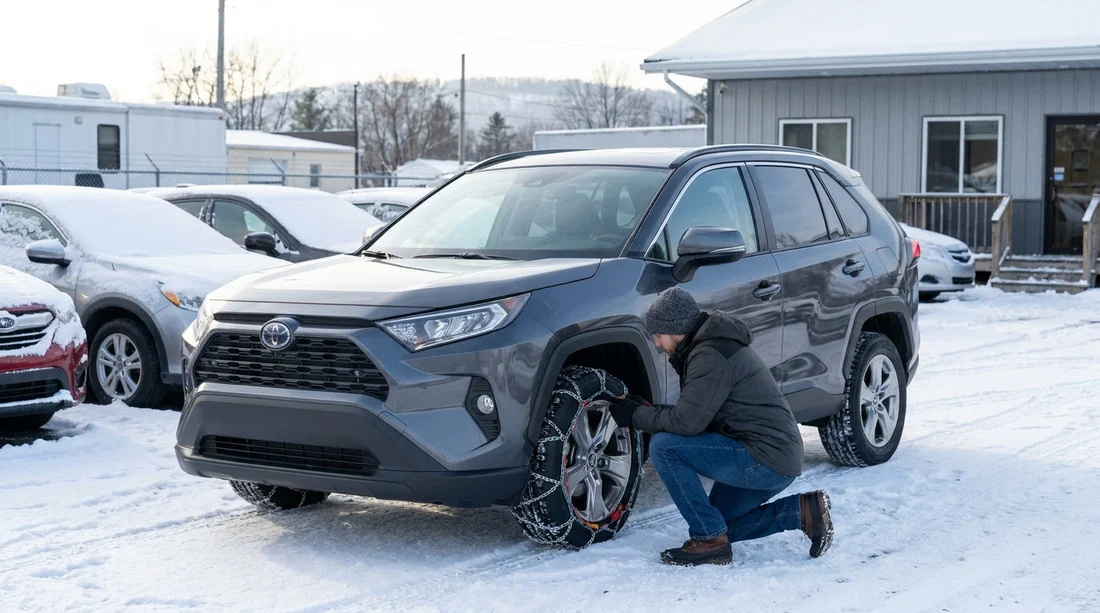
Snow chains (or cables) are removable devices fitted over the tyres when required. In many US states they are used mainly in mountainous regions with chain control. Pennsylvania does not run chain control like some western states, and many rental firms restrict chain use to avoid vehicle damage.
Typical availability for car hire in Pennsylvania
In Pennsylvania, dedicated winter tyres are not commonly offered as a selectable add-on the way they can be in some European countries. Most mainstream airport fleets operate on all-season tyres, with occasional winter-tyre fitment in specific localities, but it varies by supplier and season.
Snow chains are even less predictable. Some suppliers do not provide them at all, while others may only allow them on certain vehicle types, or they may prohibit their use even if you supply your own. That means the practical approach is to treat winter tyres and chains as a special request, not an assumed entitlement.
If you are collecting near Philadelphia International Airport, you can compare options across suppliers and vehicle categories via Hola Car Rentals pages such as car hire at Philadelphia airport or car hire in Philadelphia, then focus on the terms that describe tyres, accessories, and winter restrictions.
Seasonal restrictions and winter driving realities in Pennsylvania
Pennsylvania winters can run from late November into March, with the most disruptive snow events often between December and February. Conditions differ across the state. South-eastern areas around Philadelphia may see more freeze-thaw and slush, while northern and western areas can see heavier snow and longer periods of ice.
Rental suppliers often manage winter risk through policies rather than equipment. Common restrictions you may see include:
Accessory limitations, where chains are not offered, or are disallowed to prevent bodywork and wheel-arch damage.
Road type restrictions, such as prohibitions on unpaved roads, which matter if you are heading to rural cabins or trailheads after snowfall.
Weather clause language, stating you remain responsible for driving to conditions, and that certain incidents may be treated as negligence if you ignore warnings.
Because these conditions are policy-driven, you should assume the key issue is whether your car hire agreement permits the equipment and the intended driving, not just whether the hardware exists.
How to request winter tyres or chains when booking
When you book, look for an “extras” or “special equipment” section and search for winter-specific items. If winter tyres or chains are not shown, that does not automatically mean they are impossible, it often means they are not supported as a standard add-on for that location.
What helps most is getting confirmation in writing, either on the booking voucher or in a documented message from the supplier, that the request is noted and whether it is guaranteed. Many companies treat these as “on request” items that depend on availability at pick-up.
It is also wise to choose an appropriate vehicle category. Larger vehicles and SUVs may have better ground clearance, but they do not guarantee better grip. A minivan can be stable and practical for family trips, and you can review category options via minivan rental in Philadelphia. Whatever the category, confirm tyre type and any traction aids rather than relying on assumptions.
What to check in the booking confirmation and rental terms
Before pick-up, read the voucher and key terms with a winter lens. The important checks are usually buried in sections about prohibited use, vehicle care, and optional extras.
1) Tyre and equipment wording
Look for references to “winter tyres”, “snow tyres”, “all-season tyres”, “chains”, “cables”, or “traction devices”. If nothing is mentioned, assume standard tyres only, and ask for clarification before travel.
2) Whether chains are permitted if you bring your own
Even if a shop sells cable chains nearby, some rental policies prohibit fitting any chains. If that is the case, using them could breach the agreement and affect liability if something goes wrong.
3) Damage and underbody exclusions
Winter roads can hide kerbs and debris. Check how wheel, tyre, and underbody damage is handled, and whether any cover you add has exclusions that matter for snow and ice incidents.
4) Geographic or road restrictions
Confirm where you can drive, especially if you plan to cross state lines or head into rural areas after heavy snowfall. Even within Pennsylvania, road conditions can change quickly, so you want to know what the contract considers “misuse”.
5) Fitment responsibility
If chains were to be provided, check whether the renter must fit them. In practice you may need to know how to fit and tension them correctly, and you need to confirm they match the tyre size on the vehicle you receive.
Questions to ask at the counter before you drive away
Even with careful booking, the last chance to confirm is at pick-up. Ask staff to tell you what tyres are fitted. If they say “all-season”, you can decide whether your route and weather forecast make that acceptable.
Do a quick walkaround and inspection focused on winter readiness:
Check tyre tread depth looks healthy and even, and tyres match across an axle. Confirm the tyre size, which matters if you later buy compatible emergency cables where allowed. Look for a functioning demister, wipers in good condition, and a scraper in the vehicle if available.
If you are comparing suppliers, reviewing location-specific pages can help set expectations, such as Budget car hire in Philadelphia or Alamo car hire in Philadelphia, then validating winter equipment policies directly in the terms you receive for your dates.
If winter tyres or chains are not available: practical alternatives
If you cannot secure winter tyres or permitted chains, there are still sensible ways to reduce risk.
Time your driving to avoid the worst conditions. In Pennsylvania, roads can be cleared quickly after major storms, but the first few hours can be hazardous.
Adjust your route to stay on priority-ploughed roads and interstates where possible, rather than steep local roads.
Choose a vehicle suited to your trip, prioritising good tyres and stability over marketing labels. All-wheel drive can help you move off, but it does not improve braking on ice.
Carry permissible winter essentials, such as screenwash rated for low temperatures and a small shovel. Keep in mind any policy limitations on accessories and modifications.
Ultimately, for car hire in Pennsylvania, the safest plan is to assume standard all-season tyres unless you have explicit confirmation otherwise, then make your trip plan match the likely equipment and the forecast.
FAQ
Can I guarantee winter tyres when arranging car hire in Pennsylvania? Usually not. Many suppliers operate on all-season tyres and treat winter tyres as limited or location-dependent, so you need written confirmation to rely on it.
Are snow chains legal in Pennsylvania? Pennsylvania generally allows chains in winter conditions, but rental companies may restrict or prohibit their use. Always follow the rental terms and local road rules.
Will an SUV automatically come with better winter tyres? Not necessarily. SUVs often have all-season tyres like other categories. Ask what is actually fitted and check tread condition before leaving.
What should I look for in the terms before pick-up? Check for any mention of winter tyres or chains, whether chains are permitted, road and weather restrictions, and how tyre or wheel damage is treated.
What if the weather turns severe on my trip? Reduce speed, avoid steep untreated roads, and consider delaying travel until roads are cleared. If conditions make driving unsafe, prioritise safety over schedule.






























































































