


Quick Summary:
- Test the fob’s buttons, range, and keyless start before leaving.
- Confirm whether a spare exists, and get the key count written.
- Clarify key loss fees, recovery steps, and deposit holds in Miami.
- Plan secure storage, beach routines, and driver handovers with one key.
Picking up a car hire in Miami and being handed only one key fob is common, especially with newer vehicles where fobs are expensive and sometimes shared across fleet logistics. It is not automatically a problem, but it does change your risk and your day-to-day convenience. The best time to address it is at the counter and in the car park, before you drive off, while staff and systems can still help quickly.
This guide covers what to check on the key and fob, how to confirm whether a spare is available, and what it can mean for security deposits and practical use during your trip.
First, confirm exactly what “one key” means
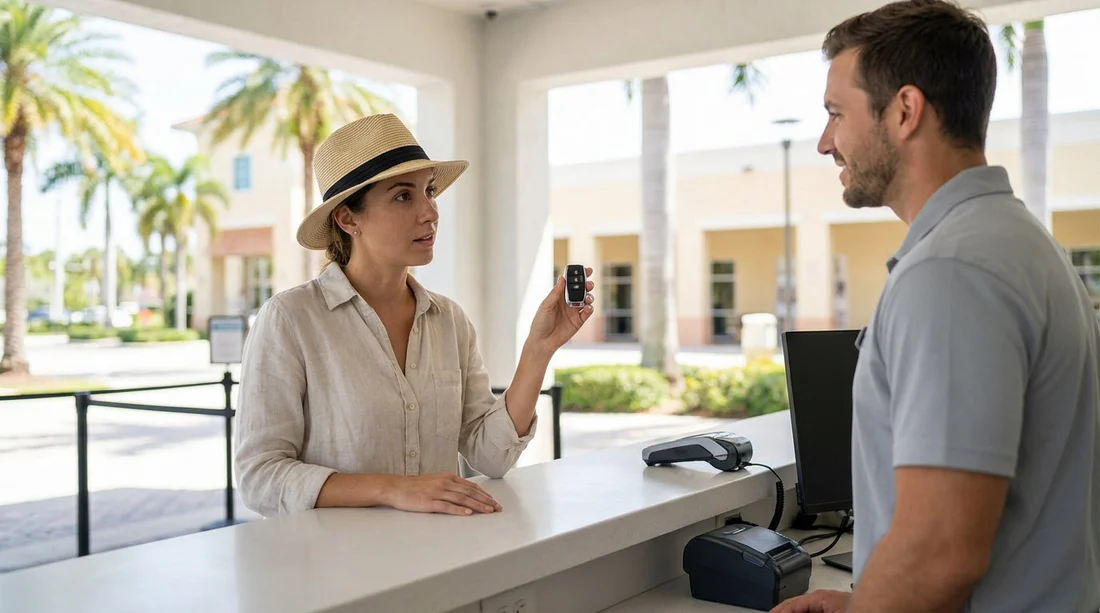
Start by asking the staff member to clarify what you have been issued. Some vehicles have a single smart key, others include a separate emergency blade, and some include a valet key function inside the fob. In Miami, you may also receive a fob plus a separate physical key for the glovebox or door.
Ask for the key count to be written or clearly reflected in the rental agreement or check-out form, not just stated verbally. If later there is a dispute about whether a second key was supplied, written notes reduce friction.
If you are collecting near the airport, Coral Gables, or central Miami areas, the counter may be busy. Still, it is worth taking two minutes to get the key status recorded. If you are comparing pick-up points for convenience, Hola’s local pages can help you understand nearby options such as car hire airport Coral Gables and National car hire Miami.
Check the key fob carefully before you leave the lot
With only one key, you cannot rely on a spare if something is faulty. Do these checks at the vehicle, with the engine off at first, then on.
1) Physical condition. Look for cracks, loose casing, missing screws, or damaged buttons. Check the metal emergency blade if present, it should slide in and out smoothly and not be bent. If the fob looks taped up or heavily worn, ask for a replacement at pick-up, not later.
2) Lock and unlock function. Stand next to the driver door and test lock and unlock several times. Then step back a few metres and test again. Intermittent range can indicate a low battery or internal damage.
3) Keyless start recognition. Sit in the driver seat, press the brake, and start the engine. Some cars will warn “Key not detected” if the fob battery is weak. Repeat after turning the engine off once. Also verify you can stop the engine and lock the car afterwards.
4) Dashboard warnings related to key. Any warning about the key battery should be raised straight away. A fob battery is often inexpensive, but the hassle of being stranded in a Miami car park is not.
If something fails, request a different vehicle or a different key before you leave. Once you have driven away, some providers may treat it as a mid-rental issue rather than a pick-up defect.
Ask whether a spare is available, and what the process is
Even if a spare exists, it may not be stored at the same location. It could be at a depot, with maintenance, or unavailable for that specific vehicle. Ask these practical questions.
Is there a second key for this car? If yes, can it be issued now? If not, can it be noted that a spare exists but was not provided?
If I lose the only key, what happens? Ask whether the vehicle must be recovered, whether locksmith services are used, and what typical timescales are in Miami.
Can I swap the car for one with two keys? Sometimes the simplest solution is a vehicle swap before you leave. This can be especially useful if you plan to share driving duties or spend time at the beach where carrying a bulky fob is inconvenient.
What is the out-of-hours plan? Miami travel often includes late arrivals, early flights, and evening dining in busy areas. If the key is lost at night, find out whether there is a 24-hour assistance line, and whether you will be charged for towing or call-out.
Neighbourhood pick-up points may have different on-site inventory and staffing. For example, if your plans include Miami Beach, it can help to understand local logistics around car rental Miami Beach and related supplier options such as Avis car rental Miami Beach.
Understand how one key can affect the security deposit and fees
Having only one key does not automatically increase your deposit, but it can change your risk exposure if that one key is misplaced. What matters is the rental terms and the supplier’s fee schedule.
Ask for clarity on these points before you drive off.
Key replacement cost. Smart keys and programming can be expensive, and prices vary by vehicle. The fee might include the fob, cutting an emergency blade, programming, and administrative costs.
Immobilisation and recovery charges. If the car cannot be moved without the key, you may be charged for recovery to a dealer or depot. In a city like Miami, towing and logistics can add up quickly.
Deposit hold and timeline. If a key is lost, the provider may retain or increase the hold until costs are confirmed. Ask how quickly holds are released after return when everything is fine, and what documentation is provided if a key issue occurs.
Insurance and waiver exclusions. Some coverages do not include lost keys or misplacement. Even if you have a damage waiver, key replacement may be separate. Get the exclusions explained in plain language.
If your car hire is via a specific supplier at Miami airport, their deposit policies can differ. For context on one common supplier landing page, see Payless car rental Florida MIA, then still confirm the exact terms on your own agreement at pick-up.
Plan for convenience, shared driving, and beach days
One key changes how you organise your day, especially if more than one driver is named on the rental.
Driver handovers. If you plan to alternate driving, agree in advance who carries the key and when it will be handed over. Avoid leaving it in cupholders during quick stops, and avoid tossing it in beach bags where it can be buried or stolen.
Beach and water activities. A key fob does not mix well with swimming. Consider bringing a small waterproof pouch, or have one person stay with the key while others go into the water. Do not hide the fob under the car or in a wheel arch, this is a known theft risk in tourist areas.
Leaving passengers in the car. With one key, be careful about locking the car with passengers inside. Some vehicles allow locking from outside while the engine runs, others do not. Test safe scenarios at pick-up, not when you are already late for dinner.
FAQ
Is it normal to get only one key fob with a car hire in Miami? Yes, it is fairly common. Many fleets issue a single smart key to reduce loss and simplify key control, but you should still confirm what is included and recorded.
Can I request a spare key at the counter? You can ask, and sometimes a spare exists, but it may not be available at that location. If a spare cannot be provided, ask for the single-key status to be noted on your paperwork.
Will having one key affect my security deposit? Usually the deposit amount is set by supplier policy, not key count. The main impact is potential charges and a longer hold if the only key is lost or damaged.
What should I do if I lose the only key fob during my trip? Contact the provider’s assistance number immediately, share your location and vehicle details, and follow their instructions. Do not arrange independent towing or locksmiths unless they authorise it.
How can I reduce the risk of losing the only fob while visiting Miami Beach? Keep the fob on your person in a secure pocket, avoid hiding it on the car, and plan who holds it during swimming or water sports. Consistent storage habits help most.





























































































