


Quick Summary:
- Photograph the fuel gauge and odometer before leaving the pick-up bay.
- Ask the agent to amend the contract fuel level immediately.
- Get a signed, time-stamped note if the system cannot update.
- Refuel near return, keep receipts, and dispute charges with evidence.
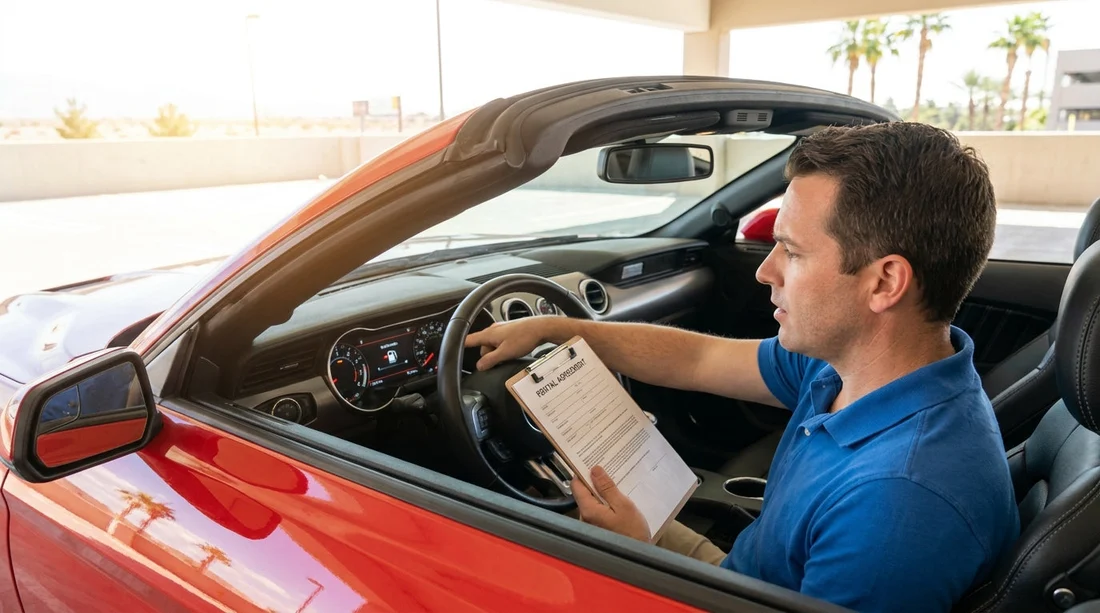
Picking up a car hire in Las Vegas is often fast-paced, especially at the airport rental centre. That speed is exactly why fuel level mistakes slip through, the contract might show “full” while the gauge clearly sits at three-quarters, or the paperwork says “3/8” when the car is closer to half. If you drive away without fixing it, you can be blamed for missing fuel at return, and some suppliers add refuelling fees on top of the fuel itself.
This counter-ready checklist helps you document the true fuel level, get the paperwork corrected, and protect yourself from unfair charges. The steps are designed for typical Las Vegas pick-ups, including the rental car facility serving airport car rental in Las Vegas, as well as off-airport locations.
Why mismatched fuel levels cause charges
Most rental agreements treat fuel as a simple promise: you receive the car at a stated level, and you return it at that same level, or you pay. When the contract overstates the starting fuel, it creates a gap you can never close without overfilling, which is usually impossible to prove. Even if you refill to “full” later, the supplier may compare your return gauge to the contract’s starting level and conclude you owe fuel. In Las Vegas, where many renters head straight to highways or long desert drives, small errors become expensive quickly.
Counter-ready checklist: do this before you leave the car park
1) Check the gauge immediately, before moving the vehicle. As soon as you start the car, look at the fuel gauge and any “miles to empty” estimate. Compare it with the rental agreement and the fuel policy printed on it. Do not rely on memory later.
2) Photograph and video your proof. Take clear photos of the dashboard showing the fuel gauge and the odometer in the same frame if possible. Also take a short video panning from the windscreen view (to show you are on-site) to the dashboard. Make sure the timestamp is saved in your phone metadata. If the car has a digital gauge with bars, capture it sharply so the number of bars is visible.
3) Walk back inside, do not wait until return. Go straight to the counter or the exit booth and explain that the fuel gauge does not match the contract. Keep it simple: “The agreement says full, the gauge shows three-quarters.” The earlier you raise it, the harder it is for anyone to suggest you caused it.
4) Ask for the contract to be reissued with the correct fuel level. The cleanest fix is a revised agreement showing the correct starting fuel. If the staff member says they cannot change it, ask for a supervisor or an alternate method, such as a printed note or a manual annotation that is signed and dated.
5) Get the correction in writing, and keep a copy. Do not settle for verbal confirmation. You want something you can upload later if needed: a revised rental agreement, a signed fuel-level note, or a stamped check-out slip. Confirm that the correction includes the vehicle registration or unit number.
6) Confirm how the supplier will judge fuel on return. Ask whether they use “full-to-full” based on the gauge reading, or a specific level like “8/8”. Then repeat it back to ensure you understood. This matters because some locations treat “near full” differently.
7) Note names and times. Write down the staff member’s name and the time you reported the issue. If you are collecting at a busy location, this can be the difference between a smooth adjustment and a long back-and-forth later.
If you discover the mismatch after leaving the site
Sometimes you only notice once you are on the Strip, at a hotel car park, or after joining traffic. If that happens, act quickly, ideally within the first hour.
1) Pull over safely and document immediately. Take the same dashboard and odometer photos. If you have already driven a few miles, that is still useful evidence because fuel should not drop significantly in a short distance.
2) Contact the pick-up location straight away. Call the branch number on your agreement and explain you noticed the fuel discrepancy right after departure. Ask them to add a note to your rental record that the starting fuel was lower than shown. If they email confirmation, save it.
If you arranged your Las Vegas car hire through Hola Car Rentals, keep your confirmation and supplier details organised so you can refer to the correct branch and brand, whether you are comparing options for car rental in Las Vegas or a broader Nevada car rental trip.
How to refuel to avoid “missing fuel” claims
Even with corrected paperwork, your return can still trigger a charge if the gauge reads slightly under the agreed level. In Las Vegas heat and stop-start traffic, gauges can be a little inconsistent. Use these habits to reduce risk.
Refuel near the return location. Fill up within a few miles of the drop-off point. A receipt showing the time and location close to return is powerful evidence.
Keep the receipt and photograph the gauge after refuelling. After you refuel, take one more dashboard photo showing the gauge at the level required. Keep the fuel receipt with the date, time, and gallons or litres.
Allow time for the gauge to stabilise. If possible, drive a short loop after refuelling to confirm the gauge remains at the correct level before you arrive at the return lanes.
What to do if a fuel charge appears anyway
Fuel disputes are easiest to win when you submit a tidy evidence package. If you see an unexpected refuelling charge on your final invoice or card statement, respond quickly.
1) Gather your evidence in order. Put your pick-up photos, any written correction, and your refuelling receipt in one folder. Rename files with the date and time so they are easy to read.
2) Reply to the invoice with specific attachments. Ask for a review of the charge and attach the pick-up gauge photo plus the return refuelling receipt. State the contract fuel discrepancy and note that you reported it at pick-up (include name and time if you have it).
3) Ask for an itemised breakdown. Request the supplier’s calculation, including the stated missing fuel amount and any service fee. This often reveals whether the starting fuel was entered incorrectly.
4) Keep communication in writing. If you speak on the phone, follow up with an email summarising what was agreed. Written records reduce misunderstandings.
If you are renting through a specific brand, the dispute route can differ slightly. For example, keep the exact location details handy for supplier-specific rentals such as Thrifty car rental in Las Vegas or Alamo car rental in Las Vegas, as the branch contact and documentation process can vary.
Extra Las Vegas tips that prevent fuel problems
Check fuel policy before you reach the counter. Look for “full-to-full” or “same-to-same”. If anything is unclear, ask at pick-up, not at return when time is tight.
Do not confuse fuel level with range estimates. “Miles to empty” changes quickly with air conditioning and traffic. The gauge is what most agents use.
Be careful with upgrades and vehicle swaps. If you change cars at the lot, re-check the fuel gauge and ensure the agreement is updated to the new vehicle and starting fuel.
FAQ
What if the contract says “full” but the gauge shows slightly under full? Treat it as a mismatch. Photograph the gauge and ask for the agreement to be corrected to the actual level, even if it is only one bar down.
Can I just top it up immediately instead of changing the paperwork? You can, but it is risky. Without a corrected contract, you may still be judged against the stated starting level, and you might not be able to prove you were shorted at pick-up.
What evidence is most convincing in a fuel dispute? A time-stamped dashboard photo at pick-up, a written correction from staff, and a fuel receipt from near the return location are usually the strongest combination.
Does the “prepaid fuel” option avoid these issues? It can reduce return stress, but you may pay for unused fuel. If your contract includes prepaid fuel, confirm whether you are required to return empty or at any level.
How soon should I report the mismatch if I notice after leaving? Report it immediately, ideally within the first hour. The sooner the rental record is annotated, the less likely you are to be blamed for the discrepancy.

























































































