


Quick Summary:
- LDW or SCDW often excludes wheels, tyres, and alloy rims.
- Read the agreement for wheel, tyre, and rim exclusions before signing.
- Photograph existing rim scuffs at pick-up and again at return.
- Ask about wheel-and-tyre protection, what it covers, and the excess.
If you are arranging car hire in Florida, it is easy to assume that LDW or SCDW will cover any accidental damage. Many drivers only discover the fine print after a scrape against a kerb in Miami Beach, a pothole near an airport exit, or a slow-speed parking mishap. Wheels, tyres, and alloy rims are among the most commonly excluded items in rental damage cover, even when the cover sounds comprehensive.
This guide explains what LDW and SCDW usually mean in Florida rentals, why wheel and alloy-rim damage can be treated differently to bodywork, and what to verify before you sign at the counter.
What LDW and SCDW usually mean in Florida
LDW typically stands for Loss Damage Waiver. SCDW is often described as Super Collision Damage Waiver. Names and exact terms can vary by rental company and sales channel, but the general concept is similar: you are reducing what you might have to pay if the vehicle is damaged or stolen.
Two points matter for wheel and rim questions:
First, LDW and SCDW are not the same thing as “everything is covered”. They are contractual waivers with defined inclusions and exclusions.
Second, the biggest differences are often the excess (deductible) amount and the list of excluded parts. Even when SCDW reduces the excess to a smaller amount, it can still exclude wheels and tyres completely, or it can include them only in limited circumstances.
Do LDW or SCDW cover wheel and alloy-rim damage?
In many Florida car hire agreements, wheel-related damage is either excluded or treated as a separate protection product. When it is excluded, that can include:
Alloy rim scuffs from kerbing while parking.
Wheel damage from potholes, debris, or impacts.
Tyre damage, including sidewall bulges and punctures.
Why the separate treatment? Wheels and tyres are exposed to frequent minor impacts, and cosmetic alloy damage is common in urban driving and tight parking areas. Rental companies may regard rim scuffs as “wear and tear”, or they may charge for repair if it exceeds normal use, depending on the contract wording and the severity.
It is also important to distinguish between cosmetic rim rash and structural damage. A light scuff might be classed as cosmetic, while a bent rim may affect safety and will usually require replacement or specialist repair. Even if LDW covers certain damage types, an exclusion for “wheels, tyres, glass, underbody” can override it.
What to check before signing in Florida
The best approach is to treat wheel and rim cover as a checklist item, not an assumption. Before you accept the keys, confirm each of the following in writing, or on the contract screen you sign:
1) Does LDW/SCDW include wheels and tyres? Ask specifically about alloys, wheel covers, and rims. If the agent uses general language like “it covers damage”, follow up with “including wheels and tyres?”
2) What is the excess for wheel damage? Some cover includes wheels but applies a separate excess, or limits the benefit to theft only.
3) Is cosmetic wheel scuff treated differently? Find out whether minor kerbing is charged as damage, and if there is a damage assessment guide.
4) Are potholes and road debris treated as accidents? Florida roads can include sudden surface changes, and damage from potholes is a common grey area. If wheels are excluded, pothole damage is often chargeable.
5) Does the contract mention “underbody” or “roadside” exclusions? A hard impact can affect both the rim and the underside, and exclusions sometimes overlap.
If you are collecting near major hubs, you may want to read the agreement carefully in calmer surroundings. Picking up from car hire airport downtown Miami locations can mean busy counters, so allow time to review the damage sections without rushing.
Inspection tips that reduce wheel and rim disputes
Regardless of what LDW or SCDW covers, your inspection process is your best protection against being blamed for pre-existing scuffs.
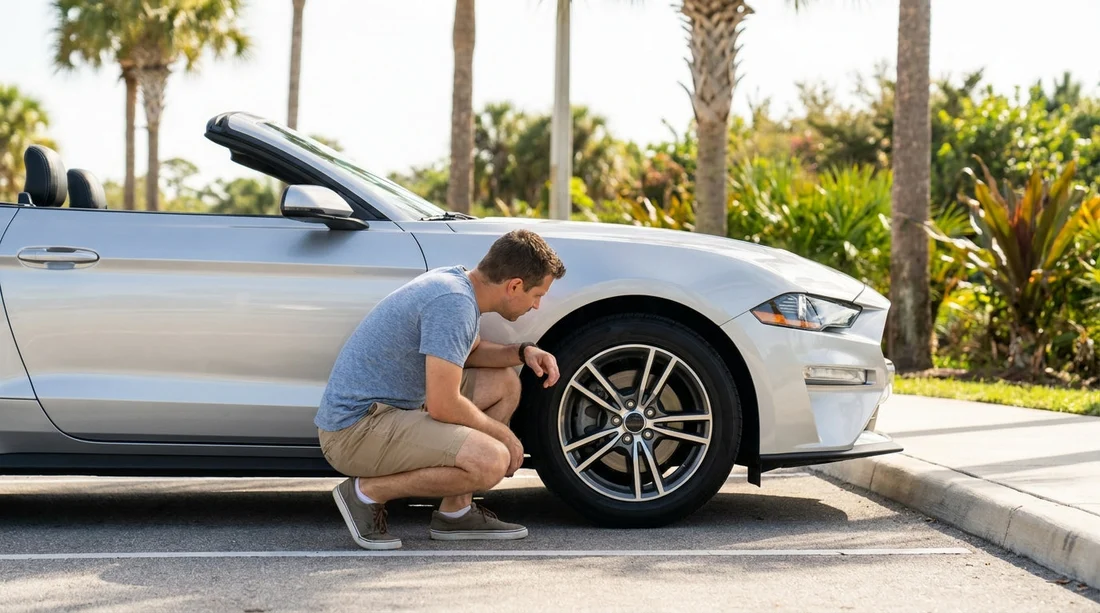
Photograph every wheel at pick-up, close enough to show existing scratches, and wide enough to show the wheel position on the car. Do the same at return. Take photos in good light, and do not forget the inner edge of rims if visible.
Check for mismatched paint or repairs on alloys, which can indicate prior damage. If you see it, ask for it to be noted.
Look at tyre sidewalls for bulges, cuts, or unusually low tread. A tyre with pre-existing issues can fail, and contracts often make the renter responsible for tyre damage.
This level of care is especially useful when driving in dense parking environments, such as around car rental Miami Beach areas where kerbs and tight spaces are common.
When wheel-and-tyre protection may be offered
Some rental desks offer an additional product that covers wheels and tyres, sometimes including alloys. The naming varies, but you might hear “wheel and tyre protection” or “road hazard” cover. If it is available, check:
What it covers, including rims, tyres, valve stems, and wheel alignment.
What it excludes, such as cosmetic scratches, vandalism without a report, or continued driving after a puncture.
How claims are handled, including whether you pay upfront and reclaim, or whether the charge is waived at return.
Any maximum per incident, since alloy replacements can be costly.
If you are hiring a larger vehicle, remember that wheel damage can sometimes be more expensive. Customers arranging minivan hire Miami options may want to pay extra attention to kerbs when turning and parking, because wider vehicles can clip edges more easily.
Realistic Florida driving situations that cause rim damage
Most wheel and alloy-rim incidents are not dramatic collisions. Typical scenarios include:
Kerbing while parallel parking in busy districts.
Pothole impacts at night or during heavy rain, when surface defects are harder to see.
Hitting raised lane markers or debris during a quick lane change.
Parking garage ramps with tight turns and concrete edges.
In business areas with frequent short trips and parking manoeuvres, such as around Alamo car rental Brickell pickup points, a slow-speed kerb strike is one of the most common causes of alloy scuffs.
How to make a confident decision at the counter
For Florida car hire, the most reliable method is to base your decision on the written terms for the specific vehicle and rental brand you are using. Verbal assurances are not enough if the contract excludes wheels.
Before you sign, summarise out loud what you believe you are covered for, and ask the agent to confirm: “So this includes wheels and alloy rims, and the excess would be X if I kerb it?” If the answer is unclear, ask to see the relevant clause. If you prefer quieter locations for reviewing documents, pickups away from the busiest tourist corridors, such as car hire Doral options, can sometimes make it easier to take your time.
FAQ
Q: Are alloy rim scuffs usually covered by LDW in Florida?
A: Often not. Many agreements exclude wheels and tyres, which can include alloy rim scuffs from kerbing. Always confirm the written exclusions.
Q: If I have SCDW, does that automatically include wheels and tyres?
A: Not automatically. SCDW usually reduces the excess for covered damage, but wheels and tyres may still be excluded or covered only with an added protection.
Q: What should I photograph at pick-up to protect myself?
A: Photograph each wheel face, the rim edges, and the tyres, plus wider shots showing the wheel position on the car. Repeat at return in similar lighting.
Q: Is pothole damage treated the same as an accident?
A: It can be, but if wheels are excluded then pothole-related rim bends or tyre bulges are frequently chargeable. Check the “wheels/tyres” and “road hazard” wording.
Q: Can I be charged if a tyre goes flat without any visible impact?
A: Potentially, yes. If tyre damage is excluded, punctures and sidewall failures may be charged unless your agreement or added protection specifically includes tyres.

























































































