


Quick Summary:
- Compare every scratch, dent and windscreen chip with the report details.
- Confirm fuel level and policy match, then record it before departure.
- Verify mileage, time out, and return expectations to prevent disputes.
- Ensure paid extras, keys, and safety kit are listed and present.
A rental car condition report is the document that records the vehicle’s state at the exact moment you take responsibility for it. In Las Vegas, where airport pick-ups can feel hurried and vehicles turn over quickly, that report becomes your main protection if a damage or fuel query appears later. Take a few minutes before you sign and drive off. Your goal is simple: ensure the report matches the car in front of you, plus the fuel level, mileage, and any extras you have agreed to.
If you are collecting at the airport, allow a little buffer time for inspection. The desk and pick-up processes vary by supplier, but the same principles apply whether you are arranging through Las Vegas airport car rental or collecting from an off-airport location. Do not rely on memory, rely on the written record and your own photos.
1) Confirm the basics on the report before inspecting
Start by checking the top section of the condition report. Make sure the vehicle registration (plate), make and model, colour, and vehicle identification details align with the car you are being handed. If you are switching from a reserved class to an upgrade, the report must reflect the actual vehicle. Also confirm the date and time out, location, and the name of the rental company, as those details can matter if there is a later query about when and where damage occurred.
Next, check that your name (or lead driver) is correct. If an additional driver is included, they may appear on a separate rental agreement rather than the condition report, but any mismatch is worth resolving before you leave the lot.
2) Pre-existing damage: look beyond the tick-box diagram
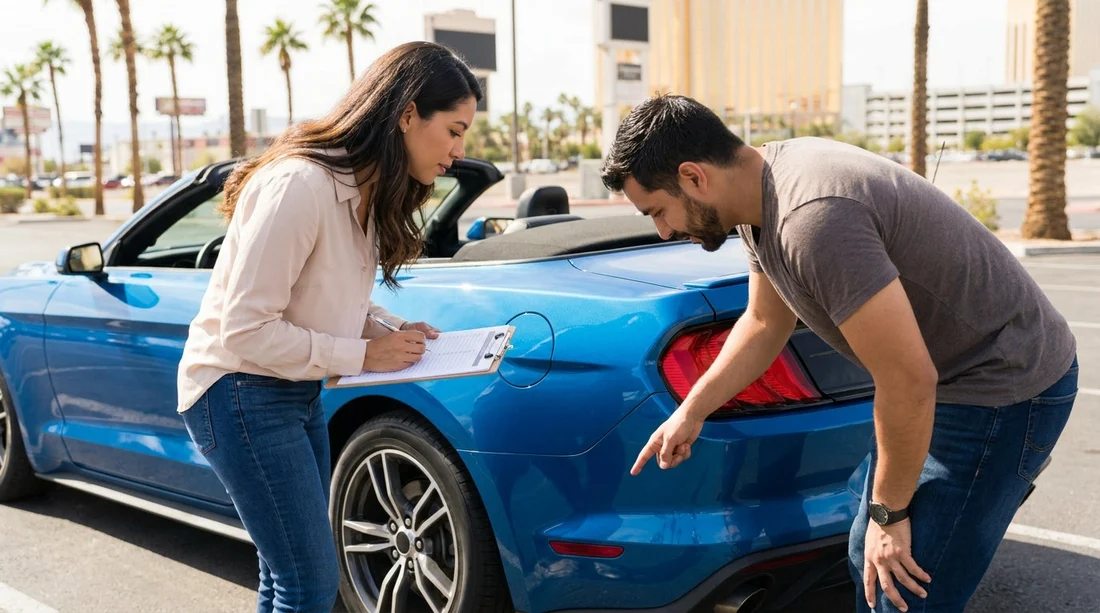
Most condition reports use a car silhouette with marked areas and short codes. Treat this as a starting point, not the full story. Walk around the vehicle slowly and compare what you see to the markings. If the report says “scratch” on the rear bumper, confirm it is the same scratch, same side, and similar length. If you see anything not clearly recorded, ask for it to be added.
Photograph the car from all sides and take close-ups of any marked or unmarked damage. Use your phone’s timestamped images, and if possible capture a brief video walkaround that shows the number plate and the damage in context. Photos do not replace the report, but they support your position if a mark is questioned later.
If you are renting a larger vehicle, inspection matters even more because panels sit higher and can hide damage. When choosing something like an SUV through SUV rental in Nevada, check the tailgate area for scuffs from luggage loading and the rear bumper corners for scrapes.
3) Interior condition: record stains, tears, odours, and warning lights
Condition reports sometimes focus on the exterior, but interior issues can also lead to extra charges if the supplier treats them as new damage. Before leaving, look at the seats for tears, deep stains, or burn marks. Check the dashboard and centre console for cracks and missing trim. Verify that carpets and mats are present and not excessively damaged.
Turn the car on and check the instrument cluster for warning lights. A tyre pressure warning can appear after temperature changes or a slow leak, but you should not accept responsibility for it without it being recorded. If any warning light is on, ask staff to note it, swap the vehicle, or confirm in writing that it is already known.
4) Fuel level: match the gauge to the written policy
Fuel is one of the most common sources of confusion in car hire. On the condition report, the fuel reading may be recorded as a fraction, a bar count, or a tick on a gauge graphic. Compare it to the actual fuel gauge when the engine is on, not just accessory mode. If the report says “full” but the gauge shows slightly under, ask for it to be corrected before you go. This is particularly important if you are expected to return it full.
Also make sure the fuel policy on your rental paperwork matches what you have been told at the counter. Typical options include “full to full” or “prepaid fuel”. The condition report often only shows the starting level, so you need to understand how that starting level will be used when calculating any refuelling charge.
Keep the first fuel receipt if you top up soon after leaving, because it can help demonstrate the level you received. If you are collecting via a broader Nevada car rental arrangement and driving beyond Las Vegas, a clear fuel baseline saves hassle at return, especially if you are refuelling away from the airport.
5) Mileage and odometer: confirm numbers, not assumptions
Check the odometer reading on the condition report and compare it to the dashboard. A simple digit error can create problems later if the return mileage looks “too high” or “too low”. If your rate includes unlimited miles, it is still worth confirming, because the odometer reading helps prove when the car changed hands and can support your account of events.
If your rental includes a mileage allowance, confirm the start mileage, the allowance, and how overage is calculated. In Las Vegas it is easy to rack up distance with day trips, so ensure you know whether the allowance is per day, per rental, or tied to a specific package.
6) Extras and equipment: ensure every item is listed correctly
Extras are another area where condition reports can help, even if they are sometimes recorded on a separate “checkout sheet”. Before you sign, confirm all paid extras you requested are present and correctly described. Common items include child seats, GPS units, toll tags, and pre-arranged additional driver details. If you are using a supplier such as Alamo car rental in Nevada, the exact form layout may differ, but the principle is identical: written confirmation protects both sides.
Check the number of keys you received. Many vehicles have a fob plus a physical key inside, and replacing missing keys can be expensive. Confirm that the spare tyre (or tyre inflator kit), jack, and locking wheel-nut key are present if applicable.
If you are collecting a people mover through van hire in Las Vegas, confirm the seat configuration matches what you need and is recorded. Missing seats or headrests can become awkward discussions at return, so it is better to address them at the start.
8) Document properly: annotations, photos, and signatures
If you need something added, be polite but firm. Ask staff to update the report, initial the change, and give you a copy. If changes cannot be made on paper, some locations allow updates via a digital check-out process. The key is that the record must show the condition before you drive away.
Take your own photos regardless, including the fuel gauge, odometer, and any warning lights. Photograph the condition report itself once it is final, so you have a timestamped copy even if paper gets lost. Finally, confirm you have the correct set of documents for your rental, including the agreement, condition report, and any extra equipment receipts.
Different suppliers have their own workflows. If you are hiring with a brand such as Hertz car hire in Nevada, you may be guided to a numbered stall with paperwork inside the car. Even then, do the same checks before you merge into traffic.
FAQ
Do I need to check the condition report if the car looks fine? Yes. Minor chips, wheel scrapes, and bumper scuffs can be hard to notice until later. The report is what matters for proving pre-existing damage.
What if I spot damage that is not on the report? Ask for it to be added before you leave, and take clear photos. If staff cannot amend it immediately, request written confirmation or a vehicle swap.
How precise should the fuel level be on the report? It should match the gauge as closely as possible. If the report says full but the gauge is below full, get it corrected to avoid a refuelling dispute.
Is it normal for the odometer to be different from the report by a few miles? A small difference can happen if the car was moved, but it should be explained and corrected. Large discrepancies should be resolved before you drive off.
Should extras like child seats be listed on the condition report? Sometimes they are listed on a separate sheet, but you should still have written proof. Confirm the item, quantity, and condition at pick-up.

























































































