


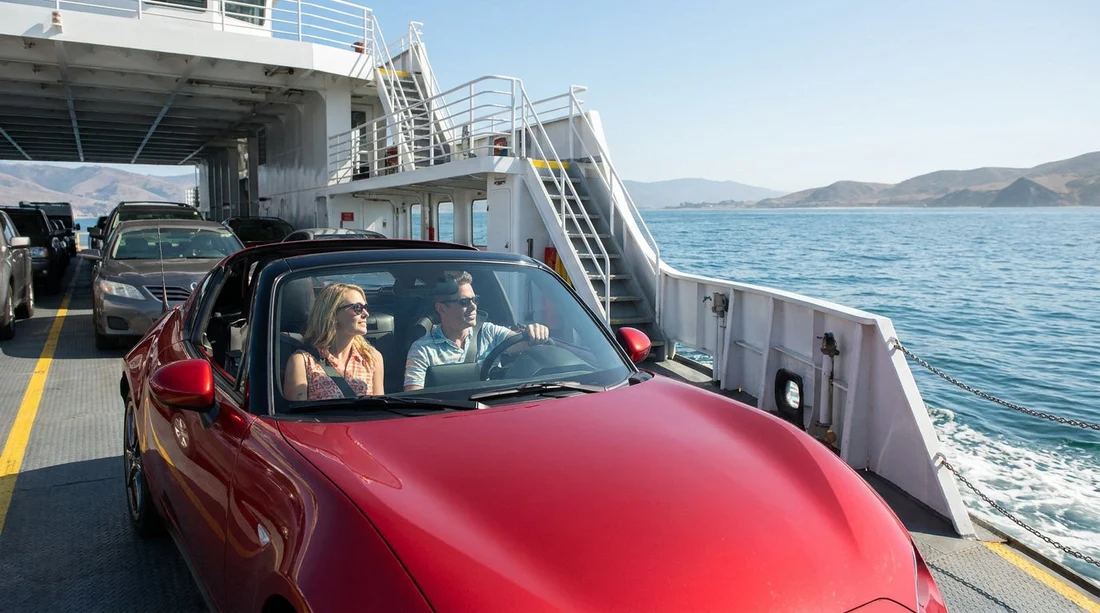
Quick Summary:
- Most California ferries accept rental cars, but hire policies can differ.
- Check your agreement allows ferries and keeps all cover valid.
- Clarify ferry fees, waiting time charges, and towing responsibilities before travel.
- Photograph the car before boarding and keep the boarding receipt safely.
Yes, you can usually take a rental car on a ferry when arranging car hire in California, but it is not automatic. The key is that two sets of rules apply at the same time: the ferry operator’s conditions of carriage and your hire company’s rental agreement. Most operators will accept a properly registered, road-legal vehicle, including rentals. However, some hire companies restrict specific routes, require notification, or limit cover if the vehicle is transported by sea.
If you are collecting from a large hub, it can be useful to compare policy wording by supplier and location, because terms can differ between brands and even between stations. For example, travellers arranging car hire at Los Angeles LAX may see different optional protection products than those picking up in Northern California, such as via Sacramento Airport (SMF) car rental.
Common California ferry scenarios, and what they mean for rentals
California ferries generally fall into three categories, each with slightly different implications for a hired vehicle.
1) Commuter passenger ferries with limited vehicle service. Many Bay Area ferry routes are passenger-focused. If a route does not carry vehicles, the question becomes moot, you would park and walk on. Where vehicles are permitted, space can be limited and boarding procedures strict.
2) Vehicle ferries serving islands or peninsulas. These are the crossings most relevant to car hire. Operators may require you to arrive early, follow staff directions precisely, and remain with the vehicle until parked. Some routes have reservation systems for vehicles, while others are first-come-first-served.
3) Private barge or specialist transport. Less common for leisure travellers, but sometimes used for moving equipment. Hire companies can be more cautious here, especially if the transport looks like commercial freight rather than a public ferry service.
Insurance and waiver considerations for car hire on ferries
The crucial issue is whether your cover applies when the vehicle is on a vessel. Many standard US rental agreements and protection products are written for on-road use, yet incidents on a ferry can still be treated as physical damage to the vehicle. The question becomes: is the ferry leg excluded, restricted, or allowed without change?
Collision Damage Waiver (or similar protection). Some policies cover damage regardless of location, others exclude damage occurring during transport, loading, or unloading. If the policy excludes “marine transport” or “while on a vessel”, you may be personally liable for dents, scraped bumpers, or undercarriage damage caused by ramps. Ask for the exact wording before pickup, and again at the counter if anything is unclear.
Liability coverage. Liability for injuries or property damage can get complicated on a ferry, as the operator may have its own liability framework. You still need valid liability protection for when you drive on and off the vessel. Confirm your liability remains in effect throughout the rental period and is not interrupted by the ferry crossing.
Roadside assistance and towing. If the vehicle fails in the ferry queue or on disembarkation, ask who coordinates towing and whether the ferry operator has rules about moving broken-down vehicles. Roadside assistance can be optional, and your responsibilities may differ by provider. Supplier policies can vary between locations, including city stations such as Sacramento car rental and airport desks.
What to confirm with the hire company before you pick up
To avoid surprises, confirm these points in writing where possible, such as in the rental terms provided with your booking confirmation.
1) Is ferry travel permitted? Ask a direct question: “Is taking the vehicle on a public vehicle ferry in California allowed under this rental agreement?” If the agent hesitates, request they check the policy notes. Some brands allow ferries as standard, others require prior authorisation.
2) Are there any route or location restrictions? Restrictions are often about borders, but they can also relate to islands, remote areas, or certain roads. Even within California, some agreements restrict travel to unpaved roads, which matters because some ferry terminals have rough access lanes or construction diversions.
3) Does my damage protection remain valid on the ferry? Ask specifically about loading and unloading, as that is where scrapes happen. If the answer is “it depends”, ask for the clause in the terms.
4) Who pays the ferry fare and deposits? Typically the driver pays ferry fees. Also check whether the ferry classifies your vehicle by length, height, or axle count, as a minivan or SUV can cost more. If you are hiring a larger vehicle, such as through a minivan rental at LAX, confirm the vehicle dimensions and any roof attachments in advance.
Practical tips for a smooth ferry crossing in a rental
Arrive early and plan for queues. Vehicle spaces can fill up. If you are late, you may be rolled to the next sailing, which can disrupt prepaid plans and may create extra rental day charges depending on your schedule.
Inspect and photograph the vehicle before you board. Take clear photos of bumpers, wheels, and the lower front lip. Ferry ramps are a common source of scuffs, especially with low-clearance vehicles.
If you are comparing suppliers for Southern California trips, note that brand and station policies can differ. For instance, the terms shown when arranging Enterprise car hire in San Diego may not match those for another brand elsewhere in the state.
FAQ
Can I take any rental car on a ferry in California? Most standard cars are accepted, but it depends on the ferry operator and your rental agreement. Confirm ferry travel is permitted and that cover remains valid.
Do I need to tell the car hire company I am taking a ferry? Often yes, especially if your agreement mentions restrictions on vehicle transport. Notifying the provider helps avoid a claim being challenged later.
Does damage on a ferry count as an accident under my waiver? It can, but some waivers exclude incidents during loading, unloading, or “while on a vessel”. Ask for the specific policy wording before pickup.
Who pays the ferry ticket when I am in a hire car? In most cases, the renter pays ferry fares and any reservation fees. Budget extra for larger vehicle classes and peak sailings.
What should I do if the ferry staff report damage while onboard? Take photos immediately, ask for a written note from staff if available, and contact the rental company using the number on your agreement before continuing.





























































































