


Quick Summary:
- Yes, a standard car is fine, but keep fuel above half.
- Refuel in Alamo and Tonopah, plus top-ups at Rachel when open.
- Expect long no-service sections, download offline maps and share plans.
- Carry water, a tyre kit, and a charger, deserts punish delays.
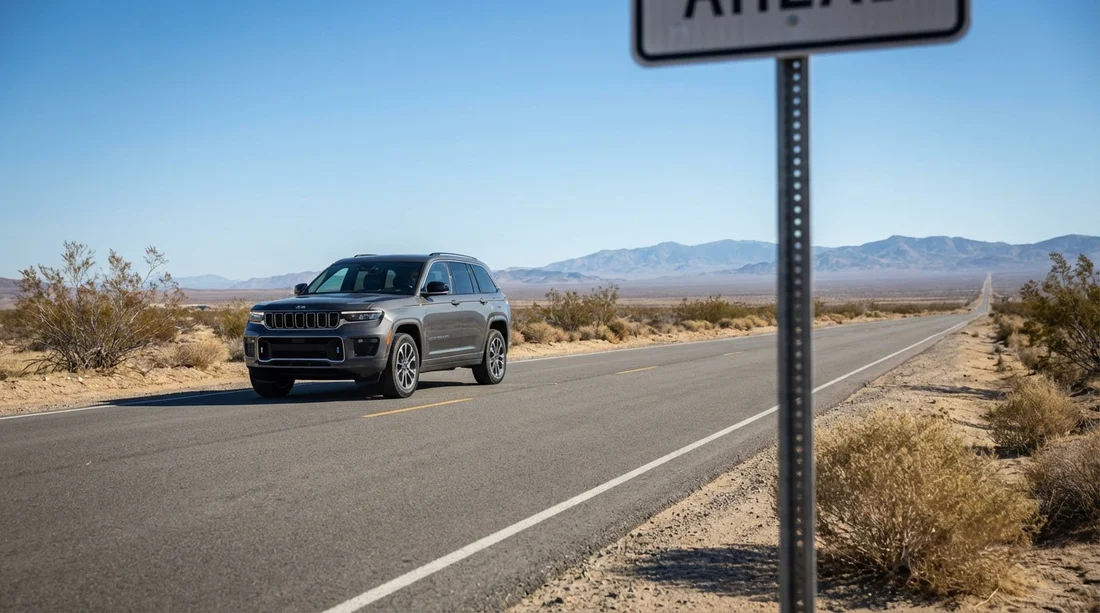
The short answer is yes, you can drive Nevada State Route 375, the Extraterrestrial Highway, on a typical Las Vegas car hire, provided you treat it like a remote-desert day trip. Roads are paved, but services are scarce, mobile signal is unreliable, and distances between fuel pumps can be longer than you expect if a small-town station is closed or out of fuel.
This guide gives you a realistic, step-by-step route plan from Las Vegas, where to refuel, what mobile coverage tends to be like, and what to keep in the car so you do not get stranded on a quiet stretch of asphalt.
If you are arranging a vehicle for this trip, start with a location that suits your pick-up plans, such as Las Vegas airport car rental options or a city location through Las Vegas car rental listings. Either way, focus on fuel range, comfort, and tyres rather than anything “off-road”.
Can you drive the Extraterrestrial Highway on a Las Vegas car hire?
Yes. The Extraterrestrial Highway is a paved state route. You do not need four-wheel drive and you should not attempt dirt tracks near the Nevada Test and Training Range boundary, where signs are clear and enforcement is real. The core drive is about patience and preparation, not vehicle capability.
Choose a car that feels stable at highway speeds and comfortable for long, straight stretches. If you want extra ground clearance and cabin space for water and supplies, consider an SUV category via SUV rental in Las Vegas. Otherwise, a standard saloon is fine, as long as it is in good condition and you keep an eye on fuel.
Step-by-step route plan from Las Vegas (with realistic timings)
This is a sensible one-day out-and-back plan that prioritises predictable fuel. It is a long day, so start early and avoid driving the most remote parts after dark. Times assume brief stops and steady driving, not high speeds.
Step 1: Las Vegas to Alamo (US-93 North)
Distance: roughly 110 miles. Driving time: about 1 hour 45 minutes to 2 hours.
Leave Las Vegas on US-93 North towards Alamo. This is your first key refuelling town and a good place to reassess your day. Even if you started with a full tank, top up here, because the next legs are where options thin out.
Step 2: Alamo to Rachel (NV-375, Extraterrestrial Highway)
Distance: roughly 50 miles. Driving time: about 1 hour.
From Alamo, take NV-318 north briefly, then turn onto NV-375. The landscape quickly becomes wide-open desert with long sightlines. Rachel is tiny, with the famous Little A’Le’Inn. Treat it as a novelty stop, not a guaranteed services hub.
Step 3: Rachel to Tonopah (NV-375 to US-6)
Distance: roughly 150 miles. Driving time: about 2 hours 30 minutes to 3 hours.
This is the most important planning segment. You will pass through open basins and mountain ranges with limited traffic. Plan for no mobile service for long periods and avoid stopping on soft shoulders. Tonopah is your next reliable fuel and food point.
Step 4: Return options
From Tonopah, the most straightforward return is to backtrack the same way. You can also turn back earlier if your fuel margin, daylight, or weather does not look good. “Out and back” might feel repetitive, but it is usually the lowest-risk approach for a first visit.
Where should you refuel, and how to avoid fuel anxiety
Fuel planning is the biggest difference between a fun desert drive and a stressful one. Stations can be closed early, have pump issues, or have limited supplies in very small towns. Build a buffer and do not rely on a single stop.
Fuel rule for this route: in remote Nevada, treat half a tank as “empty” and top up when you can.
Recommended refuelling plan
1) Start full in Las Vegas. Fill up the night before or on departure morning so you are not hunting for fuel on the edge of town.
2) Mandatory top-up in Alamo. Even if you do not need it yet, do it anyway. Alamo is the last consistently dependable fuel before you commit to the highway stretch.
3) Optional top-up in Rachel, only if pumps are operating. If there is fuel available, take a small top-up for peace of mind. Do not bank on it.
4) Mandatory refuel in Tonopah. This is the point where you can reset: fuel, food, water, and a short rest before returning.
How much range do you need?
A typical modern rental with 350 to 450 miles of range on a full tank is suitable. The problem is not total distance, it is the uncertainty. Wind, sustained highway speed, and hill grades can push consumption up. If your car has a small tank and the gauge drops faster than expected, slow down slightly and refuel at the earliest safe opportunity.
What about EVs?
For a first-time Extraterrestrial Highway trip, an electric vehicle adds planning complexity because charging availability can be limited and hours can vary. If you do go electric, have a conservative charging plan and a fallback overnight option in a larger town. For most travellers, a petrol vehicle is simpler for this route.
Mobile signal expectations, navigation, and safety check-ins
Assume you will have long stretches with no service once you leave the main corridors. You may get intermittent coverage near some towns or higher elevations, but it can disappear for an hour or more at a time along NV-375.
Do this before you leave Las Vegas:
Download offline maps for Nevada and an offline copy of your route. Save key locations (Alamo, Rachel, Tonopah) and also your return path. If you rely on streaming music, download playlists too, because entertainment drops out exactly when you want it most.
Tell someone your plan and your expected check-in times, for example “left Las Vegas 07:00, fuel Alamo 09:00, Rachel 10:30, Tonopah 13:30, return Alamo 17:30”. If you are travelling as a pair, agree what you will do if you lose each other at a stop.
If you want an added safety layer, a satellite messenger is helpful in the most remote stretches, but it is not essential if you keep to the paved route, drive in daylight, and maintain fuel margin. The bigger hazards are running low on water, overheating the car, or getting a puncture far from help.
What to carry in the car so you do not get stranded
The desert is unforgiving, but you do not need extreme gear. You need a sensible kit that covers heat, tyres, visibility, and charging.
Carry at minimum:
Water: at least 4 litres per person for a long day, more in summer. Add extra for radiator emergencies, but do not rely on it as coolant.
Food: snacks that tolerate heat, plus something salty. You may be waiting longer than planned if there is an incident on the road.
Phone charging: a car charger and a power bank. Keep the power bank topped up before leaving Las Vegas.
Tyre basics: check the spare is present, and know where the jack tools are. A simple tyre inflator and puncture sealant can save hours, but do not use sealant if you can fit the spare safely.
Sun and heat protection: hat, sunglasses, sunscreen, and a light layer. Heat fatigue sneaks up quickly.
Visibility and roadside safety: torch, reflective vest, and a warning triangle if your rental includes one. If you stop, pull well off the road where the shoulder is firm.
Paper backup: write down the key town names and highways. If your phone fails, you can still follow signs with confidence.
Vehicle checks in Las Vegas before you depart: set tyre pressures to the door-jamb recommendation, confirm the air conditioning works, check the fuel cap seals properly, and take a photo of the fuel gauge and mileage. If your car hire agreement has guidance on roadside assistance, save the number offline.
Driving tips for remote Nevada roads
Drive smoothly and conservatively. Wildlife can appear without warning, especially around dawn and dusk. Maintain extra following distance behind trucks, because stones and debris can be thrown up on quiet roads. Avoid stopping on blind corners or crests where approaching drivers have limited reaction time.
Do not chase “Area 51” access. The boundary is clearly marked and patrolled. Enjoy the scenery, the sense of space, and the quirky roadside stops, then return the way you came.
Choosing the right car hire set-up for the trip
For this route, comfort and reliability matter more than performance. An automatic is easiest for a long day. If you are travelling with several people, extra water, or you want more luggage space, an SUV can make life simpler. If you prefer a major brand option, Hola Car Rentals also lists suppliers such as Hertz car rental in Las Vegas and Alamo car rental in Las Vegas, which can be useful when comparing vehicle classes, luggage capacity, and pick-up logistics.
Whichever provider you choose, ask yourself one question: “If a station is closed, do I still have enough fuel to reach the next reliable town?” If the answer is no, top up earlier.
FAQ
Is the Extraterrestrial Highway suitable for a normal rental car? Yes, the route is paved and suitable for a standard car hire. The key is keeping plenty of fuel and avoiding unpaved side roads.
Where is the most reliable place to refuel on the Area 51 route? Alamo and Tonopah are the most dependable refuelling points for most travellers. Rachel may have fuel, but it should be treated as optional.
Will my mobile phone work along NV-375? Expect patchy or absent signal for long stretches, especially between towns. Download offline maps, and do not rely on live navigation or streaming.
How much water should I take in the car? For a full-day drive, take at least 4 litres per person, plus extra in hot months. More is better when you are hours from services.
Can I do the drive as a day trip from Las Vegas? Yes, but it is a long day, so leave early and plan to be off the most remote sections before dark. Keep refuelling conservative and take breaks in Alamo and Tonopah.





























































































