Quick Summary:
- Ask if your hire car already has a FasTrak transponder installed.
- Confirm whether Toll-by-Plate triggers extra admin fees on your agreement.
- Check which routes and express lanes require FasTrak to use legally.
- Before leaving, verify opt-in rules, billing timing, and dispute steps.
California tolling can feel confusing on a first trip because you may see different systems on different roads. In practice, most toll payments fall into two categories: transponder-based tolling (commonly FasTrak) and camera-based plate billing (often called Toll-by-Plate). When you are using car hire, the method matters because the rental company may add daily programme charges, per-toll administration fees, or both.
The key question is not only “Will I be able to pay the toll?”, it is “How will it be billed back to me, and what extra fees apply?”. This guide explains the practical differences and what to confirm at the counter before you drive away.
Transponder tolls (FasTrak): what it is and when it matters
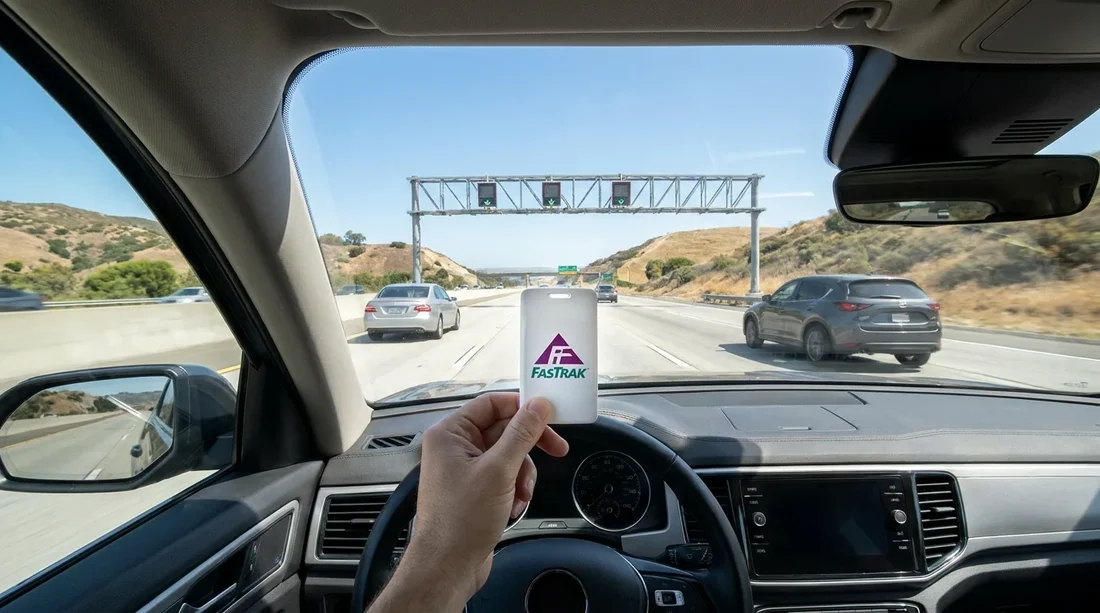
FasTrak is the transponder system used across much of California for toll bridges, toll lanes, and some toll roads. A transponder is a small device that communicates with roadside readers. When the system detects the transponder, it charges a linked toll account at the appropriate rate.
For travellers, the main advantages of a transponder are reliability and access. Certain lanes, particularly express lanes on motorways, may require FasTrak to use them lawfully. Even where cameras exist, the signage may specify “FasTrak only” for the express facility. If you accidentally enter a restricted lane without the right setup, you can face penalties in addition to tolls.
For car hire drivers, the transponder question becomes: is a device physically in the car, and is it linked to a rental toll programme? Some fleets have a built-in tag, others supply a portable transponder, and some rely mostly on number-plate billing. You want to know what you are actually driving away with, not what is theoretically possible.
If you are collecting near the Bay Area, you may be comparing options such as car hire at San Francisco SFO or car hire at San Jose SJC. These regions commonly use FasTrak for bridges and express lanes, so confirming your toll setup is especially important.
Toll-by-Plate: what it is and why charges can surprise you
Toll-by-Plate uses cameras to capture the number plate as you pass under gantries. The toll operator then sends an invoice to the vehicle owner. With car hire, the “owner” is usually the rental company, which then passes the toll cost on to you.
This sounds straightforward, but the difference is in fees and timing. Plate billing often arrives days or weeks after your drive. The hire company may charge an administrative fee per toll, a daily fee for days when tolls are incurred, or a mixture depending on the provider and location. These extras can make plate billing more expensive than it appears when you only look at the advertised toll rates on the road.
Toll-by-Plate can still be convenient for occasional toll crossings, especially if you are not using express lanes and want to avoid enrolling in a toll programme. However, it is essential to understand what your hire company adds on top of the toll itself, because two drivers on the same road can pay very different totals depending on billing method.
Which one do you need for car hire in California?
You do not always “need” a transponder to drive on tolled routes, but you may need one to use particular lanes. In many areas, you can cross a tolled bridge or use certain toll roads and be billed by plate. Express lanes are the main exception, as they frequently require FasTrak, even if general-purpose lanes do not.
So the practical answer is: choose based on your itinerary. If you expect to use express lanes during peak times, or you are driving around regions where FasTrak-only facilities are common, a transponder-based solution is safer. If you are mainly doing off-peak, avoiding express lanes, and only expect the occasional tolled segment, plate billing may be acceptable provided the admin fees are reasonable.
It also depends on vehicle type. Larger vehicles, such as SUVs and minivans, may carry more passengers, which can tempt drivers to use faster express facilities. If you are picking up a family vehicle, for example via minivan hire in California LAX or SUV rental at Sacramento SMF, checking whether the toll setup supports express lane use can prevent last-minute route changes.
What to confirm at the counter before you leave
Counter conversations can be rushed, but a few specific checks will save money and stress later. Keep it practical and ask for clear answers you can understand quickly.
1) Is there a FasTrak transponder in this specific vehicle? Ask whether it is built-in or a separate device, and where it is located. If it is portable, confirm it is actually supplied with the keys and present in the car.
2) How does toll billing work on this agreement? You want to know what triggers charges. Some programmes charge only when you use a toll, others charge a daily fee on any day a toll is incurred, and some have different rules for different toll agencies.
3) What are the administrative fees and caps? Ask whether there is a per-toll admin fee, a maximum per day, or a maximum per rental. If the staff member cannot quote it, request the terms on paper or in the app so you can review the figures.
4) Can you opt out, and if so, how? Some agreements allow you to decline the toll programme, but that does not mean you can ignore tolls. It usually means you are responsible for paying directly through the toll operator’s payment options, where available. Confirm what “opt out” actually changes.
5) What should you avoid if you do not have transponder access? Ask specifically about express lanes and “FasTrak only” facilities. Knowing what to avoid is as important as knowing what you can use.
6) How long after the rental will toll charges appear? Plate-billed tolls can arrive after you have returned home. Understanding the expected delay helps you recognise legitimate charges and query anything unexpected promptly.
Bottom line for California car hire
You do not always need a FasTrak transponder for car hire in California, but you do need a clear plan for toll payment. FasTrak is best when you may use express lanes or want the most consistent coverage. Toll-by-Plate can work for lighter toll use, but the hire company’s admin fees and billing delays can make it more expensive than expected.
Before you leave the counter, confirm what is physically in the vehicle, how the billing rules work, what fees apply, and what roads or lanes you should avoid if you are not set up for FasTrak.
FAQ
Do all California toll roads accept Toll-by-Plate for rental cars? Not always. Many do, but some express lanes and facilities are effectively transponder-required, and signage may indicate FasTrak-only operation.
Will I be charged automatically if I drive through a toll point? Usually yes, either via the transponder programme or via plate billing to the hire company, then recharged to you with any applicable fees.
Can I use my own FasTrak transponder in a hire car? Sometimes, but you must add the hire vehicle’s number plate to your account and follow the rental company’s rules. Confirm there is no conflict with an in-car tag.
Why do toll charges show up after I have returned the car? Toll agencies may bill the registered owner later, then the hire company processes the charge and any admin fees, which can take days or weeks.
What is the single best question to ask at the counter? Ask for the exact toll programme fees on your agreement, including daily charges and per-toll admin fees, so you can compare options.