


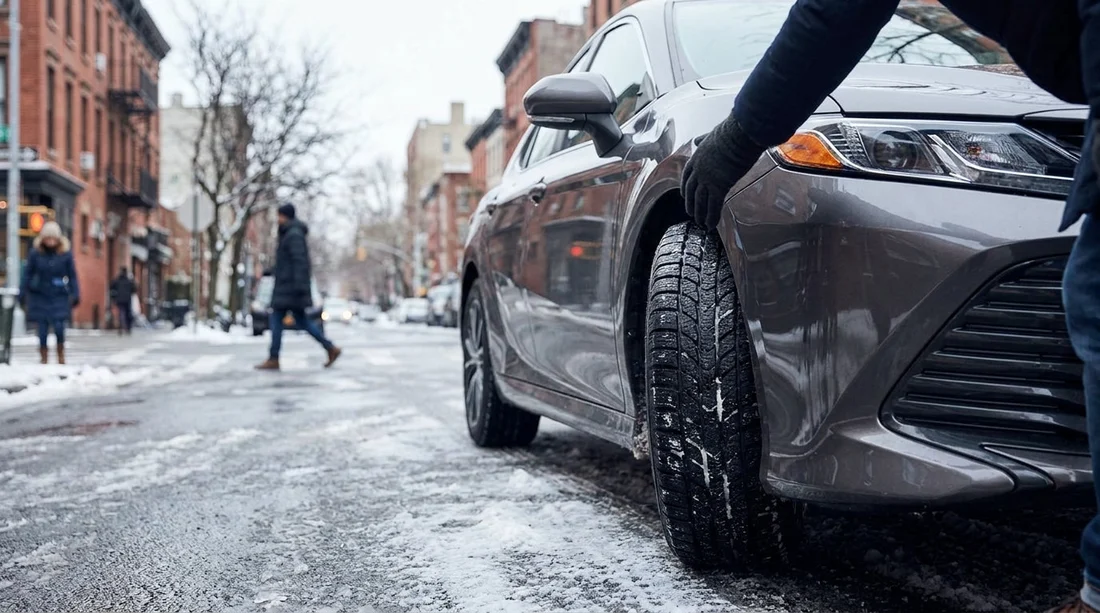
Quick Summary:
- Most US car hire uses all-season tyres, not dedicated winter tyres.
- Ask for AWD and confirm tyre markings before collecting in New York.
- Look for the 3PMSF symbol on sidewalls for winter capability.
- Plan around storms, carry essentials, and avoid summer tyres in cold weather.
If you are planning car hire in New York during winter, it is sensible to assume the vehicle will not automatically come with dedicated winter tyres. In the United States, the default tyre on most rental fleets is an all-season tyre, chosen because it works acceptably across a wide range of temperatures and avoids the cost and logistics of seasonal changeovers. That reality can surprise travellers from countries where winter tyres are normal or legally required at certain times.
This guide sets expectations on what you are likely to get, what to ask for before you travel, and how to spot whether the tyres fitted are genuinely winter-capable. It also covers the practical differences between all-season, all-weather, and winter tyres.
Do US rental cars in New York come with winter tyres?
Usually, no. Dedicated winter tyres are not a standard inclusion with car hire in New York or the wider USA. Many rental companies operate national fleets that move between states, so they tend to standardise on all-season tyres. Even in colder regions, winter tyres are often treated as a special request, a limited-availability option, or a feature reserved for certain vehicle categories.
That does not mean you will always be on unsuitable rubber. Modern all-season tyres can be workable for typical New York City winter conditions, especially if roads are ploughed quickly and you are mostly driving urban routes. However, if you expect frequent snow, early-morning ice, or trips beyond the city into hillier areas, tyre choice becomes more important.
Tyre types you are likely to encounter in the USA
All-season tyres are the most common fitment on US rental cars. They are designed to handle warm and cool temperatures and light snow, but their cold-weather grip and braking performance generally do not match a true winter tyre. In New York, they are often good enough provided you adjust your driving and avoid travelling during heavy snow events.
All-weather tyres sit between all-season and winter tyres. The term is sometimes used casually, so the key is markings on the tyre itself. True all-weather tyres are often certified for severe snow service and can be a strong compromise for travellers who want better winter traction without changing tyres seasonally.
Winter tyres (also called snow tyres) use a softer rubber compound and more aggressive siping to grip in cold conditions. They can significantly improve braking and cornering on snow and ice. The downside is faster wear in warm weather and higher operating costs, which is why they are not the default on many rental fleets.
Summer tyres are uncommon on mainstream rental categories in New York, but they can appear on performance or premium models. They are not suitable for winter temperatures, because the rubber can harden and lose grip as temperatures drop. If you are collecting a higher-spec vehicle, it is worth checking the sidewall markings.
What to look for on the tyre sidewall at pick-up
You do not need to be a mechanic to do a quick tyre check before you drive away. When you collect your car, take a moment to look at the tyre sidewall and confirm the following:
3PMSF symbol (Three-Peak Mountain Snowflake). This is the clearest sign of winter capability. Tyres with this marking have passed a snow traction test standard and are generally the best option for winter driving without needing a dedicated winter set.
M+S marking (Mud and Snow). Many all-season tyres carry M+S, but it is a less rigorous designation than 3PMSF. Treat it as a baseline, not a guarantee of strong snow performance.
Tyre condition. Look for adequate tread depth and even wear. If the tread looks low, request a different vehicle. Better tread depth matters more than many drivers realise when braking on slush.
Matching tyres. All four tyres should match in type and similar wear. Mismatched tyres can reduce stability, especially in slippery conditions.
How to request winter-ready car hire in New York before you travel
Because winter tyres are not standard, the best approach is to set expectations early and be specific. When comparing options, prioritise vehicle suitability first, then confirm tyres and winter equipment policies.
Choose an appropriate vehicle class. If your plans include upstate driving, rural roads, or early starts after snowfall, consider an AWD vehicle or a higher-clearance SUV. AWD can help you move off and climb gentle inclines, although it does not reduce stopping distances. Tyres still matter most for braking.
Ask direct questions. Enquire whether the vehicle will have 3PMSF-rated tyres, winter tyres, or standard all-seasons. If the answer is all-season, ask whether they can note your preference for severe-snow-rated tyres, and whether supply is realistic for your dates.
Pick-up location matters. Airport locations can have larger fleets and more vehicle categories, which can improve your chances of finding an AWD option. If you are arriving by air, you might compare availability at New York JFK airport car rental versus nearby New Jersey options like car hire at Newark EWR.
New York winter conditions: what is realistic?
New York City streets are frequently ploughed and treated quickly after snow, especially on major routes. The bigger risk for visitors is not constant deep snow, but sudden changes, slush, black ice on bridges, and reduced visibility during a storm. Temperatures can fluctuate around freezing, which creates refreezing hazards at night.
If you are heading beyond the city, conditions can be more variable. Higher elevations and less-trafficked roads may remain icy longer. Even within the metro area, routes involving bridges, ramps, and parkways can feel very different from surface streets.
If you are collecting a vehicle and then driving to New Jersey or further afield, the same tyre considerations apply. For larger groups or extra luggage, you may be weighing a people carrier or van. It is still worth thinking about traction, weight distribution, and stopping distances, especially if you are considering options like van hire at Newark EWR in winter.
Driving tips if you only have all-season tyres
If your car hire in New York comes with all-season tyres, you can still drive safely by adjusting how and when you travel.
Drive slower and leave more space. Stopping distances increase dramatically on slush and ice. Keep bigger gaps and brake earlier with gentle pressure.
Avoid sudden steering inputs. Smooth steering helps tyres maintain grip. If the car begins to slide, ease off the accelerator and look where you want to go.
Do not rely on AWD. AWD helps you get moving, but it does not help you stop. Many winter crashes involve confident acceleration followed by insufficient braking grip.
Time your travel. If heavy snow is forecast, delaying departure can be safer than trying to beat the storm. In severe conditions, consider staying put.
How Hola Car Rentals listings can help you compare winter suitability
When you are comparing providers and vehicle categories, it helps to focus on the factors that influence winter performance: drivetrain options, vehicle type, and pick-up location. For example, you might look at fleet choices around JFK using car rental in New York JFK, or compare supplier availability in New Jersey such as Enterprise car rental in New Jersey EWR. The important point is to confirm tyre expectations in advance, then verify markings and tread at collection.
Ultimately, the right set-up depends on where you will drive. For Manhattan and nearby suburbs on cleared roads, good all-seasons with sensible driving are often enough. For frequent snow, early starts, or longer trips outside the city, seek AWD and prioritise tyres with the 3PMSF marking where possible.
FAQ
Are winter tyres required by law for car hire in New York? No. New York State does not generally mandate winter tyres for passenger vehicles, so rental fleets are usually fitted with all-season tyres.
Will an SUV rental automatically have better winter tyres? Not automatically. SUVs often have all-season tyres too, so check for the 3PMSF symbol and confirm tread depth at pick-up.
What does the snowflake symbol on tyres mean? The 3PMSF snowflake-and-mountain marking indicates severe snow service certification, meaning the tyre meets a defined traction performance standard in snow.
Is AWD enough for winter driving around New York? AWD helps with pulling away and stability, but braking and cornering still depend heavily on tyres, speed, and road conditions.
Can I request snow chains with a rental car in New York? Often no. Many rental companies do not supply chains and may prohibit their use, so plan routes and timing to avoid conditions where chains are necessary.





























































































