


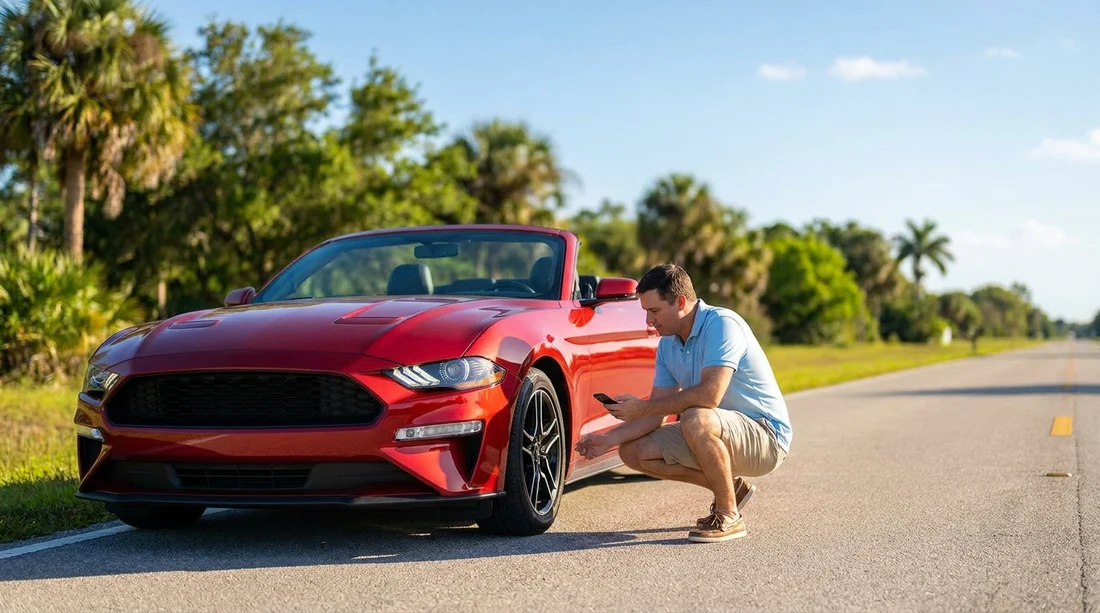
Quick Summary:
- Roadside assistance helps with breakdowns, lockouts, flat tyres, and jump starts.
- LDW reduces your cost for theft or damage to the hire car.
- You may want both if driving long distances or with family.
- Check exclusions, fees, and your card insurance before pick-up.
When arranging car hire in Florida, two add-ons often sound similar but solve different problems, roadside assistance and LDW. Travellers sometimes assume LDW includes help if a tyre fails or the battery dies, while others assume roadside cover protects them from accident damage. In reality, they are designed for different kinds of disruption. Understanding the distinction can save you time at the counter, prevent unexpected charges, and help you pick the most suitable protection for your itinerary.
Florida is a popular self-drive destination because distances between airports, beaches, theme parks, and national parks are manageable, but still long enough for minor issues to matter. A flat tyre on a busy road, a dead key fob battery, or a minor scrape in a car park can each lead to very different costs depending on what you have added to your car hire agreement.
What roadside assistance cover typically includes
Roadside assistance is focused on getting you moving again when the vehicle becomes temporarily unusable, or when you cannot access it. While the exact terms vary by supplier and location, roadside cover in Florida commonly includes some combination of the following services.
Breakdown support can include dispatching a service provider if the vehicle will not start or suffers a mechanical fault. This usually means basic assistance at the roadside, and if the car cannot be made mobile, arranging towing to a suitable location or a replacement process.
Flat tyre help often means assistance fitting the spare tyre, or towing if there is no usable spare. Many modern vehicles may have a repair kit rather than a full-size spare, so it is worth confirming what is in the boot at pick-up.
Jump starts for a flat battery are frequently included. This is one of the most common call-outs, particularly if lights are left on at a theme park car park, or if a vehicle sits unused overnight.
Lockout services may be included, for example if keys are locked inside the vehicle. Some policies cover dispatch and entry, while others still charge a service fee. Key replacement is usually treated separately and can be expensive.
Roadside assistance is about convenience and operational help, not about paying for collision repairs. It is also not the same as personal medical assistance, travel insurance, or liability protection.
What LDW usually covers, and what it does not
LDW stands for Loss Damage Waiver. In US car hire, LDW is commonly used to describe an optional waiver that limits what you pay if the hire car is damaged or stolen, provided the terms are followed. It is often described as a waiver rather than insurance because it is a contractual reduction of your financial responsibility to the rental company.
Typically, LDW addresses costs such as repair or replacement of the vehicle after an accident, vandalism, or theft. It may also cover loss of use charges claimed by the rental company while the vehicle is out of service, and administrative fees, depending on the contract.
However, LDW does not usually provide the practical help you might need in the moment. If you have a flat tyre and are safely parked but stranded, LDW may not send anyone to assist. Likewise, if you lock the keys in the car, LDW does not generally cover locksmith dispatch. In addition, LDW may contain exclusions or conditions, such as restrictions on unauthorised drivers, driving under the influence, off-road use, or leaving the vehicle unattended with keys inside.
How they work together, and when you might need both
Roadside assistance and LDW can be complementary. Think of roadside cover as reducing disruption during the trip, and LDW as reducing financial exposure after damage or theft.
You might consider both if your Florida plans involve long motorway drives between cities, late-night arrivals, or remote destinations where a minor issue becomes a major inconvenience. Families with children often value the practical support of roadside assistance because waiting for a tow or searching for help can quickly derail a day.
You might prioritise LDW if you are more concerned about repair costs from car park scrapes, unpredictable traffic incidents, or weather-related mishaps. Florida downpours can reduce visibility, and busy areas around beaches and attractions can make minor damage more likely.
You might prioritise roadside assistance if you are confident in your damage protection already, for example through an existing policy, but you want to avoid high call-out charges for lockouts or tyre help. The key is to confirm what protection you already have, and what it actually covers in the US context.
Common exclusions and charges to watch for in Florida
Even with add-ons, some situations can still produce charges. For roadside assistance, exclusions can include incidents caused by negligence, repeated call-outs, or situations where the vehicle is not accessible. For LDW, exclusions often relate to breach of contract, such as an unlisted driver, using the wrong fuel, or driving where prohibited.
Also consider timing. If you are collecting at a busy airport, getting clarity on cover before you reach the counter can reduce pressure. Hola Car Rentals provides location pages that help you compare options for car hire in Florida, such as car hire in Orlando Airport (MCO) and car hire at Fort Lauderdale Airport (FLL).
How to decide before pick-up
A practical way to decide is to separate questions about disruption from questions about cost exposure. First, ask yourself what would be most stressful on your trip: being stranded, or receiving a large bill after damage. Then match cover accordingly.
1) Review what you already have. Some credit cards offer damage cover for rental vehicles, but the conditions can be strict and may exclude certain vehicle types or require you to decline the rental company’s waiver. Separate travel insurance may include personal assistance, but that is not the same as a roadside service that sends help to the vehicle.
2) Map your driving pattern. If you will mainly drive short urban trips, the chance of a battery issue may be lower, but minor parking damage may be more likely. If you will drive between cities or do day trips, roadside support can be reassuring.
3) Check the vehicle type. Larger vehicles can be more challenging in tight spaces, which can influence how you view LDW. If you are considering a people carrier for a group, see minivan rental in Downtown Miami for an idea of typical options.
Florida pick-up locations and why they matter
Where you pick up can influence your decision because it affects driving conditions right after collection. For example, city driving can involve more tight parking and stop-start traffic, while airport collection often leads straight to motorways at higher speeds.
If your trip starts in Miami, you may want to compare city collection points, such as car hire in Downtown Miami, where parking scenarios are common. If you are flying into Tampa and heading to beaches or across the state, you might compare supplier options such as Avis car hire in Tampa (TPA) to see what is typically offered alongside your rental.
Whatever your route, the best outcome is to arrive at pick-up with a clear idea of what you want LDW to do, what you want roadside assistance to do, and what you are comfortable paying out of pocket if something minor happens.
FAQ
Is roadside assistance cover different from LDW? Yes. Roadside assistance focuses on getting you moving again after issues like a flat tyre or lockout. LDW focuses on reducing what you pay for damage or theft of the hire car.
Does LDW include towing or a flat tyre in Florida? Not always. Some agreements treat towing after a breakdown differently from towing after an accident, and tyre or windscreen issues may be excluded. Check the specific terms for your rental.
If I have roadside assistance, am I covered for accident damage? No. Roadside assistance generally does not cover repair costs from collisions, vandalism, or theft. That is the role of LDW or another damage protection arrangement.
Do I need both for car hire in Florida? It depends on your risk tolerance and plans. Both can make sense for long drives, family trips, or busy destinations where disruption and minor damage are more likely.
What should I ask at pick-up to avoid surprises? Ask what happens with tyres, windscreens, key replacement, towing, and after-hours assistance. Confirm which charges are waived under LDW and which services are included under roadside assistance.































































































