


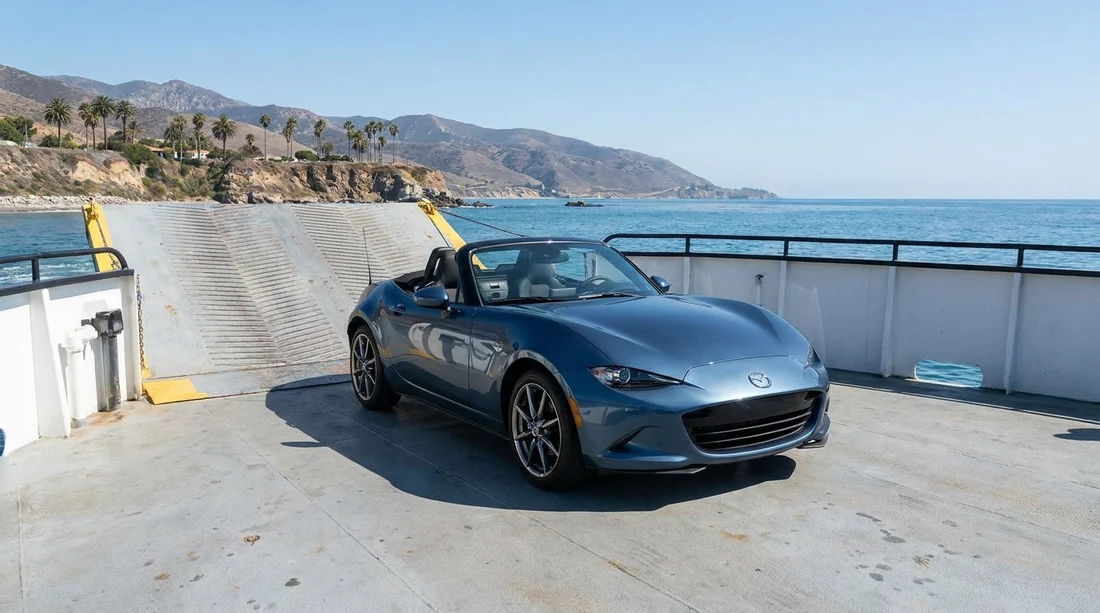
Quick Summary:
- Check your car hire contract, ferries may be allowed but conditional.
- Confirm insurance still applies while boarding, sailing, and disembarking.
- Ask whether islands, Mexico routes, or overnight parking are restricted.
- Inspect the car before and after, and photograph any new damage.
In California, taking a rental vehicle onto a ferry is often possible, but it is rarely a simple yes or no. Typical car hire terms focus on three things: where the vehicle is allowed to go, what happens to insurance while it is being transported on water, and who is responsible for damage that can occur during loading, lashing, and parking on the boat.
Because California has a mix of short commuter ferries and longer island services, the details matter. A quick vehicle ferry hop is very different from leaving a car overnight on an island, or combining a ferry with travel outside the state. Before you drive away, it helps to know what “ferry permitted” usually means in practice and what you should confirm at the counter.
Why car hire companies care about ferries
From a rental company perspective, a ferry crossing increases risk and reduces control. The car may be parked by a deckhand, secured with wheel chocks, exposed to salty air, or placed close to other vehicles. Scrapes can happen in tight lanes, doors can be dinged, and underbodies can be damaged on steep ramps. Even if you are careful, the environment is different from normal road driving.
Many US car hire agreements treat ferries as permitted, but they can be treated as a “special situation” that affects liability or the way claims are handled. In other words, you might be allowed to take a ferry, but still be on the hook for certain types of loss or for failing to follow the rules.
Common ferry rules you will see in California rental terms
While each provider differs, typical terms and counter guidance in California tend to fall into these patterns.
1) Ferries allowed, but only on approved routes
Short vehicle ferries within California are often allowed. The key is that the vehicle stays within permitted geographic areas and does not violate other restrictions such as off-road use. Some agreements do not list ferries explicitly, but still require you to stay on “public roads” and within approved regions, which can indirectly affect island travel where roads may be limited or unpaved.
If you are collecting near a major airport, staff may be more familiar with common trips. For example, travellers picking up via Los Angeles car rental at LAX often ask about coastal or island day trips, so it is worth raising your plan early.
2) Islands can trigger extra conditions
California’s islands can be the tricky part. An island may have limited service access, restricted towing, or different road conditions. Even if the ferry operator accepts cars, a rental company may restrict taking the car to specific islands or may require you to notify them. Sometimes the restriction is practical, because recovery and repairs are harder and more expensive.
Do not assume that because a ferry runs, your rental is automatically permitted. Ask whether your destination island is allowed and whether any road types there would break the contract, such as unpaved tracks, beach driving, or service roads.
3) Restrictions that have nothing to do with ferries but still matter
Ferry plans can accidentally collide with other common exclusions, including:
Cross-border travel, some contracts restrict driving into Mexico or require extra documentation. A ferry that connects to an onward route near the border can raise questions.
Commercial use, if you are transporting goods, towing, or using a van for business delivery, the rules may differ. If you are hiring a larger vehicle, clarify this up front, for instance when arranging van hire in Sacramento SMF.
After-hours drop-off logistics, if the ferry arrival time affects your return, late returns can create extra day charges. It is not a ferry restriction, but it is a common cost surprise.
Insurance implications: what can change on a ferry
Insurance is where most misunderstandings happen. Your protection can come from several layers, including the rental company’s damage waiver options, liability coverage, your own motor policy (if applicable), and credit card benefits. The ferry itself adds additional parties, such as the ferry operator and port staff.
Damage waiver and who is “in control” of the vehicle
Some damage waiver products still apply on ferries, but you may be responsible if you fail to follow procedures. Common triggers include leaving keys in the car when instructed not to, ignoring guidance from deck staff, or parking in a restricted area of the vessel.
Also ask how the rental company handles situations where a deckhand moves the car. Even when you are not driving, the rental agreement may still treat you as responsible for the vehicle’s condition during the rental period. The practical takeaway is to document the car’s condition before you board and immediately after you disembark.
Tyres, underbody, and salt exposure
Many rental agreements exclude tyres, wheels, and underbody damage from damage waivers. Ferry ramps can be steep, and low vehicles can scrape. Salt air can also accelerate corrosion, especially if the car is already chipped.
What to confirm at the counter before you drive off
Counter conversations are often quick, so it helps to be precise. Here is what to confirm in plain language, and why each point matters.
Confirm the ferry and destination are permitted
Ask: “I plan to take a vehicle ferry to [destination]. Is that permitted under this contract?” If you are picking up from San Diego Airport car rental, for example, you may be weighing coastal ferry options and want confirmation that the route and destination area are acceptable.
Clarify the insurance products you have selected and their exclusions
Do not only ask “Am I covered?”, ask “Are tyres, wheels, glass, roof, and underbody covered?” and “Does coverage apply during ferry transport?” If you are arranging a branded supplier option such as Enterprise car hire Sacramento SMF, terms can still vary by package, so check what your specific booking includes.
Practical tips for a smooth ferry crossing with a rental car
Arrive early so you are not rushed while lining up, especially in peak travel periods.
Photograph the car immediately before boarding and after disembarking, focusing on bumpers, wheels, and lower panels.
Follow deck crew instructions on parking distance, handbrake use, and whether to leave the car in gear.
Remove valuables and keep the rental documents with you in case you need to make a report.
Watch for steep ramps, approach slowly to avoid scraping the front or underbody.
Finally, if you are comparing providers, note that the question is not only “Are ferries allowed?” but “What happens if something goes wrong?” When reviewing a package such as Dollar car hire at Los Angeles LAX, look carefully at exclusions and the claims process so you know how issues are handled.
FAQ
Are ferries generally allowed with car hire in California? Often yes for standard in-state routes, but permission can be conditional. Always confirm the specific ferry and destination are permitted under your contract.
Does insurance or a damage waiver still apply while the car is on the ferry? It may, but exclusions can still apply, and you can remain responsible for the vehicle’s condition. Ask whether coverage applies during transport and what incidents are excluded.
What should I do if the car is scratched or dented on the ferry? Take time-stamped photos, report it to the ferry operator if relevant, and contact the rental provider as soon as practical. Keep any incident reference numbers for your records.
Can I take a rental car to an island in California? Sometimes, but islands can trigger special restrictions due to recovery and road conditions. Confirm the island is allowed and that you will stay on permitted road types.
What is the single most important thing to confirm at the counter? Get clear confirmation that your planned ferry route and destination are allowed, and that you understand how your selected cover handles ferry-related damage scenarios.































































































