


Quick Summary:
- Check if your route enters the Manhattan congestion pricing zone.
- Confirm how your rental firm bills charges and administration fees.
- Ask if E-ZPass is included and how tolls post later.
- Track dates and times, as charges can vary by schedule.
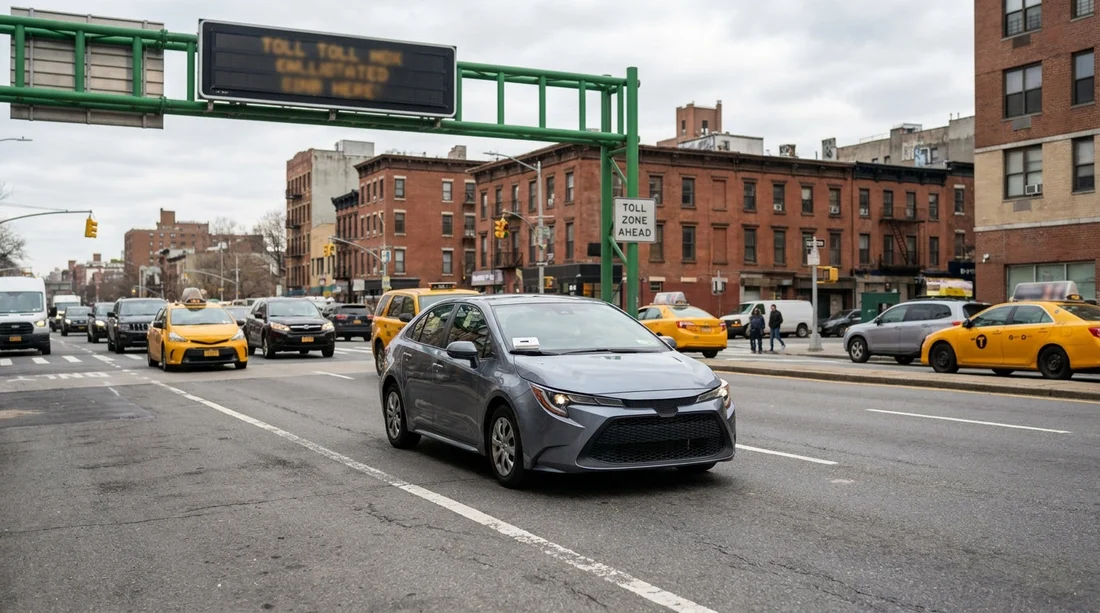
Congestion pricing is a road-use charge designed to reduce traffic in the busiest parts of a city by pricing vehicle entries into a defined zone. For visitors arranging car hire in New York, it matters because it can add an extra cost on top of normal tolls, fuel, parking, and any optional extras. The key is that the charge is linked to where and when you drive, not where you pick up the car. If your plans include Manhattan, especially the central business areas, you will want to understand how a rental car is identified and how the charge is passed on to you.
In New York, most drivers already encounter tolled bridges and tunnels, and many rental vehicles are set up for electronic tolling. Congestion pricing is different from traditional tolls because it targets a zone rather than a single crossing. That makes it easy to incur charges without noticing, for example by following sat nav directions into a priced area or making a hotel drop-off inside the zone. Before you leave the rental counter, confirm the billing method so there are no surprises weeks later.
What congestion pricing is, in plain terms
Think of congestion pricing as a pay-to-enter policy for a defined, high-traffic area during set times. When a vehicle crosses into the zone, a charge can be triggered. This can be done using camera-based licence plate recognition, electronic transponders such as E-ZPass, or a combination of both. The important point for car hire is that the rental vehicle’s plate and transponder are tied to the rental company first, and charges are commonly forwarded to the renter later.
When it applies, and when it usually does not
Congestion pricing rules depend on the zone boundaries and the schedule set by local authorities. In general, zone-based schemes apply when you enter the defined area, and rates may vary by time of day, day of week, and vehicle class. Some vehicles or trips may be exempt or discounted, but visitors should not assume that a rental vehicle qualifies. Always treat it as payable unless you have written confirmation of an exemption that applies to your specific vehicle and use.
It often does not apply if you never enter the zone. For example, trips confined to parts of New York State outside central Manhattan, or routes that remain in New Jersey, may avoid it. Airport collections can be a common starting point for visitors, and your planned direction matters. If you are picking up near JFK and heading to Long Island, you may never encounter it. If you are collecting at Newark and driving to midtown Manhattan, the chance is higher depending on your chosen crossings and final destination.
If you are comparing pick-up points, it can help to read the local guidance on your chosen location and likely routes. For airport-based options, start with pages such as car rental New York JFK or car hire at Newark Airport, then map your hotel and planned sights to see whether central Manhattan driving is truly necessary.
How a congestion charge is billed on a rental car
With car hire, you usually do not pay a congestion charge at the gate because there is no gate. Instead, the charge is recorded electronically and billed later. There are three common models:
1) Transponder-based billing: The vehicle has an E-ZPass or similar device. Charges post to the rental company’s account, then the rental company bills you, often with an administration fee per day of use or per toll event.
2) Plate-based billing: Cameras read the number plate and generate a bill. The rental company receives it, matches it to your rental agreement, then charges your card on file plus any handling fees.
3) Hybrid systems: Some trips are captured by transponder, others by plate, depending on equipment and lane choices. Either way, the rental company is usually the first recipient of the charge.
What to confirm before leaving the rental counter
Before you drive off, ask specific questions and make sure the answers align with the paperwork you sign. The aim is to know whether you will be billed, when, and what extras may apply.
Confirm the toll and congestion pricing programme name. Many rental firms offer an electronic toll option that automatically pays tolls and then bills you. Ask what it covers, whether congestion pricing is included in “tolls”, and whether any separate programme rules apply.
Ask about administration or convenience fees. Some providers charge a daily fee on any day the transponder is used, others charge per toll event, and some charge both. Clarify whether a congestion charge counts as a toll event for fee purposes.
Check whether the car has an E-ZPass and where it is mounted. If the transponder is present, you want to know whether it is active, and whether you must keep it in a certain position. If it is not active and you rely on plate billing, ask how long after the trip your card could be charged.
Confirm the billing timeline. Congestion charges and tolls can post days or weeks after you return the vehicle. Knowing the expected window helps you reconcile your statement later.
Verify the vehicle class. Some congestion pricing schemes vary by vehicle type. If you are considering a larger vehicle, confirm how it is categorised. If you need extra space, see vehicle options like minivan rental near Newark EWR, then ask the counter to clarify how that category is treated for charges.
Route planning tips to manage costs in New York
If you want to minimise congestion charges, plan around the zone rather than reacting on the road. Consider whether public transport, taxis, or walking can cover the most central segments while you use your rental car for day trips outside the core.
Also consider where you pick up and drop off. Many travellers fly into one airport and depart from another. If your plans include both Newark and JFK, compare how each aligns with your itinerary. For Newark-based pick-ups, the local pages car hire Newark EWR and provider options such as Enterprise car hire Newark EWR can help you review location logistics before you decide.
FAQ
Does congestion pricing automatically apply when I drive in New York? No. It applies when you enter the defined congestion pricing zone at the relevant times, not simply for driving anywhere in New York.
Will I pay congestion pricing at the rental counter? Usually not. Charges are typically recorded electronically and billed to the rental company first, then passed to you later with any applicable fees.
Is congestion pricing the same as bridge and tunnel tolls? No. Traditional tolls charge for specific crossings. Congestion pricing is a zone-based charge, and you may pay both depending on your route.
How can I avoid surprise fees on car hire in New York? Confirm the toll programme, admin fees, and billing timeline before you leave, then plan routes to avoid the congestion zone if you do not need to drive there.
How long after my trip could congestion charges appear? It varies by system and rental company. Charges can post days or weeks after return, so monitor your payment card for delayed toll-related transactions.






























































































