


Quick Summary:
- SCDW often excludes underbody scrapes, even when caused by speed bumps.
- Check if underbody, oil pan, or exhaust are listed as exclusions.
- Photograph existing low clearance damage before you leave the rental lot.
- Drive slowly over bumps and consider higher clearance vehicles for Florida.
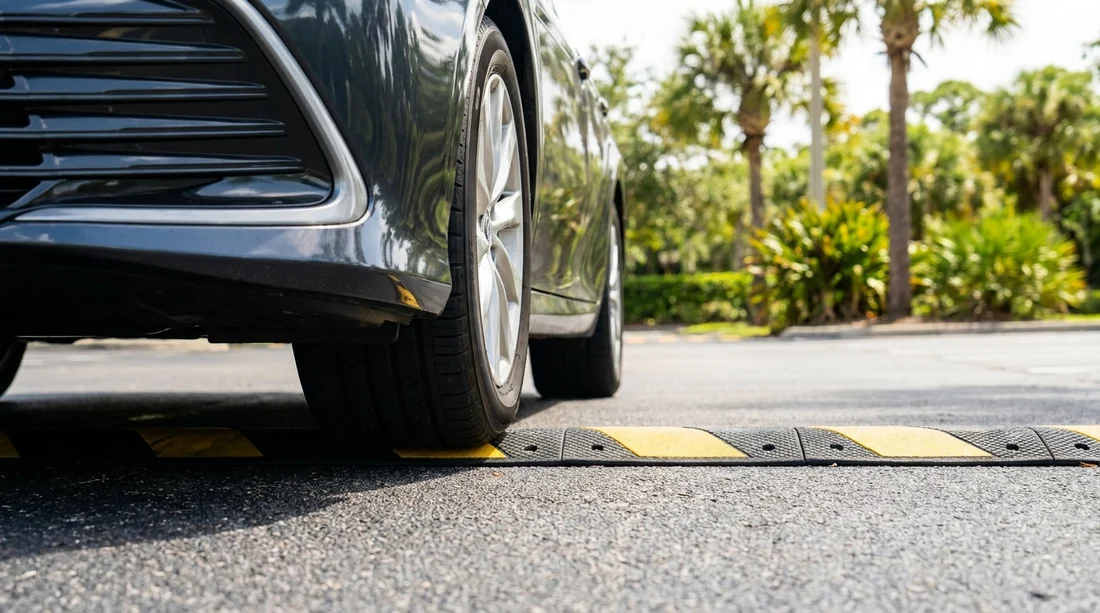
Speed bumps are everywhere in Florida, from hotel entrances and theme parks to residential communities and beach car parks. If a rental car bottoms out, the first question is usually whether SCDW, sometimes listed as LDW or a damage waiver, will pay for the underbody repair. In most cases, the answer is, not automatically. Underbody damage is one of the most common exclusions or limitations in damage waivers, even when the impact happened at low speed on a normal road surface.
This article explains how SCDW typically works in Florida car hire, why underbody damage is treated differently, which contract terms to look for before you sign, and the practical steps that reduce disputes if something does happen.
What SCDW and LDW usually mean in Florida car hire
Although names vary by supplier, SCDW, CDW, and LDW are generally designed to reduce or remove your financial responsibility for damage to the rental vehicle. In Florida car hire, these products often operate as a waiver rather than a regulated insurance policy, meaning the contract wording and exclusions matter a lot. The waiver might be included in the rate, offered as an add-on, or bundled with other protections.
If you are arranging a car for Orlando airport collections, reviewing the supplier’s terms in advance helps you compare like for like, for example via car rental at Orlando MCO.
Does SCDW cover underbody damage from speed bumps?
Typically, SCDW does not fully cover underbody damage from speed bumps, because the undercarriage is frequently excluded. Some suppliers treat underbody, tyres, wheels, glass, and roof as separate risk categories. Others may cover them only if you purchase additional protection, or only when the damage is clearly linked to a covered collision event, not a grounding or “contact with road surface” incident.
Speed bump damage is commonly classified as “underbody” or “undercarriage” damage, which can include the splash shield, exhaust, catalytic converter, radiator supports, suspension components, oil pan, gearbox casing, and protective covers. Even if you were driving carefully, the rental company may argue that the vehicle was driven in an unsuitable manner for the conditions, or that you should have avoided the obstacle.
Common SCDW/LDW exclusions to look for (underbody and related)
Before signing, scan the rental agreement and the coverage summary for these common exclusions or carve-outs.
Underbody, undercarriage, underside: wording may explicitly exclude any damage beneath the vehicle, even if the body panels are intact.
Mechanical damage: some terms exclude mechanical or consequential damage, which can include oil loss after an impact, or overheating after radiator damage.
Negligence or misuse: driving over obstacles, ignoring warnings, driving on unpaved surfaces, or failing to stop after an impact can void the waiver.
Roadside and recovery costs: towing, call-out fees, and storage can be excluded, even when repair damage is covered.
Administrative and loss-of-use fees: even where SCDW applies, you may still face fees depending on the specific waiver terms and state rules.
When comparing options for Miami arrivals, it is useful to check how the supplier describes exclusions, for example at car rental in Miami MIA or car rental in Miami Beach. The key is not the location itself, but ensuring you read the same coverage categories across offers.
What to verify before signing the agreement
To avoid surprises, confirm these points in writing, meaning in the contract, the coverage summary, or the supplier’s displayed terms.
1) Whether underbody damage is excluded. Look for words like “underbody”, “undercarriage”, “oil pan”, “exhaust”, “catalytic converter”, “suspension”, “chassis”, or “floor pan”. If any of these are excluded, speed bump damage is likely not covered.
2) Whether there is a separate protection for wheels/tyres and underbody. Some suppliers offer extra packages that extend protection. Check what they actually include, not just the product name.
3) The deductible or excess and how it applies. Even when covered, you may pay an excess. Confirm if the excess changes by vehicle class.
If you are choosing between vehicle types, consider ground clearance. A higher-clearance option can reduce the risk of underbody contact, especially in car parks with aggressive bumps. For example, browsing an SUV category such as SUV rental in Doral can be a practical comparison point if your route includes uneven entrances.
Practical steps to reduce risk on Florida speed bumps
Approach slowly and straight. Taking a bump at an angle can increase the chance of scraping, especially on long-wheelbase vehicles.
Watch for unpainted bumps. In some private lots, bumps are poorly marked, particularly at night or during heavy rain.
Use ground clearance wisely. Avoid loading the boot heavily if you are already low to the ground, as extra weight reduces clearance.
Do not ignore warning lights or new noises. If you hear scraping, rattling, or see a warning, stop safely and check. If there is any sign of leaking fluid, do not continue driving.
What to do if you hit a speed bump and suspect underbody damage
Stop somewhere safe and check for leaks. Look under the centre of the car for fresh oil or coolant. If you see a puddle, do not drive.
Photograph the area and the location. Take clear photos of the bump, the roadway, and any visible damage or fluid. Also note the time and approximate address.
Contact the rental company promptly. Follow the agreement’s reporting steps and ask for instructions on roadside assistance or replacement.
For travellers comparing suppliers, it can also help to look at how different brands present their coverage and exclusions on local pages such as Alamo car hire Florida, then confirm the exact terms at the counter or in the final rental agreement.
Bottom line for Florida renters
If your question is specifically whether SCDW covers underbody damage from speed bumps on a rental car in Florida, the safest assumption is that it may not. Many waivers exclude the undercarriage, and speed bumps are a common cause of damage that falls into that category. Your best protection is to verify the underbody clause before signing, pick a vehicle suitable for your route, document the vehicle condition at pickup, and report any incident immediately according to the agreement.
FAQ
Is underbody damage the same as “mechanical damage” in rental terms? Not always. Underbody damage refers to the underside components and structure, while mechanical damage can mean failure not caused by an impact. Many agreements exclude both, so read each definition carefully.
If I bought SCDW, can the rental company still charge me for towing? Yes. Towing and roadside assistance are often excluded or capped, even when collision damage is waived. Check the roadside and recovery section before you sign.
What wording in the contract most clearly excludes speed bump scrapes? Phrases like “damage to the undercarriage/underbody is not covered” or lists including “oil pan, exhaust, catalytic converter, suspension” are strong indicators that speed bump damage will be your responsibility.
Will photos at pickup help if underbody damage is found later? Yes, especially if you photograph low front spoilers and existing scrapes, and keep time-stamped images. Underbody areas are hard to capture, but any evidence of pre-existing low-clearance damage supports your case.






























































































