


Quick Summary:
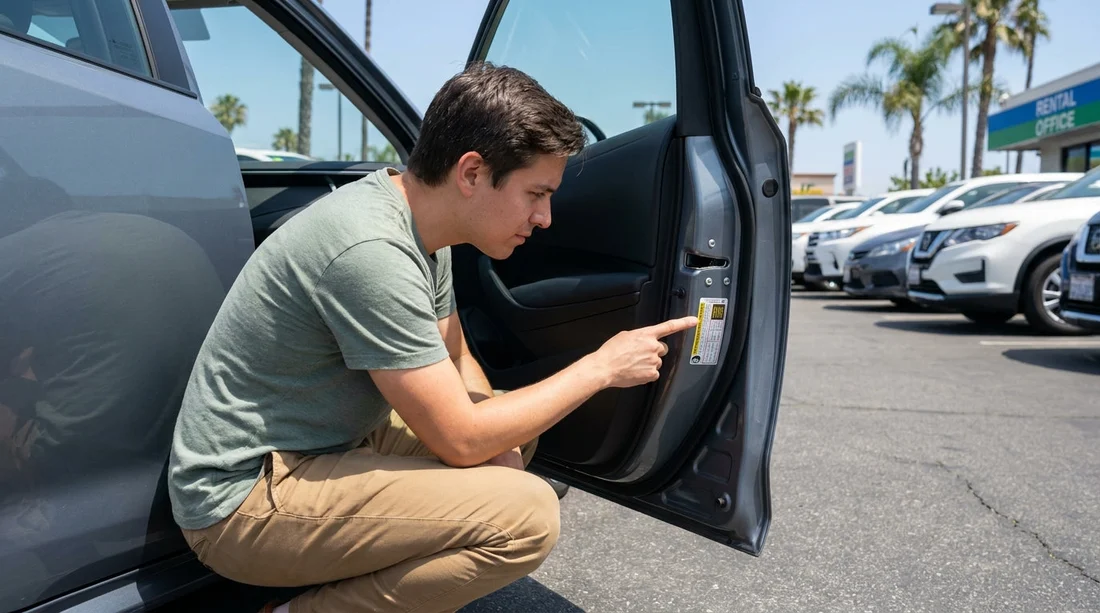
- Check the driver’s door jamb placard for the recommended PSI values.
- Measure tyre pressures cold before leaving the car park.
- Ignore the PSI on the tyre sidewall, it is a maximum.
- Ask staff for help if the placard is missing.
When you pick up a rental car in California, a quick confidence check before joining a fast freeway is to confirm the tyres are inflated to the manufacturer’s recommended pressure. In the US this is usually shown in PSI, and you can find it in a couple of standard places on almost every modern vehicle. The key is knowing what you are looking at, and what to ignore, because tyre sidewalls also show a pressure number that is not the right target for normal driving.
This guide explains where to find the correct PSI on a rental car, how to interpret the label, and what to do if you cannot locate it quickly. It is written for visitors and locals using car hire in California, whether you are leaving an airport lot or picking up from a city location.
1) The first place to look: the driver’s door jamb placard
On nearly all passenger vehicles sold in the United States, the recommended tyre pressures are printed on a placard, sometimes called a tyre information label. The most common location is on the driver’s side door jamb, on the edge of the door itself, or on the pillar that the door closes against. Open the driver’s door and look for a rectangular sticker with text such as “Tire and Loading Information”.
You will typically see the recommended cold tyre pressure for the front and rear tyres, shown in PSI (and sometimes kPa). Many cars list different front and rear values, while others list a single value for all four.
You may also see the tyre size as fitted from the factory, plus spare tyre information if applicable, and vehicle load information for heavier loads.
If you only have time to check one thing before driving off, check this label. It is the vehicle manufacturer’s recommendation for normal road use, and it is what you should aim for when setting pressures in a rental.
2) Other common places: fuel flap, glovebox manual, or a second door label
If you do not see a placard on the driver’s door jamb, look in these places next. Some vehicles place the label on the front passenger door jamb instead, and occasionally there is a sticker inside the fuel filler door.
The owner’s manual also lists the recommended tyre pressures. In rentals, the manual may be missing, replaced with a quick guide, or stored digitally on the infotainment screen, but it is still worth a glance if the sticker is not obvious.
If you are collecting at a busy airport and want to minimise delays, it helps to check the door jamb label while you are still parked in the bay. For instance, if you are arranging car hire in San Diego, you can do this check before joining the I-5 or I-8 traffic streams.
3) The number on the tyre sidewall is not the target PSI
Many drivers notice a PSI number on the tyre itself, for example “Max Pressure 51 PSI”. This is not the recommended driving pressure for your vehicle. It is the maximum inflation pressure for the tyre’s construction, and inflating to that value can make the ride harsh and reduce grip, especially on uneven surfaces.
Always prioritise the door jamb placard or the manual, because those figures account for the vehicle’s weight distribution, suspension tuning, and intended tyre size. When comparing numbers, it is normal for the placard to show a value well below the sidewall maximum.
4) “Cold” pressure matters, check before you drive
The label will usually specify “cold” tyre pressures. Cold does not mean the air is chilly, it means the tyres have not been driven on for a while and have not heated up from flexing.
Check the placard, then if you have access to a gauge, measure the tyres while the car is still parked. If you must drive to find an air pump, keep that trip short and re-check quickly. If tyres are warm, aim not to over-correct.
5) How to check PSI quickly and accurately
There are three common ways to check pressure before you leave. You can use a handheld gauge, check the car’s TPMS readout (as a cross-check), or use a nearby air station gauge if one is available.
If your trip starts from an airport outside California and then continues into the state, the same principles apply. For example, travellers collecting from Las Vegas Airport car rental before driving towards California should still use the door jamb placard and check pressures while tyres are cool.
6) If the placard is missing or unreadable
Rental fleets take wear and tear, and occasionally a label is scuffed, painted over, or missing after a repair. If you cannot find a readable tyre placard, check the owner’s manual first, including any digital manual section on the infotainment system.
If you still cannot confirm the recommended PSI for that specific vehicle and tyre size, ask the rental counter or lot attendant. At Alamo car rental at San Jose SJC, staff in the pickup area can often assist with basic vehicle questions before you depart.
Consider swapping vehicles if you cannot confidently verify tyre pressures before a long drive. It is a reasonable safety check.
7) A simple before-you-leave checklist
Use this quick routine at the bay, before you leave the rental car park. Open the driver’s door and read the tyre placard, then note the front and rear PSI. Walk around and visually inspect each tyre for obvious low inflation or damage. If you have a gauge, check each tyre and adjust if necessary.
This takes just a few minutes, but it reduces the chance of a warning light mid-journey or a handling surprise on the freeway. It is a sensible habit with any car hire vehicle, especially when you did not control the vehicle’s last service checks.
If you frequently pick up rentals in different cities, the label location is still consistent across most makes and models. For example, if you later arrange Chicago O’Hare car rental, you will almost always find the PSI on the same driver’s door jamb placard.
If you are planning an SUV-heavy trip elsewhere, the same label check applies before long drives. Compare options such as SUV hire in Atlanta (ATL), where verifying cold PSI at pickup can help avoid TPMS warnings later.
FAQ
Q: Where exactly is the tyre pressure sticker on most rental cars?
A: Most commonly on the driver’s door jamb, either on the door edge or the pillar. Look for “Tire and Loading Information”.
Q: Can I rely on the TPMS display instead of the door sticker?
A: TPMS is useful, but it may show pressures after driving and warming the tyres. Use the door jamb placard as the correct target, then use TPMS as a cross-check.
Q: The tyre sidewall says 50+ PSI, should I inflate to that?
A: No. The sidewall number is the tyre’s maximum pressure, not the recommended operating pressure. Follow the placard or the manual.
Q: What if one tyre is much lower than the others at pickup?
A: Check it with a gauge, inflate to the placard PSI if safe to do so, and tell the rental staff. A large drop can indicate a puncture or bead leak.
Q: Does California heat change what PSI I should set?
A: Set pressures to the placard’s cold PSI before driving. Pressures will rise naturally as tyres warm up, and you generally should not bleed air off when hot.




























































































