


Quick Summary:
- Pennsylvania requires car seats until age four, and boosters until age eight.
- Use your child’s height and weight to match seat limits.
- Confirm the rental can provide rear-facing, forward-facing, or booster seats.
- Practise installation, then inspect harness, labels, and expiry before driving.
Choosing the right child restraint is one of the most important parts of planning a car hire trip in Pennsylvania, especially if you are collecting at a busy airport counter and want to leave quickly. The state rules are age based, but safe selection is also about your child’s height, weight, and how the seat fits the vehicle. This guide summarises what to know so you can request the right option and avoid last minute surprises.
If you are arranging pickup around Philadelphia, it can help to review your vehicle and supplier details in advance, for example via car hire at Philadelphia Airport or a city location page such as car hire in Philadelphia. The key is to match the legal minimums and your child’s needs, then confirm availability and fit.
Pennsylvania’s core child-seat and booster requirements
Pennsylvania law sets clear minimum requirements for young passengers. In general, children must ride in an appropriate child passenger restraint system until their 4th birthday, and must ride in a booster seat until their 8th birthday. After that, a standard seat belt is permitted, provided it fits properly.
These are minimum legal thresholds, not necessarily the safest practice for every child. Many children will be better protected by staying in a harnessed seat or booster beyond the minimum, depending on their size. Treat the rules as the baseline for compliance, then use height and weight guidance to decide the best seat type for your journey.
Age is a starting point, size determines the right seat
When you are choosing a car hire child seat option, the most common mistake is using age alone. Seat labels and manuals list weight ranges, sometimes height ranges, and harness slot guidance. These numbers matter because a seat that is outgrown can fail to position the belt or harness correctly.
Before you travel, note down your child’s current weight and approximate height, plus what they ride in at home. If your child is close to the upper limit for their current seat, consider requesting the next stage up so you are not forced into an unsafe fit on the day.
Rear-facing seats are designed for infants and toddlers and have specific weight and height limits. Many children can safely remain rear-facing beyond age two if the seat allows it, which often provides better head and neck protection.
Forward-facing harnessed seats suit children who have outgrown rear-facing limits. Ensure the harness sits at the right shoulder height for the seat’s mode, and that you can tighten it so it passes the pinch test.
Booster seats are for children who are too big for a harness but too small for an adult belt. The booster’s job is to position the lap belt low on the hips and the shoulder belt across the centre of the chest, not cutting into the neck.
Seat belts are only a safe final step once the belt fits without slouching. Many children need a booster beyond age eight for a correct belt fit, even if the law allows a belt.
What to confirm before you reach the rental counter
Rental child seats are typically offered as optional extras, but availability and exact models can vary. Before you collect your keys, it helps to confirm what is actually being provided, and whether it matches your child’s stage.
Key questions to settle ahead of time include the seat type (rear-facing, forward-facing, or booster), whether the seat includes the base if required, and whether it can be installed with the car’s seat belt or lower anchors. If you are travelling with more than one child, confirm that multiple seats can fit across the back seat of the vehicle you selected.
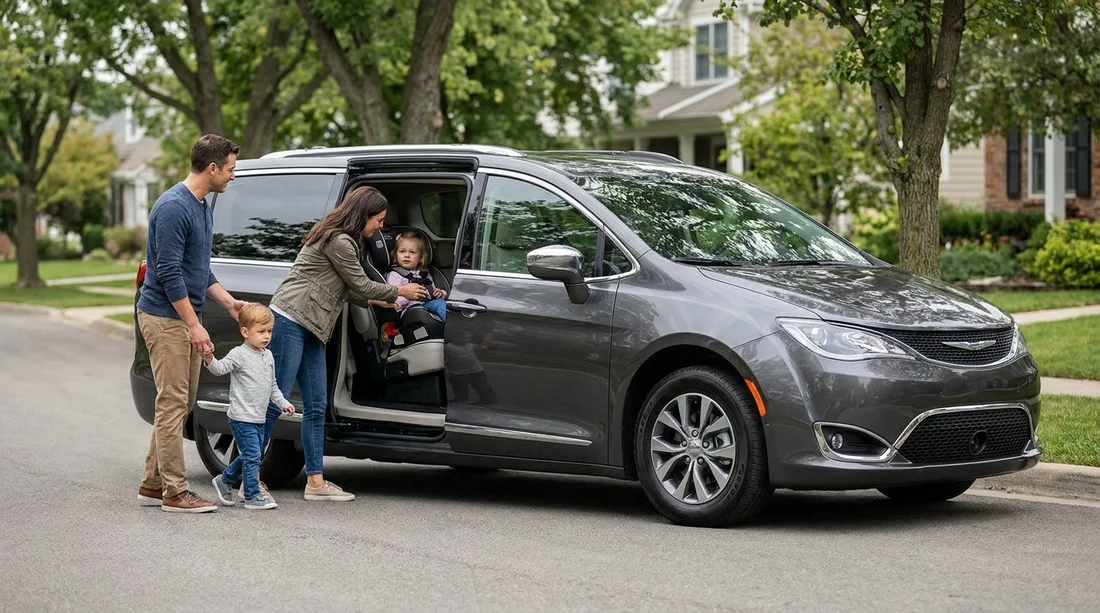
Vehicle choice matters for correct installation and day-to-day convenience. For families, sliding doors and a wider second row can make strapping children in much easier, which is why some travellers look at minivan hire in Philadelphia when planning longer trips with child seats and luggage.
Supplier policies and the range of child seat options can also differ, so it is useful to understand which company you are collecting from. If you are comparing providers, pages such as Avis car hire in Philadelphia or National car hire in Philadelphia can help you orient yourself before pickup, then you can verify the child-seat specifics in your booking details.
Installation basics that keep you legal and safer
Even the correct seat is only effective when installed properly. Plan a few extra minutes at pickup to check the seat, install it carefully, and adjust it for your child. If you are new to installing a seat with a seat belt, practise at home with your own seat, or review your seat’s manual beforehand if you are bringing one with you.
Get the angle right for rear-facing seats, especially for infants. A seat that is too upright can affect airway position.
Check tightness at the belt path. You should not be able to move the seat more than about an inch side-to-side or front-to-back at the point where the belt runs through.
Use either the seat belt or lower anchors, as allowed by the seat and vehicle, but do not double up unless the manufacturer explicitly permits it.
Position the chest clip correctly, typically at armpit level, and tighten the harness so it is snug, with no slack you can pinch.
For boosters, ensure the shoulder belt routes through the correct guide and retracts freely, and the lap belt stays low on the hips.
Inspecting a rental child seat: what to look for
Because rental seats have been used by many families, do a quick but careful check before you drive away. Look for a readable label showing the model and date of manufacture, and check that no parts are cracked, missing, or obviously damaged. Straps should not be frayed, twisted, or stiff with grime, and the buckle should click securely.
If the seat looks heavily worn, cannot be adjusted smoothly, or lacks key information, request a different seat. Also confirm that the seat has not passed any expiry date listed on the label, and that it includes all necessary parts for the mode you need, such as an infant insert or booster belt guide if applicable.
FAQ
What are the minimum child-seat and booster rules in Pennsylvania? Children must use an approved child passenger restraint system until age 4, and must use a booster seat until age 8. After age 8, a seat belt may be used if it fits correctly.
Is age enough to choose the right restraint for car hire? No. Age is the legal baseline, but you should choose based on your child’s height and weight and the seat’s stated limits. Many children need a booster beyond age eight for safe belt fit.
Can I rely on a rental child seat fitting my child and the vehicle? Not automatically. Seat models vary, and some fit better in certain vehicles than others. Confirm the seat type in advance, then check labels, parts, and fit at pickup before you drive.
What quick checks should I do on a hired child seat? Check the seat is not expired, has no cracks or missing parts, and the harness and buckle work smoothly. Install it tightly at the belt path and adjust the harness or belt routing to your child.
Should I bring my own seat instead of hiring one? If you want predictable fit and you know how to install it, bringing your own can be reassuring. Hiring can be convenient, but plan time to inspect and install properly, and request another seat if it seems unsuitable.




























































































