


Quick Summary:
- Bring your confirmation and compare included LDW and SLI line by line.
- Ask for an itemised quote showing daily prices, totals, and exclusions.
- Decline duplicates by naming your existing cover and matching limits precisely.
- Add extras only when they reduce excess or fill a clear gap.
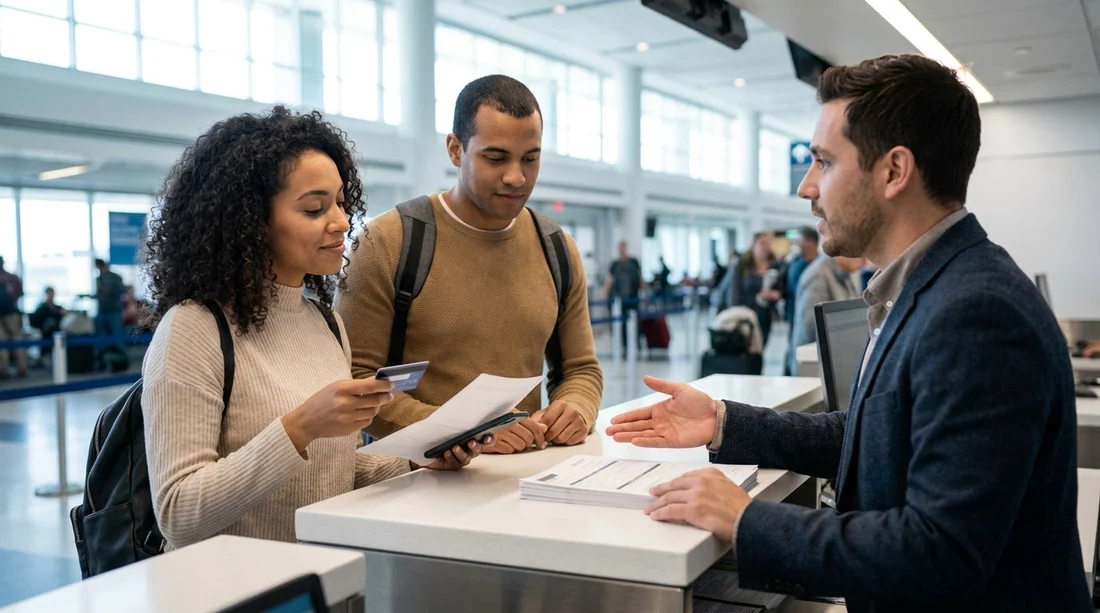
Collecting car hire in New York can feel rushed, especially at busy airport counters where queues move quickly and questions come fast. Insurance is where many travellers accidentally pay twice, not because they want more cover, but because the terminology at the desk does not match what they booked online. The simplest way to avoid duplicate upsells is to treat the pickup conversation like a comparison exercise: confirm what is already in your reservation, map it to what the agent is offering, then ask for an itemised quote before you agree to anything.
In New York, pickups may happen at JFK or across the river at Newark. The practical steps are the same whether you are collecting via Budget car rental New York JFK or arranging a collection near Newark Airport (EWR). The goal is to leave the counter with the cover you intended, and only pay more when you can state exactly what the extra product changes.
1) Start with your reservation, not the counter script
Before you reach the desk, open your booking confirmation and find the sections that list inclusions and exclusions. Look for insurance or protection products and how they are described. Common labels you may see include LDW (loss damage waiver), CDW (collision damage waiver), SLI (supplemental liability insurance), TP (theft protection) and glass, tyres, or roadside cover.
The key is to remember that the counter agent may use different names for the same thing. For example, one system might say LDW while the desk calls it “damage waiver”, and SLI might be presented as “liability cover” or “additional liability”. If you do not anchor the discussion to your confirmation, it is easy to hear a familiar word and assume you are missing it.
If your pickup is at JFK with a brand desk such as Alamo car hire New York JFK, the agent may have a standard flow that bundles multiple items into a single “protection package”. Your job is to slow it down and separate the package into components you can compare against your existing cover.
2) Translate what you booked into what the desk is selling
To avoid duplicates, you need a clean comparison between “already included” and “newly offered”. Use this quick translation method.
LDW/CDW: Usually relates to damage to the rental car and can include theft. The important detail is not the name, it is the excess (deductible) you would pay if the car is damaged or stolen, plus what is excluded (for example, tyres, glass, underbody, roof).
SLI/liability: Relates to claims from third parties, such as injury or property damage. The key detail is the limit. In the US, base liability may be low, so SLI is often a genuine upgrade, but it is also often already included in certain prepaid deals. Never assume either way, confirm the amount shown on your paperwork.
PAI/PEC: Personal accident and effects cover. This does not replace LDW or SLI, it covers medical payments or belongings. Many travellers already have this via travel insurance, which can make it unnecessary.
Roadside assistance: Covers call-outs such as lockouts, flat tyres, or jump starts. Your rental may already include basic breakdown help, while the upsell adds convenience items that can be charged per incident otherwise.
Once you have these categories in mind, you can ask targeted questions that make it hard for duplication to hide inside a bundle.
3) Ask for an itemised quote before agreeing
The most effective sentence at the counter is a calm request for detail: “Can you print or show an itemised quote with each optional product and its daily price?” This forces a pause and moves the conversation from persuasion to numbers.
When you receive the itemised quote, look for daily rates and totals, what changes compared with your booking, bundled packages, and which items are optional versus required. If something is described as required, ask required by whom, and for what reason, and request the relevant wording in the rental terms.
This step matters whether you are picking up at JFK or using a New Jersey location and driving into the city, for example via car rental New Jersey EWR. The counter environment may differ, but the maths does not.
4) Use precise wording to decline duplicates
Vague refusals can invite more pressure, because the agent may assume you do not understand the risk. Instead, decline by naming what you already have, and what you are not changing.
Useful phrasing: if you already booked LDW, ask what the excess is on yours versus theirs, and keep yours if it does not improve. If you already booked SLI, ask whether the option increases your limit, and decline it if it does not. If they offer a package, ask them to remove the bundle and add only the single item that changes your cover.
5) Know the common “double pay” traps at New York pickups
Duplicate insurance upsells often happen through a few predictable patterns. “Full coverage” is not a defined product, so ask whether they mean a lower excess, broader exclusions covered, or higher liability limits. Keep liability and damage waiver separate, and do not let deposit size push you into buying something without seeing what changes on paper. If offered roadside assistance, ask what incidents are charged without the optional cover, and at what rates, so you can decide based on your driving plan.
6) Decide what is worth adding, based on a documented gap
Avoiding duplicates does not mean refusing everything. It means adding only what clearly improves your position. Consider paying more only if the added product reduces your excess, covers exclusions you are worried about, or meaningfully increases your liability limit, and ensure any change is written on the contract.
If you are choosing a larger vehicle, bear in mind that pricing and risk perception can change. For example, at JFK options such as SUV hire New York JFK may come with different deposit levels or damage waiver terms. The same approach still applies: compare your booked terms, request itemisation, then accept only what changes the written cover.
7) Do a final contract check before you sign
Before you sign the rental agreement, scan the add-ons section and ensure it matches your decision. Look for line items that resemble what you declined, and confirm any agreed changes like a lower excess or higher liability limit are actually shown.
If something appears that you did not agree to, ask for it to be removed and the total recalculated. Stay calm, stick to the itemised list, and keep your focus on duplicates and documented gaps. This last check is where many accidental extras can be caught, because the contract is the final source of truth.
FAQ
Is it normal to be offered extra insurance when collecting car hire in New York?
Yes. Many US rental counters routinely offer additional protection products, even when you already have LDW or SLI included, so it pays to compare line by line.
What should I ask for to avoid paying twice?
Ask for an itemised quote that lists each optional product, its daily cost, and the total. Then match each item to what your booking confirmation already includes.
How do I tell if LDW at the counter duplicates my booking?
Compare the excess amount and exclusions. If the excess and covered damage areas are not improved, the counter LDW is effectively a duplicate of what you booked.
What if the agent says I must buy their insurance?
Ask what is required by the rental terms for your rate, and request it in writing on the agreement. Often, the extras are optional, and clarity comes from itemised paperwork.
Does a bigger deposit mean I should buy extra cover?
Not necessarily. A deposit reflects the rate rules and risk policies. Decide based on whether an added product meaningfully reduces your excess or increases liability limits.




























































































