


Quick Summary:
- Many New York parkways prohibit vans and commercial-plated vehicles entirely.
- SUVs are usually allowed, but height, weight, and signage still matter.
- In sat-nav, avoid “parkway” routes and enable truck-avoidance options where available.
- Use interstates and state routes as detours to avoid low bridges.
If you are planning New York car hire for airport pick-up and city exploring, parkways can be a surprise. In and around New York City, “parkway” often means a scenic, passenger-car focused road with low bridges and strict vehicle rules. Some parkways ban all trucks and many ban vehicles that look or are registered as “commercial”, even if you rented them for personal travel. The result can be stressful reroutes, low-clearance scares, or tickets.
This guide explains what is usually restricted, how to recognise whether your rental counts as a “commercial” vehicle, how to spot prohibited routes in common sat-nav apps, and which alternative highways to choose so your trip stays smooth.
What makes New York parkways different?
New York has a mix of interstates, expressways, and parkways. Interstates and most expressways are designed for a full range of vehicles, including trucks, and have higher clearances. Parkways, especially those on Long Island and in the NYC metro area, were designed primarily for passenger cars. They often have:
- Low bridges and tight clearances.
- Prohibitions on trucks, trailers, and many commercial vehicles.
- Frequent on-ramps, short merges, and park-style access limitations.
That is why a sat-nav route that looks “faster” can be the wrong choice for a larger vehicle. The words on the sign matter: if it says “NO COMMERCIAL VEHICLES” or “NO TRUCKS”, it applies even if you are driving a rental for a family holiday.
Are SUVs restricted on parkways?
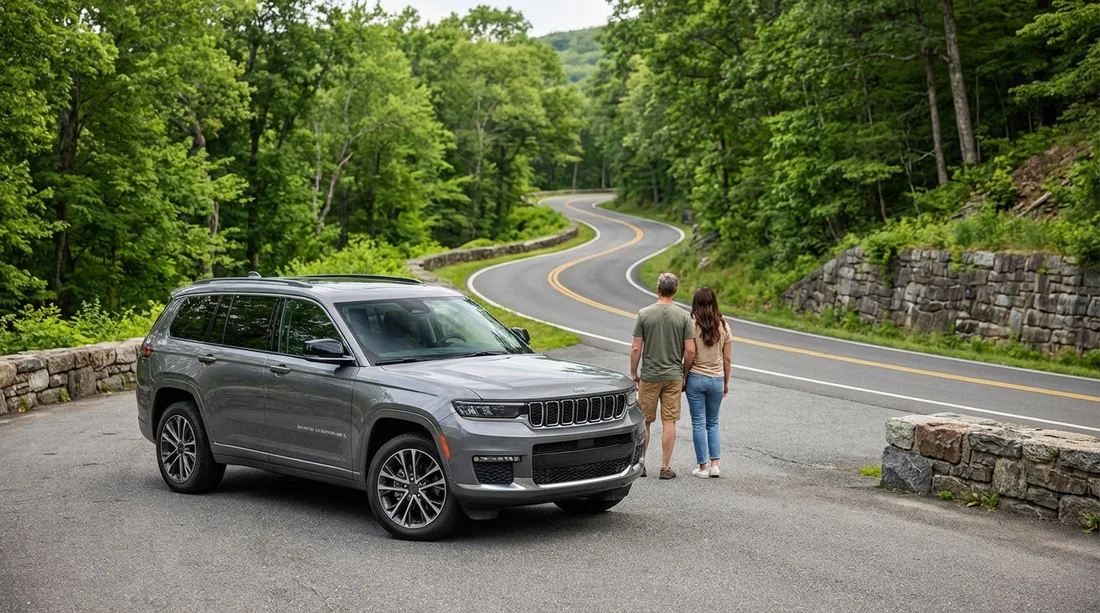
Most standard SUVs rented for personal use are generally permitted on many New York parkways, because they are treated as passenger vehicles. The catch is that “SUV” covers a wide range of sizes. A typical mid-size SUV is rarely the issue, but you still need to consider:
1) Clearance. Parkways can have bridges posted around 7 to 10 feet in places. Most SUVs are below that, but roof boxes, bike racks, or tall aftermarket accessories can change things. If your SUV has any added height, do not assume it will clear every bridge.
2) Vehicle classification. Some larger SUV-based models, or vehicles registered as commercial, can fall under restrictions even if they look like a passenger car.
3) Local signage rules. Restrictions vary by parkway. Some are explicitly “passenger cars only”. Others say “no trucks” but allow SUVs and non-commercial pickups below a certain weight.
Practical rule: if you are in a normal SUV with standard plates and no commercial markings, you are typically fine, but you should still avoid any route your app flags as a “parkway” when you are unsure of clearances.
Are vans and minivans restricted?
This is where most confusion happens with car hire in New York. The word “van” can mean a family minivan or a cargo van. Parkways often treat these very differently.
Minivans (like a typical family 7-seater with side windows and rear seats) are often permitted where passenger vehicles are allowed, because they are built and registered as passenger vehicles. Even so, always watch signage, since a parkway might ban all vehicles above certain dimensions.
Cargo vans (panel vans, many 12-passenger vans, and vehicles with minimal rear windows) are frequently restricted, especially on Long Island parkways and certain NYC approaches, because they are commonly classed as commercial vehicles. Some parkways prohibit commercial plates outright, regardless of whether the vehicle is used privately.
Passenger vans (larger 12 or 15-seat vans) can be restricted due to size and classification. Even if not explicitly banned, low bridges can create an immediate safety issue.
If you are collecting at an airport, the vehicle type you select matters. For context on options around arrivals, see car hire at New York JFK and, if you are travelling as a group, van hire at New York JFK.
Why “commercial vehicle” rules can catch renters out
Parkway signs often mention “commercial vehicles” rather than “rental vehicles”. Rental companies may register certain vans, large SUVs, or people carriers in a way that can be interpreted as commercial, especially if they have commercial plates. The police and parkway authorities enforce the signage, not your travel purpose.
Before you set off, take 30 seconds to check:
- Plates: commercial plates can trigger bans on some parkways.
- Body style: panel van silhouettes are commonly targeted.
- Any markings: even small “rental” stickers do not exempt you, but they can attract attention.
If you realise you have a commercial-plated van and your route crosses a parkway, plan a highway alternative immediately.
Which New York parkways are most likely to restrict vans?
Restrictions change, so treat this as a planning guide and rely on posted signs in real time. In general, the highest-risk areas for bans and low bridges are the classic NYC and Long Island parkways. Drivers regularly get caught on routes such as those connecting Queens, Brooklyn, and Nassau County, where parkways are common “shortcuts” suggested by apps.
Also, bridges and parkway segments near beaches and parks often have particularly low clearances. If you are in any van or tall vehicle, avoid parkways by default unless you have confirmed the rules for that specific road.
How to spot parkway restrictions in sat-nav and map apps
Most tickets and low-bridge scares happen because an app suggests a parkway as the quickest route. Here is how to reduce the risk.
Step 1: Treat “Parkway” as a warning word
When reviewing routes, scan the turn-by-turn list for the word “Parkway”, not just “I-” or “US-”. If you see parkways, assume restrictions may apply and look for an alternative route that stays on interstates or major expressways.
Step 2: Use vehicle settings where available
Some sat-nav systems allow you to enter vehicle type, height, or “avoid restricted roads”. If you are in a van, entering the vehicle as a larger class may steer you away from parkways and low bridges. If your app does not support height, you can still:
- Enable “avoid tolls” only if it does not push you onto parkways.
- Avoid “shortest route” modes that use smaller roads.
- Prefer “highways” or “motorways” options for safer clearances.
Be careful with “avoid highways”. In New York, avoiding highways can force you onto exactly the kind of parkways you should not use in a van.
Step 3: Cross-check the route name before you commit
If the app is pulling you onto a parkway and you are unsure, pull over safely and search the route alternatives within the app until you see one dominated by I-95, I-295, I-495, I-278, or other major numbered roads. Interstates are not guaranteed to be perfect, but they are far more compatible with vans and larger vehicles.
If you are arriving via New Jersey, routes from Newark often tempt drivers onto NYC-area parkways once they cross into Queens or Brooklyn. Planning from the start helps, and you can compare pick-up points and routes via car hire at Newark EWR.
Detours that usually keep you off restricted parkways
The safest detours are typically based on interstates and major expressways. Your exact choice depends on your origin and destination, but these principles work well:
Use interstates for cross-city movement. If you are travelling between boroughs, start by looking for I-278, I-495, I-95, or I-295 based routes. They are designed for a wider range of vehicles than classic parkways.
Choose bridges and tunnels signed for trucks. When you are near a crossing, follow signs that indicate truck routes and avoid any approach that funnels onto a parkway. If a ramp sign mentions parkway access, take the next suitable alternative.
Prefer “Expressway” over “Parkway”. In NYC, “expressway” routes are generally the safer bet for vans and tall vehicles. A few expressways still have complex signage, so keep your speed down and read advance signs early.
When heading to Long Island, think interstate first. Many drivers heading east get pushed onto parkways with low bridges. An interstate-led route may look longer on the map but can be smoother and safer.
If you are renting a larger people carrier for a family trip, compare minivan-specific options and think about your likely routes before you pick up the keys. For arrivals from New Jersey, see minivan hire near Newark EWR.
What happens if you accidentally enter a restricted parkway?
If you find yourself on a parkway with restriction signs you do not meet, do not panic or stop in a live lane. Do this instead:
- Stay calm, maintain a safe speed, and avoid sudden lane changes.
- Take the next exit that is safe and legal, even if it delays you.
- Do not attempt to “chance” a low bridge, clearances can be unforgiving.
If you see a low clearance sign and you are unsure you fit, assume you do not. Find an exit before the bridge if possible. A detour is inconvenient, but a roof strike can be dangerous and costly.
Tips when choosing a vehicle for New York driving
For New York car hire, your best choice depends on where you will drive:
Mostly Manhattan and short trips: a standard car or compact SUV is easier to park and usually parkway-compatible.
Family travel with luggage: a minivan can be comfortable, but still avoid parkways if unsure about restrictions on your specific route.
Moving, work, or lots of cargo: cargo vans are the most likely to be restricted on parkways. Plan interstate routes and expect longer drive times to stay compliant.
If you are comparing suppliers and pick-up logistics, information pages like Alamo car hire at New York JFK can help you understand what you are collecting and where, so you can plan a compliant route immediately.
Key takeaways for avoiding tickets and low bridges
Parkway rules in New York are not just technicalities. They are actively enforced, and the physical design of parkways makes mistakes expensive. Keep it simple: if you are in an SUV, you are usually fine but still read signs. If you are in any kind of van, especially a cargo van or large passenger van, avoid parkways unless you have confirmed the rules for that specific road and you know your vehicle height.
Finally, remember that sat-nav is a suggestion, not permission. The sign on the road is what counts, and in New York, that sign often appears right before a low bridge or a restricted entrance.
FAQ
Can I drive a rented SUV on New York parkways? Often yes, because most SUVs are treated as passenger vehicles. Still watch for “passenger cars only” signs, and avoid parkways if you are unsure about clearance or classification.
Are minivans allowed on Long Island parkways? Many minivans are allowed, but rules vary by parkway and signage. If a sign bans commercial vehicles, you should also confirm your minivan is not commercial-plated.
Why does my map app route me onto a parkway if it is restricted? Consumer map apps optimise for time and may not model commercial bans or low clearances well. Always cross-check for the word “parkway” and follow posted restrictions.
What is the safest way to avoid low bridges in New York? Prefer interstate and expressway routes, and avoid any road labelled “parkway” when driving a van or tall vehicle. If your sat-nav supports vehicle settings, enter your vehicle type and height.
What should I do if I accidentally enter a restricted parkway? Continue safely to the next suitable exit, then reroute onto major highways. Do not stop on the shoulder unless it is an emergency, and never attempt a low bridge if you are unsure of clearance.




























































































