


Quick Summary:
- LDW usually covers body damage, not stains, burns, or odours.
- Interior rips, missing accessories, and smoke damage are typically excluded.
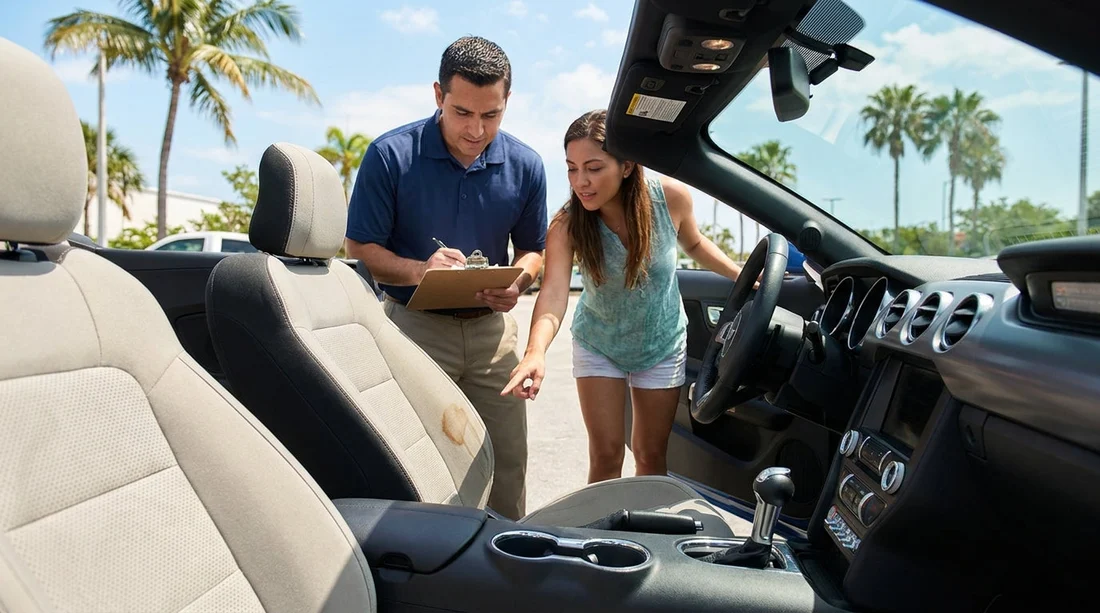
- Inspect, photograph, and get pre-existing cabin marks recorded before leaving.
- Ask about interior protection, cleaning fees, and deposit rules at pickup.
When arranging car hire in Miami, many renters assume Loss Damage Waiver (LDW) works like comprehensive insurance for everything that could go wrong with the vehicle. In reality, LDW is usually focused on accidental damage to the rental car’s exterior bodywork and theft related losses, subject to the agreement’s exclusions. Interior issues, especially upholstery stains, spills, burns, odours, and tears, are often treated differently.
This matters most at pick-up because you are agreeing to take responsibility for the vehicle’s condition from that moment onwards. If the cabin already has marks, or if you are travelling with children, beach gear, or takeaways, you can be exposed to cleaning or repair charges that LDW does not reduce. The best approach is to understand what is typically excluded and to document the car properly before you drive off.
What LDW generally does and does not cover
LDW is commonly described as a waiver that limits what you pay if the rental car is damaged or stolen, provided you follow the rental terms. It is not always an insurance policy, and the details vary by provider and location. However, across many rental agreements, LDW tends to apply to collision or theft related damage to the vehicle’s body panels, bumpers, lights, glass, and similar exterior components.
Interior damage and stains are frequently outside LDW because they are treated as cleaning, wear, misuse, or negligence issues rather than accidental collision damage. Even where interior repairs are not explicitly excluded, many agreements carve out specific cabin related events such as cigarette burns, pet damage, water saturation, or biohazard contamination.
If you are collecting from a city location, you can review local guidance for pick-up expectations and typical checks at car hire in Downtown Miami. Procedures vary, but the principle is consistent, you should verify condition before accepting the car.
Does LDW cover upholstery stains before pick-up?
Usually, no. Upholstery stains before you pick up the car are not something LDW would address because LDW is designed for damage that happens during your rental period, not for pre-existing condition. If a seat already has a stain, you need it recorded on the check-out report or the vehicle condition form. Otherwise, the stain could be attributed to your rental, and you may face cleaning fees or repair charges on return.
Even when a stain occurs during your rental, LDW still often will not cover it because the charge is categorised as detailing, shampooing, odour removal, or replacement of interior trim. In Miami, sand, sun cream, and drinks can quickly create problems that look minor but require professional cleaning. The charge is typically based on the supplier’s cleaning schedule, not on what the stain looks like to the naked eye.
For beach heavy itineraries, it is worth understanding the practical differences between pick-up spots, for example car rental in Miami Beach can see more sand related issues, so interior inspections may be more detail oriented.
Common cabin exclusions that surprise renters
When people ask whether LDW covers interior damage, the answer often depends on how the damage is classified. Here are common exclusions that can apply even when you have LDW:
Stains and spills: Coffee, soft drinks, sun cream, makeup, and food grease can trigger cleaning fees. If liquid soaks into foam, the supplier may charge for deep extraction or for replacing seat covers.
Burns and smoke odours: Cigarette burns, vaping residue, and smoke smell are frequently charged as “smoke damage”. This can include ozone treatment, interior replacement, and downtime.
Tears, cuts, and punctures: Rips in upholstery, headliner damage, and torn door panels can be treated as misuse rather than an accident.
Pet hair and allergens: Some companies prohibit pets without prior approval, and even when allowed, hair and odour can lead to special cleaning charges.
Missing interior items: Floor mats, parcel shelves, boot covers, child seat parts, charging cables, and removable cargo nets may be billed separately if missing.
These rules can apply regardless of whether you collect a compact car or a larger vehicle. If you are considering a people carrier for family travel, review capacity needs first and then read the condition responsibilities carefully, for example at van hire in Florida.
How to avoid interior damage disputes at the counter
Because pre-existing stains are a documentation issue, not an LDW issue, your best protection is a consistent inspection routine. Build an extra 10 minutes into your pick-up time, especially if you are arriving after a long flight or collecting in busy periods.
1) Inspect the cabin before you sign off. Check seats, headrests, armrests, door cards, carpets, floor mats, boot area, and the headliner. Look for stains, tears, burn marks, and strong odours.
2) Take timestamped photos and short videos. Photograph every row of seating, the boot, and any damage close up and wide angle. Capture the mileage and fuel gauge too, so your files show the same moment in time.
3) Get everything written on the check-out report. If staff say “it’s fine”, ask for the condition to be noted anyway. A written record is what matters later.
4) Ask what counts as “excessive dirt”. Miami trips can mean wet towels and sand. Clarify whether a normal vacuum is expected, and what triggers a special cleaning fee.
5) Understand the deposit and claim process. If the supplier places a hold, ask how long it stays pending if there is a cleaning allegation. Knowing the timeline helps you spot issues quickly.
If you prefer to collect outside the busiest core areas, compare operational styles between branches, including Payless car hire in Doral, as processes for documenting condition can feel more or less formal depending on location and staffing.
Choosing cover that matches real interior risks
LDW can still be valuable for collision risks, but it will not necessarily solve the most common family travel problem, the interior mess. If you are worried about cabin damage, consider these practical steps alongside LDW:
Check for an interior protection option. Some suppliers offer an additional product that covers cleaning or minor interior damage. If offered, ask for the exclusions in writing, especially around stains, smoke, and pets.
Use your own preventative kit. A small towel, a rubbish bag, wet wipes, and a seat cover for child seats can reduce the chance of a chargeable stain. Keep sand outside by shaking towels and using a soft brush before getting in.
Plan for return time. If you have been to the beach, allow time to vacuum quickly before drop-off. A few minutes can be the difference between “acceptable” and “chargeable”.
Be realistic about incidents. If something happens, report it promptly. Undisclosed interior damage can escalate costs because it may be treated as a breach of terms.
Finally, remember that “before pick-up” is mainly about making sure you do not inherit someone else’s damage. Once you have clear photos and the check-out report reflects the cabin condition, you can make an informed decision about whether the vehicle is suitable for your trip.
FAQ
Does LDW cover interior stains on a rental car in Miami? Typically no. LDW usually focuses on collision damage and theft related loss, while stains are often treated as cleaning or misuse and billed separately.
If the car already has a stain at pick-up, what should I do? Photograph it clearly and ask staff to record it on the check-out condition report before you leave. Pre-existing marks need to be documented so they are not attributed to your rental.
Are burns, smoke smell, or vaping residue covered by LDW? Usually not. Smoke related issues are commonly excluded and can involve deep cleaning, ozone treatment, or replacing interior parts, with charges based on the supplier’s policy.
What interior damage is renters most often charged for? Common charges involve seat stains, sand and wet carpet, torn upholstery, damaged trim, and missing items like floor mats or parcel shelves. Fees may include cleaning and vehicle downtime.
How can I reduce the risk of interior cleaning fees during my trip? Keep food and drinks controlled, shake off sand before entering, use towels or seat covers, dispose of rubbish daily, and allow time to tidy and vacuum before returning the car.




























































































