


Quick Summary:
- Allow 45 to 75 minutes from gate to car hire counter.
- Add 15 to 30 minutes for checked bags, especially evenings.
- Shuttle travel and waiting typically take 10 to 25 minutes.
- Peak periods can push counter queues to 30 to 60 minutes.
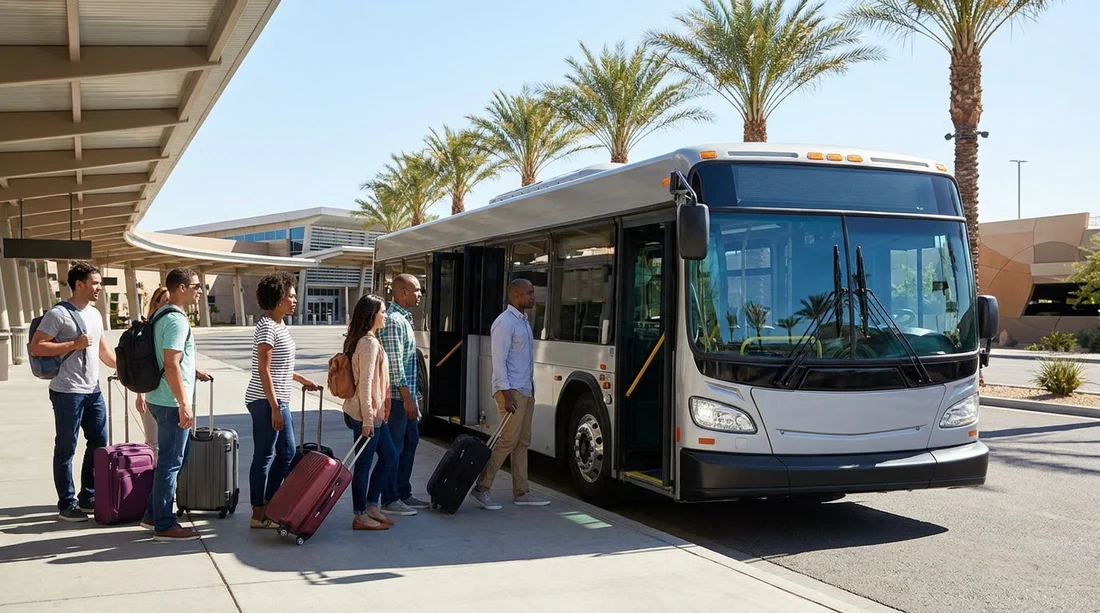
Las Vegas looks compact on a map, but Harry Reid International Airport (LAS) has a few time traps between landing and driving away. The most common mistake is assuming the rental car centre is “right outside” the terminal. In reality, most travellers will walk through the terminal, collect luggage, queue for a shuttle, ride to the off-site facility, then queue again to collect keys or complete paperwork.
This guide sets realistic timings, so you can plan your first hour in Las Vegas without stress. It focuses on what actually adds minutes, walking distances, shuttle frequency, peak-hour queues, and the extra steps that can catch out first-time visitors.
Typical timelines from landing to car hire pick-up
The time you should allow depends on three things: whether you have checked luggage, the time of day, and how quickly your party can move through the airport. As a planning baseline, most travellers should budget 45 to 75 minutes from the moment the aircraft reaches the gate to the moment they reach the rental counter area. That assumes normal queue conditions and a fairly direct route.
Best case (carry-on only, light queues): 30 to 45 minutes. You deplane quickly, head straight out, and catch the next shuttle with minimal waiting.
Typical case (carry-on or one checked bag, average queues): 45 to 75 minutes. This is the most common experience, especially midday.
Busy case (checked bags, peak arrivals, long queues): 75 to 120 minutes. Evening arrival waves, holidays, and major events can stretch everything.
If you are comparing providers and locations, it helps to start with an overview of LAS pick-up basics on Hola Car Rentals. The airport-specific page at car hire at LAS summarises the general process and what to expect when you arrive.
Step-by-step: where the minutes go
Breaking the journey into steps is the easiest way to set a realistic schedule, particularly if you are meeting friends, collecting a child seat, or planning a timed activity after landing.
1) Deplaning and walking to exits (5 to 15 minutes)
Even after the plane parks, it can take a while to get off. Sitting near the back adds time. After that, you may have a long walk through the concourse, plus escalators or lifts, depending on your gate.
2) Baggage claim (0 to 35 minutes)
Carry-on only can save the most time. If you have checked bags, 15 to 35 minutes is a realistic planning window, with occasional longer waits during heavy arrival banks. A good rule is to add at least 20 minutes if you are checking bags, and add more if you land in the evening.
3) Finding the car rental shuttle area (5 to 10 minutes)
Even when you know where you are going, it takes time to follow signs, cross the terminal areas, and gather your party. If you need toilets, cashpoints, or a quick snack, add another 5 to 10 minutes.
4) Waiting for the shuttle (5 to 15 minutes)
Shuttles run frequently, but the wait is variable. If two flights unload at once, you might watch one shuttle depart full. At quieter times you may step straight on.
5) Shuttle ride to the rental car centre (5 to 10 minutes)
The ride itself is not long, but traffic and loading can add minutes. If your group has lots of luggage, boarding and securing bags can slow down the departure.
6) Counter, kiosk, and vehicle pick-up process (10 to 60 minutes)
This is where timings can swing dramatically. Some travellers complete the process quickly via kiosks, while others face long queues, especially around late afternoon and evening. If you need to add a second driver, a young driver surcharge, or specific cover options, allow extra time at the desk.
For a broader Las Vegas overview, including general pick-up expectations and local driving notes, see car rental in Las Vegas (LAS).
Peak-hour reality in Las Vegas
Las Vegas is a high-volume airport with pronounced busy windows, and queues are not evenly spread. If you land during a peak arrival period, it is sensible to plan for the “busy case” timeline even if you have only carry-on luggage.
Common busy periods: late afternoon into evening, Friday arrivals, Sunday returns, school holidays, and dates tied to major conventions, concerts, and sports weekends. Even if the shuttle wait is short, counter lines can be the main delay.
What to do with this information: if you have dinner plans, show tickets, or a long drive out to the desert, add buffer time. In practical terms, aiming to have your vehicle within 90 minutes of landing is a safer target on busy days.
Choosing the right buffer for your itinerary
Your ideal buffer depends on what happens next. A short hotel transfer on the Strip is different from driving straight to a national park or meeting someone on a tight schedule.
If you are driving to the Strip: allow 60 to 90 minutes from landing to keys in hand, plus traffic and hotel check-in time. The Strip can be slow at peak times, so the “last mile” can take longer than expected.
If you are heading out of town: plan 90 to 120 minutes to account for queues, a quick vehicle check, and setting up navigation. Many visitors underestimate the time needed to load luggage, connect phones, and orientate before joining traffic.
If you are travelling with children or a large group: add 15 to 30 minutes. Child seats, regrouping after baggage claim, and bathroom stops make the process slower. If you are considering a larger vehicle for bags and passengers, minivan hire in Las Vegas can be helpful for planning space and practicality.
Queue-proofing tips that genuinely save time
Some delays are out of your control, but a few preparation steps can reduce the chance of being stuck at the counter.
Have your documents ready before you join a line. Keep driving licences, payment card, and reservation details accessible. Searching through bags at the desk is a common time-waster, especially after a long flight.
Know who is driving. If you need an additional driver, be prepared for them to be present and show their documents. Adding drivers at the counter can add minutes when lines are already long.
Plan for fuel and navigation. Even after you receive keys, you will want a few minutes to set mirrors, connect your phone, and confirm your route. Build this into your schedule, so you are not rushing out of the facility.
If you are comparing providers, reviewing the main Nevada LAS page at car rental in Nevada (LAS) can help you understand how options fit your trip.
How specific suppliers can affect your timing
Different suppliers can have different desk layouts, queue patterns, and processes. On some days the fastest line is simply the one with fewer people at that moment. Still, it can be useful to know where to check details in advance, especially if you prefer a particular company.
For example, if you are considering Avis, Hola Car Rentals provides a dedicated page at Avis car rental at LAS. Reviewing supplier-specific information ahead of time can reduce decision-making at the counter, which helps when you are tired or arriving during a busy window.
FAQ
How long does it take to get from LAS terminal to the rental car centre? Typically 15 to 35 minutes once you are ready to leave the terminal. That includes walking to the shuttle, waiting, and the shuttle ride itself.
Is the rental car pick-up at LAS on-site or off-site? It is generally off-site at a dedicated rental car centre reached by shuttle. This is why budgeting time for shuttle waiting and boarding is important.
What time should I allow if I have checked luggage? Add around 20 to 35 minutes compared with carry-on only. The variability comes from baggage belt timing and how busy the arrival hall is.
When are the queues worst for car hire pick-up at LAS? Late afternoon into evening, weekends, holiday periods, and major Las Vegas event dates often bring longer counter lines and fuller shuttles.
If I land late at night, can I still face delays? Yes. While traffic may be lighter, late arrivals can bunch together, creating short but noticeable queue spikes at the counter and at the shuttle bay.

























































































