Quick Summary:
- You can bring your own child seat for Florida car hire.
- Check the seat has a US FMVSS 213 compliance label.
- Practise installing with seat belt or LATCH before travelling.
- Allow extra time at pick up to fit it carefully.
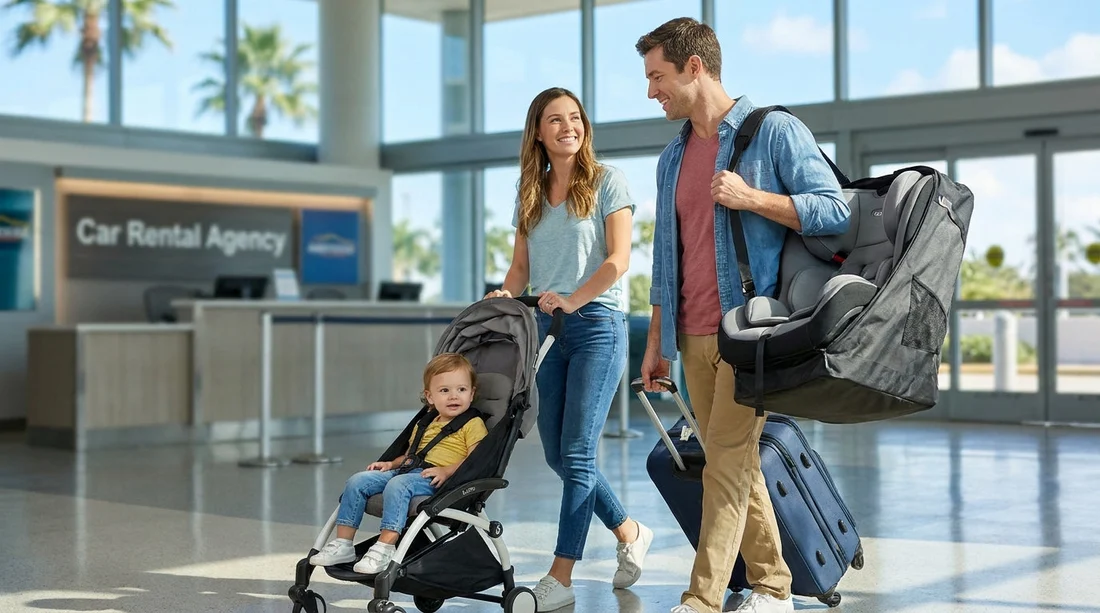
Bringing your own child seat instead of hiring one for a rental car in Florida is usually allowed, and for many families it is the simplest way to keep routines consistent and ensure you know the seat’s history. The key is to balance convenience against luggage and travel logistics, then confirm the seat is compliant for US use and can be fitted safely in the specific vehicle you collect.
Because Florida trips often involve airport arrivals, long drives, and multiple passengers, a child seat choice can affect your whole pick up experience. If you are collecting at Miami Airport (MIA) or heading straight out of Orlando, you will want the seat ready to install, rather than discovering missing parts or an incompatible belt system at the kerb.
When bringing your own seat makes sense
Bringing your own seat is most useful when you want predictability. You already know how tight the harness should be, whether your child is comfortable, and how the recline works. This is especially valuable for infants and younger toddlers who are more sensitive to unfamiliar gear.
It can also be the sensible option if you are travelling with a higher end seat, one with specific fit features, or a model your child sleeps well in. Hiring seats can vary by supplier and availability, and you may not know the brand or exact type until you arrive.
Another reason is cost control. Child seat hire fees can add up on longer trips, particularly if you need more than one seat, for example a rear facing seat for a baby plus a booster for an older child. For multi stop itineraries, the savings may offset the extra baggage charge.
US compliance: what to check before you travel
In the United States, child restraints sold for use in vehicles must meet the Federal Motor Vehicle Safety Standard 213, often shown as FMVSS 213. Before you pack your seat, look for a manufacturer label stating it is certified for use in motor vehicles and meets FMVSS 213. This label is usually on the side or base of the seat.
If your seat was bought in the UK or EU, it may have an ECE R44/04 or UN R129 (i-Size) label instead. That does not automatically mean it is illegal to use in Florida, but it can create uncertainty if you are asked to show compliance. For peace of mind, many families choose a US certified seat for US trips, or confirm with the seat manufacturer that the model is US certified.
Also check the seat’s expiry date. Many seats expire six to ten years after manufacture, and some infant carriers have shorter lifespans. Using an expired seat is not recommended, even if it looks fine.
Fitting basics for Florida rental cars: seat belt or LATCH
Most modern vehicles in Florida have lower anchors and tethers for children, known as LATCH. Your seat may call it ISOFIX in other markets. The concept is similar, but connectors can differ. Ensure your seat’s lower connectors are compatible and in good working order, and remember that forward facing seats usually require a top tether for best performance.
Seat belt installation is still common and can be equally safe when done correctly. The detail that catches travellers is how the belt locks. Many US vehicles have switchable retractors, you pull the shoulder belt all the way out, then it ratchets back in and stays locked. Practise in advance so you can recognise whether the belt is locked and the seat is secure.
A properly installed seat should move less than one inch side to side and front to back when pulled at the belt path. Focus your checks at the belt path, not at the top of the seat, because that area naturally has more flex.
Before pick up: checks to make your installation smoother
Think about the type of vehicle you are hiring. If you are travelling with multiple children, consider whether you need three across, extra rear seat width, or more luggage capacity for a buggy. A people carrier can simplify access and reduce installation frustration, especially if you need to reach a top tether anchor behind a third row. You can compare suitable options on the minivan rental in Coral Gables page.
Plan where you will install. Airport car parks can be busy. If you are collecting at Orlando, it may help to allow extra time before leaving the terminal so you can fit the seat carefully. If you are arranging Florida car hire through Hola Car Rentals and collecting via National at Orlando (MCO), you can still treat installation as a non rushed safety step.
Bring a small kit: disinfectant wipes for hands, and a torch for checking belt routing. Avoid using bulky accessories that did not come with the seat, such as add on head supports, because they can interfere with crash performance.
Common travel pitfalls and how to avoid them
Gate checking damage: Child seats can be dropped or crushed in transit. If you must check it, use a dedicated travel bag with padding, and inspect the shell, harness, and buckle after landing. If you see cracks, stress marks, or a harness that no longer tightens smoothly, do not use it.
Wrong fit for your child: Re check height and weight limits, and confirm the harness slots are at the correct level. For rear facing, harness straps should come from at or below the shoulders. For forward facing, from at or above.
What Florida law means in practice
Florida requires young children to be secured in an appropriate child restraint, with requirements that depend on age. The practical takeaway for visitors is simple: plan to have a suitable seat available for every car journey, including the first trip from the airport. Police and insurance expectations generally align with using an age and size appropriate restraint installed correctly.
How to do a quick safety check at the car before you drive away
Once you have the car keys, do a fast, repeatable process. First, choose the safest seating position you can use. The centre rear is often preferred, but only if you can achieve a tight install. If not, a rear outboard position is fine. Second, confirm the seat is at the right recline for your child’s age. Third, install using either seat belt or LATCH, not both unless the manufacturer explicitly allows it. Fourth, perform the one inch movement test at the belt path. Fifth, place your child in the seat and do the pinch test on the harness, you should not be able to pinch slack at the shoulder.
Do not feel pressured to rush. If you are finishing your journey in the city, it can help to choose a calmer return or collection point, such as car hire in Doral or car rental in Miami Beach, so you can adjust the fit without distractions.
If you want a like for like provider option, you can also review National car hire in Doral before you travel, then plan your installation time into the pick up routine.
FAQ
Can I legally bring my own child seat for car hire in Florida? Yes, you can bring your own seat and use it in a rental car, provided it is appropriate for your child and installed correctly.
How do I check whether my seat is compliant for use in the US? Look for a label stating it meets FMVSS 213 and is certified for use in motor vehicles. If it only has an EU or UK approval label, consider confirming with the manufacturer.
Will my rental car in Florida have LATCH anchors? Most modern cars do, but anchor locations vary by vehicle and seating position. Check the vehicle manual or labels near the seat bight before installing.
What should I inspect after flying with a child seat? Check the shell for cracks, ensure the harness tightens and releases smoothly, confirm the buckle clicks securely, and verify no parts are missing.
What is the quickest way to know the seat is installed tightly enough? Hold the seat at the belt path and tug firmly side to side and front to back. If it moves less than one inch, the installation is generally tight enough.