


Quick Summary:
- Expect a credit-card-only pre-authorisation at pick-up in Miami.
- Zero-excess cover may reduce the hold, but rarely removes it.
- Budget for blocked funds plus fuel, tolls, and optional extras.
- Use the lead driver’s credit card with enough available credit.
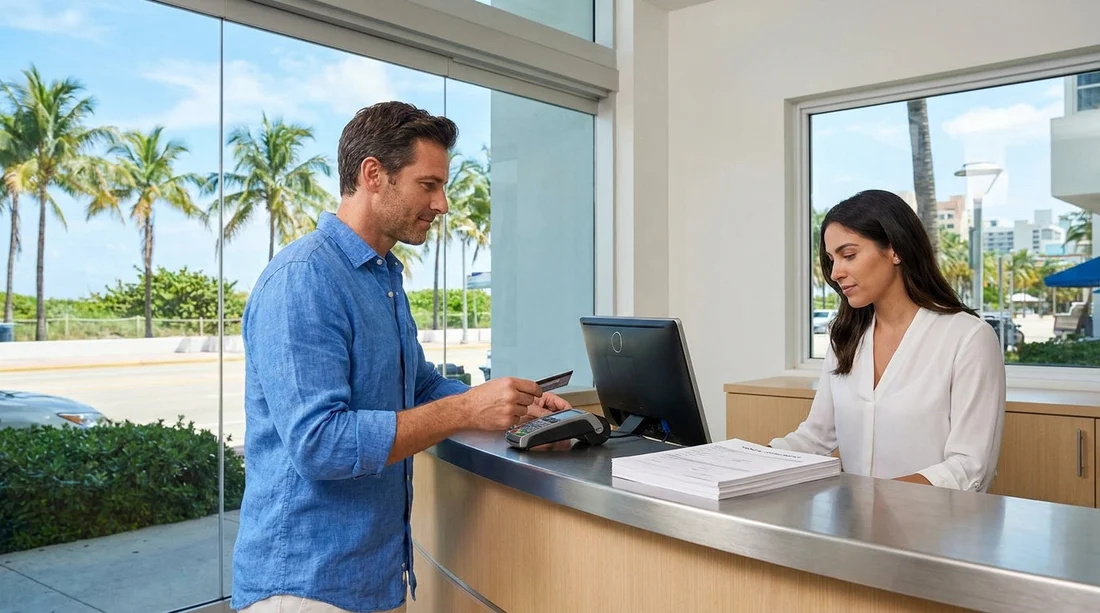
Even when you add zero-excess car hire cover for Miami, you should still expect a credit-card-only pre-authorisation (a temporary deposit hold) at pick-up. This can feel confusing because “zero excess” sounds like “no deposit”, but they are different parts of the rental agreement.
Zero-excess cover is about what you may owe if the vehicle is damaged or stolen. The pre-authorisation is about the rental company’s ability to secure funds for other potential charges during the hire, such as fuel differences, toll administration, traffic penalties, late return time, cleaning, damage not covered, or a deductible that may still exist under certain situations. As a result, the deposit hold is mainly a payment and risk-control requirement, not a judgement on how careful you are.
Miami is a high-volume car hire market, and the supplier’s counter process is designed to be fast and consistent. A pre-authorisation on a credit card is the standard method because it is reversible, it does not require taking cash, and it provides a reliable way to confirm identity and available credit at the start of the rental.
What “credit-card deposit hold” actually means
A deposit hold (also called a pre-authorisation) is not an extra fee. It is a temporary block of funds on your credit card’s available limit. The money is not taken unless something is charged later. When you return the vehicle and the rental is closed out, the hold is released, although your bank may take several days to show that release.
Because it is a hold on available credit, it can affect your holiday spending even if you never pay the deposit. This is why budgeting for the hold is as important as budgeting for the headline car hire price.
One common issue is travellers arriving with plenty of money in a current account but limited credit-card headroom. A debit card balance usually does not help if the supplier requires a credit card specifically for the deposit.
Why Miami pick-up still requires a credit card
In Miami, most major suppliers use the same basic principles at the counter: the lead driver must present an accepted credit card, the name on the card should match the driver, and the card must have sufficient available credit for the hold. This is true whether you pick up near the airport or in a neighbourhood location.
The supplier uses the pre-authorisation to cover scenarios that are difficult to price upfront. Examples include fuel if you return less than full, toll charges that arrive later, or cleaning costs if the car is returned in poor condition. Even with strong insurance, these items are typically outside excess-related cover because they are not “damage excess”.
If you are planning to collect outside central Miami, you might compare location rules as you research, for example on Hertz car hire Downtown Miami or Avis car hire Doral. The exact deposit level and card acceptance can vary by supplier and vehicle group, but the need for a credit-card pre-authorisation is very common across Miami.
How zero-excess cover affects the deposit hold
Zero-excess cover can change the size of the deposit hold, but it usually does not eliminate it.
Excess-related risk: If the supplier would normally hold a larger amount to cover the collision or theft excess, reducing the excess can reduce that part of the hold.
Non-excess charges: Items like fuel differences, toll administration, parking or traffic penalties, cleaning, or contract breaches are not “excess”. The supplier may still hold funds to protect against these.
So, the most accurate expectation is: zero-excess cover often makes the hold smaller and your financial exposure clearer, but you should still plan for a deposit hold on a credit card at pick-up.
Vehicle type can also influence the hold. A larger or premium vehicle can attract a higher hold because replacement and repair costs are greater and the rental value is higher. If you are considering a people carrier, checking the practicalities on minivan rental Florida MIA can help you anticipate the sort of deposit policies often applied to higher-capacity vehicles.
What to budget for in Miami beyond the rental price
To avoid surprises, separate your travel budget into two categories: amounts you will pay, and amounts that will be temporarily blocked.
1) Temporary deposit hold (blocked funds)
Plan for a hold that can range from modest to significant depending on supplier, car category, and your chosen cover. Because the hold reduces available credit, consider keeping extra headroom for hotels and other travel spends that also use pre-authorisations.
2) Fuel policy outcomes
Full-to-full is often the simplest. If you return the car with less fuel than agreed, the supplier may charge for fuel plus a service fee. This is a common source of unexpected post-rental charges, and one reason deposit holds exist.
3) Tolls, toll products, and admin fees
Miami has extensive toll roads and express lanes. Even if the toll amount is small, the administration process can create additional fees. Decide upfront whether you will use the supplier’s toll option or pay tolls yourself as permitted, then keep receipts or confirmations where applicable.
4) Optional extras
Items such as additional drivers, child seats, or sat nav can be charged at pick-up. If you add them, they can increase the deposit requirement or the final bill, depending on the supplier’s policy.
5) Cross-border or one-way plans
If your itinerary involves different drop-off points, or you are considering longer Florida travel, policies and fees can vary. Comparing Florida-focused options such as car hire Florida MIA can help you plan for any location-specific rules that might affect deposit amounts.
Common reasons a deposit is higher than expected
Most deposit surprises come down to a small number of issues.
Card type: Some travellers arrive with a debit card, prepaid card, or a credit card not accepted by the supplier. Even if it works for everyday purchases, it may not be valid for a rental deposit hold.
Insufficient available credit: Your credit limit might be high, but existing holds from hotels or pending transactions can reduce what is available at the counter.
Vehicle category changes: Upgrading at the counter, or being allocated a higher category due to availability, can trigger a higher hold.
How to prepare for pick-up in Miami
To make the counter process smooth, focus on the practical steps that prevent declines or delays.
First, bring a credit card in the lead driver’s name with enough available credit for the hold plus your trip spending. If you are travelling as a couple or group, avoid assuming someone else’s card will be accepted if they are not the lead driver.
Second, review your chosen cover so you understand what it changes. Zero-excess cover mainly reduces your damage-related exposure, but it does not guarantee a zero deposit. If your priority is to minimise blocked funds, consider selecting a vehicle group that usually carries a lower hold, and avoid premium categories unless you need them.
Finally, allow time at pick-up for the hold to be placed and for any bank security prompts. This is especially important if you land late or have connecting plans immediately after collection.
What happens to the hold after you return the car?
After the vehicle is returned and the rental is closed, the supplier releases the pre-authorisation. The timing you see depends on your bank, not just the rental company. Some banks update available credit quickly, while others take several business days.
If a charge is legitimately applied, for example fuel difference or a toll administration item, it might appear separately rather than simply converting the hold into a charge. Keep your final rental agreement and return paperwork until all pending items have settled.
FAQ
Will Hola still place a credit-card deposit hold in Miami if I have zero-excess cover? Yes. Zero-excess cover can reduce the hold, but most suppliers still require a credit-card pre-authorisation at pick-up.
Is the deposit hold taken from my account as a payment? No. It is a temporary block on available credit, released after the rental is closed, subject to your bank’s processing time.
Can I use a debit card instead of a credit card for Miami car hire? Often no, because many suppliers require a credit card for the deposit hold. Acceptance varies by supplier and can depend on card type and location.
What costs can still be charged even with zero-excess cover? Fuel differences, toll administration, parking or traffic penalties, cleaning, late returns, and contract breaches are typical examples outside excess-related cover.
How can I avoid unexpected charges that might use the hold? Return the car with the agreed fuel level, understand the toll approach, keep the car clean and undamaged, and return on time with supporting paperwork.





























































































