


Quick Summary:
- Choose self-park to keep keys and minimise movement risk overnight.
- Use valet when access is tight, but photograph condition before handover.
- Confirm overnight rate, re-entry rules, taxes, and “SUV” surcharges in writing.
- Collect a time-stamped claim ticket, then check the car before leaving.
Overnight parking in New York City can feel like a second rental agreement, especially when you are managing car hire paperwork at the same time. Garages vary hugely by neighbourhood, building layout and staffing. The biggest decision is usually self-park versus valet, because that choice affects who holds your keys, how often the vehicle may be moved, and how easy it is to dispute damage later.
This guide explains what to expect from NYC overnight garages, how to handle key handovers and tipping, and the practical checks that protect you if a scratch appears in the morning. If you are collecting a vehicle after a flight, it helps to plan your first night’s parking in advance. Many travellers arriving through New Jersey or JFK compare options such as car hire at Newark Airport (EWR) or car hire at New York JFK and then head into Manhattan with an overnight garage already in mind.
Why NYC overnight garages feel different
Space is the main constraint. Many Manhattan garages are stacked, narrow or use mechanical lifts. Even when a sign says “self-park”, you may still follow strict staff directions to a specific bay, or park in a tight aisle where other cars squeeze past. In a valet operation, attendants may double-park vehicles or shuffle them to reach other cars. That movement is the core trade-off: valet can be convenient, but the car is more likely to be repositioned.
Also, “overnight” is not always a simple 24-hour block. Some garages price by calendar day, meaning a late evening check-in and early morning exit can still trigger a full day charge, plus an overnight surcharge. Always clarify the exact cut-off times before handing over money or keys.
Self-park vs valet: the real-world differences
Self-park generally means you park the vehicle yourself and keep the keys. This is common in larger, more modern facilities, or in outer boroughs and some hotel garages. The main benefits for car hire drivers are less vehicle movement and clearer responsibility for any new damage. The downside is access. If the garage uses a lift, tight ramps or a one-way flow, self-parking can be stressful, and your car may still get door dings from neighbouring bays.
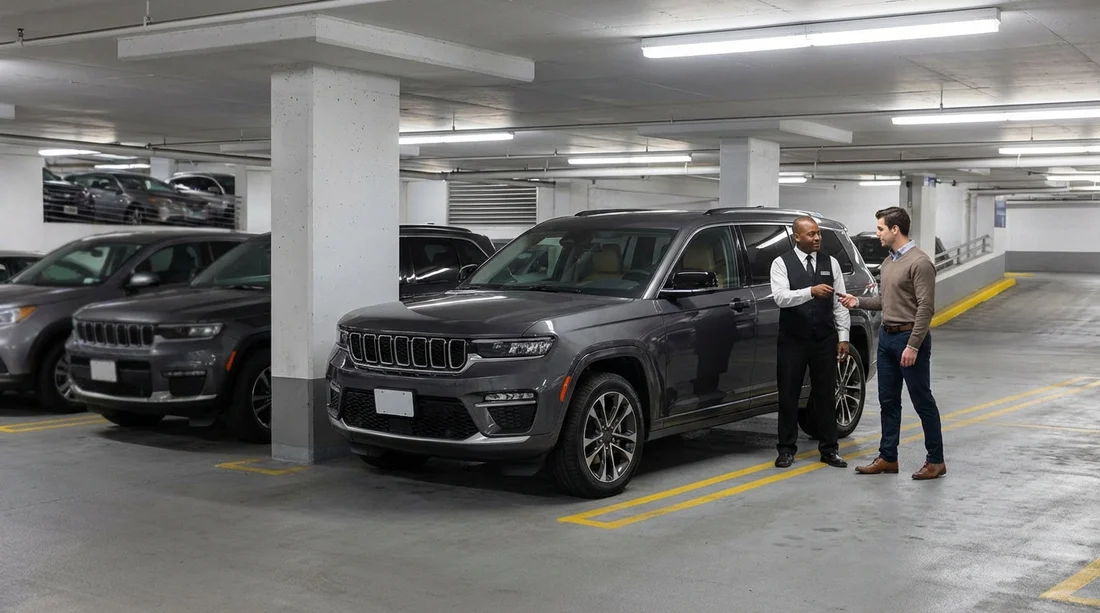
Valet means a staff member parks and retrieves the car, and usually keeps the keys. In NYC, many “garages” are effectively valet only because the layout requires staff to stack cars. Valet helps when you are tired, have luggage, or arrive late, but you must accept that the car could be driven short distances within the facility. If your car hire agreement restricts who can drive, valet is still permitted in practice, but you should minimise disputes by documenting the car’s condition clearly at handover.
Decision tip: If you have a larger vehicle, an SUV or minivan, valet may be the only workable option in a cramped Manhattan garage, but you should ask about any oversize fee before entry. Travellers arriving via New Jersey sometimes pick up a larger car and then drive in, see SUV hire in New Jersey (EWR) or minivan rental at Newark (EWR), so confirming height and size limits matters.
Key handovers: what is normal and what to question
In a true self-park setup, you keep your keys. If a garage calls itself self-park but insists on holding keys “just in case”, treat it as valet for risk purposes. Ask why they need the keys and whether your car will be moved overnight. If they cannot confirm, assume it may be repositioned.
With valet, handing over keys is normal. Before you do, remove valuables and personal data items, including anything with your home address. For car hire, also remove the rental agreement paperwork from the glovebox if it contains personal details. Keep your own set of essentials such as toll transponders or parking passes you need later.
When you hand over keys, you should receive a claim ticket. Check that it shows the date and time, and ideally a stall number or vehicle description. If there is a damage diagram on the ticket, ask the attendant to mark existing scuffs. If they will not, use your phone photos as your record.
Fees you can expect overnight, and how to avoid surprises
NYC garage pricing can include layers. Common add-ons include taxes, “facility fees”, oversize vehicle surcharges, and overnight or late-night premiums. Some garages charge extra for in-and-out privileges, while others do not allow re-entry at all once you exit.
Before paying, ask these questions in plain terms:
What is the total cost including tax for the exact hours I’m parked? NYC rates advertised on street signs sometimes exclude tax. If you are comparing options, insist on the all-in number.
Is it a calendar-day rate or a 24-hour rate? This single detail can double the cost if you check in late.
Can I access the car overnight? Some garages lock down after a certain time, or retrieving the car at 2am may carry an extra fee.
Is there an oversize fee for SUVs, crossovers or minivans? Even if your car is not huge, some garages apply “SUV” pricing to many modern models.
Do you charge for re-entry? If you plan dinner outside the area, you may be better with a garage that allows in-and-out, or with a second short-term stay elsewhere.
Tipping etiquette for NYC garages
Tipping is common in valet garages in New York. For overnight parking, tips often happen at retrieval rather than drop-off, because the quality of service is most obvious when the car returns quickly and in good condition. There is no fixed rule, but a modest tip is typical if staff handle luggage, retrieve the car promptly, or navigate difficult traffic at the entrance.
For self-park, tipping is less expected, though some facilities still have an attendant directing you. If someone helps with bags or provides extra assistance, a small tip is normal, but it should never be presented as mandatory.
If a garage adds a “gratuity” or “service fee” automatically, treat it as part of the total cost. Ask whether staff receive it. You can still tip extra for exceptional help, but you should not feel pressured to double-pay.
Protecting yourself from overnight damage disputes
Damage disputes are where car hire and garages intersect most painfully. The goal is to leave a clear trail showing the car’s condition at handover and at pickup. The steps below take three minutes and are worth it.
1) Take a full walkaround video at the entrance. Include all panels, wheels, bumpers and the roofline if possible. Narrate the date and time. Capture the garage signage in the same clip to link location and condition.
2) Photograph existing marks close-up. If you already have rental pick-up photos, you are ahead. Still take fresh ones under the garage lighting because scuffs can look different at night.
3) Photograph the odometer and fuel level. This helps if the car is moved more than expected or if you suspect an extended drive within the facility.
4) Keep your claim ticket safe and legible. If it is thermal paper, take a photo immediately. These can fade fast, and the ticket is your proof of custody timeline.
5) Inspect the car before leaving the garage. Do not wait until you reach your hotel. If you see new damage, return to the booth at once, ask for a supervisor, and request a written incident note. The earlier you raise it, the more credible it is.
If the garage refuses responsibility, keep your own documentation. Note staff names if visible on a badge, and record the time. For major damage, consider requesting that local police take an information report, but be realistic: many minor incidents are handled through insurance rather than on-site enforcement.
Choosing the right garage for your itinerary
For Manhattan sightseeing, a garage close to your accommodation is often better than chasing the cheapest rate far away, because crossing town in traffic adds stress. That said, if you are using the car mainly to reach New Jersey or the airport the next day, you might choose a garage on the west side for a smoother departure toward the Holland Tunnel and EWR corridors.
If you are planning your overall trip costs, you can compare vehicle categories and pick-up points, such as budget car hire at Newark (EWR) or Hertz car rental in New Jersey (EWR), then budget separately for Manhattan overnight parking. Parking can exceed a daily car hire rate in central areas, so it is worth treating it as its own line item.
Common garage terms you will see on signs and tickets
“No in-and-out” means you pay again if you leave and return. If you need the car twice, confirm whether a multi-entry rate exists.
“Early bird” is a discounted day rate for entering by a certain morning time and exiting before evening. It rarely helps for overnight stays.
“Overnight” may mean a flat add-on after a certain hour, not a full night included.
“Oversize” can apply to many crossovers, not just large SUVs. Ask what models count.
“Lost ticket” fees can be steep. Photograph your ticket as backup.
FAQ
Is self-park always safer for a car hire vehicle overnight in NYC? Self-park usually reduces the chance your car is moved, which can lower risk. But tight bays still cause door dings, so choose well-lit, wider facilities when possible.
Can a NYC valet legally drive my hire car? In practice, yes, valet parking requires staff to move cars within the garage. The key protection is documenting condition at handover and checking the car carefully before exit.
Should I tip when picking up the car in the morning? Tipping is most common on retrieval for valet service, especially if the car arrives quickly. Self-park tips are optional and usually only for extra help.
What fees should I confirm before leaving the car overnight? Ask for the total with tax, the time basis (calendar day or 24 hours), oversize charges, late-night retrieval fees, and whether re-entry is allowed.
What should I do if I notice new damage after overnight parking? Report it before leaving the garage, take photos and video immediately, request a written incident note, and keep your claim ticket as proof of custody timing.





























































































