


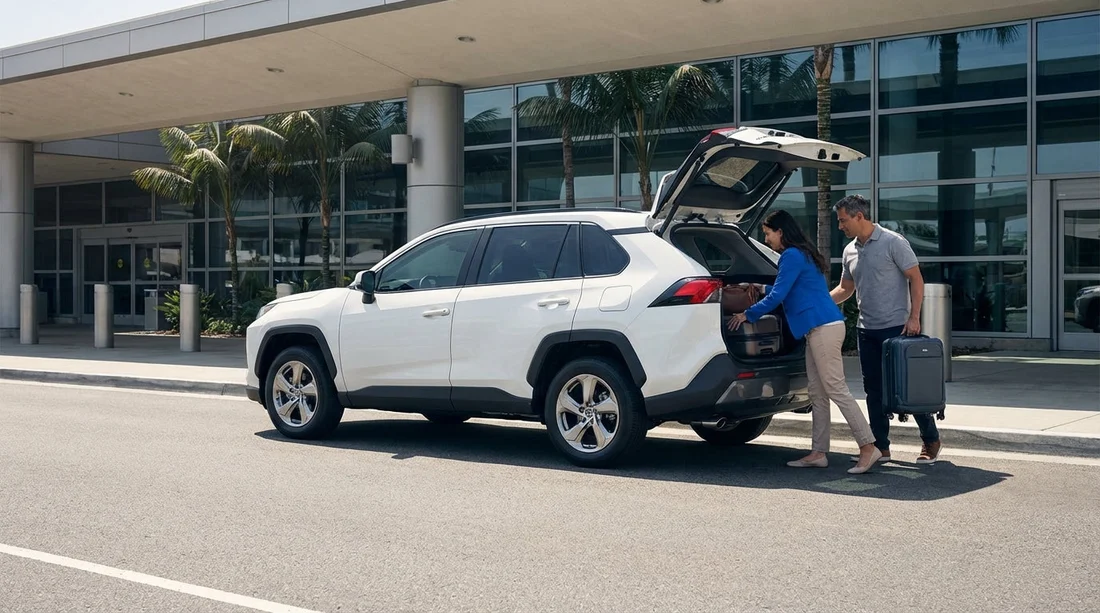
Quick Summary:
- Use the correct terminal level, Departures above and Arrivals below.
- Stay with your vehicle, active loading only, no waiting.
- If kerb is full, loop the horseshoe or use a legal waiting area.
- Know red zones and crosswalk rules, citations can be issued quickly.
Kerbside pick-up and drop-off at Los Angeles International Airport (LAX) looks simple, drive up, load, and go. In practice, it is one of the easiest places in Los Angeles to receive a parking citation, a traffic ticket, or an instruction to move on by airport police. The key is understanding what “active loading” means, where stopping is permitted, and what actions are treated as illegal parking even if you stay in the driver’s seat.
This guide breaks the process into clear steps for passengers, drivers, and anyone using a car hire vehicle. It focuses on the terminal kerb rules around the Central Terminal Area, commonly called the horseshoe, and the typical restrictions on stopping, standing, double-parking, and blocking lanes. If you are collecting someone arriving on a flight, or dropping someone for departure, the same principle applies, minimise kerb time and keep moving unless you are actively loading.
If you are arranging a vehicle for your trip, the Hola Car Rentals LAX page for car hire in Los Angeles (LAX) provides airport-specific context, including provider options and pick-up considerations.
How LAX terminal kerbside is laid out
LAX’s Central Terminal Area is a loop road with terminals on the inside and kerbside lanes on the terminal side. Most terminals have two public kerb levels. The upper level is generally Departures, airline check-in and drop-off. The lower level is generally Arrivals, baggage claim and pick-up. Some terminals also have dedicated lanes and islands that change with construction and traffic management.
In almost all cases, the legal kerbside stopping zones are designed for very short stops. LAX is not a place to “park for a minute” while you wait for a phone call. Even if you are in the driver’s seat, waiting at the kerb is commonly treated as standing or parking, and staff may direct you to move immediately.
Step-by-step: dropping someone off legally at LAX
Step 1: Choose your level early. If your passenger is departing, aim for the upper level. If you accidentally end up on Arrivals, do not stop and walk them upstairs from the kerb. Instead, continue and loop back to Departures if needed. Unplanned lane changes near terminals are a frequent cause of blocked traffic and enforcement attention.
Step 2: Stay in the correct lane. Use the rightmost lanes for kerbside access where permitted. Avoid stopping in an inner lane even briefly. Stopping away from the kerb often blocks through traffic and is one of the fastest ways to get waved on or cited.
Step 3: Prepare before you reach the terminal. Have the passenger ready with boarding pass, passport, and bags. The objective is an efficient unload. If you need to reorganise luggage, programme navigation, or search for documents, do it before entering the horseshoe.
Step 4: Stop only at the kerb and only as long as needed. Pull in tight to the kerb. Put the vehicle in park, switch on hazard lights if appropriate, and unload immediately. Keep doors closed when not actively unloading. A long “goodbye” is the classic way a lawful stop turns into an unlawful wait.
Step 5: Leave promptly. Once the passenger and bags are out, depart without delay. If the kerb is crowded, do not remain stopped hoping a space opens ahead. Move on and loop.
Step-by-step: collecting someone at LAX without breaking kerb rules
Step 1: Agree a pick-up level and a precise meeting point. Ask the arriving passenger to confirm their terminal and door number or column area. Many delays occur because the driver pulls over too early and waits, which is exactly what enforcement is looking for.
Step 2: Time your entry. The simplest way to avoid illegal waiting is to enter the horseshoe only when your passenger is at the kerb, ready to load. If they have not collected bags yet, do not enter and circle endlessly, or stop and “hold” a space. Choose a legal waiting option until they are ready.
Step 3: Use Arrivals kerb for most pick-ups. Most passengers will come out at the lower level. Pull to the kerb, load quickly, and depart. If your passenger is instructed by the airline to go to Departures pick-up, follow that plan, but still apply the same active loading rule.
Step 4: Load efficiently and avoid lane drift. Keep bags ready to lift straight into the boot. Avoid leaving doors open into adjacent lanes. If you miss the passenger, continue around the loop rather than stopping mid-lane or reversing.
Step 5: Have a fallback if kerb access is full. If the kerb is solid with no legal space to pull in, do not block. Continue to the next terminal or complete another loop. Being “almost there” does not make an illegal stop legal.
What’s illegal at LAX kerbside, and what gets cited
Rules can be enforced by airport police and traffic officers, and enforcement often focuses on behaviour that creates congestion or safety risks. The most common illegal actions include:
Waiting at the kerb. Stopping without active loading or unloading is typically treated as standing or parking. Sitting in the driver’s seat does not automatically make it legal. If your passenger is not present at the kerb, you are usually expected to move on.
Leaving the vehicle unattended. Walking into the terminal while your car is at the kerb is a major red flag. Even if you think you will be “two minutes”, the vehicle is not actively loading and may be cited or towed depending on circumstances.
Double parking or stopping in a travel lane. Stopping next to a kerbside-parked vehicle to load is dangerous and blocks traffic. This is one of the quickest ways to receive enforcement attention.
Stopping in red zones or no-stopping areas. Red painted kerbs and signed zones typically mean no stopping or standing, even briefly. Treat these as zero-tolerance areas, especially near corners, crosswalks, bus zones, and emergency access points.
Blocking crosswalks, ramps, or bus lanes. LAX has heavy pedestrian flow. Blocking a marked crossing, wheelchair ramp, or designated transit lane creates safety hazards and can be cited.
Using commercial zones without authorisation. Some kerb sections are reserved for shuttles, authorised commercial vehicles, or specific services. If you are in a standard car hire vehicle, stick to public passenger pick-up and drop-off areas unless signage clearly allows otherwise.
Legal ways to wait near LAX when your passenger is not ready
The safest approach is to avoid the terminal kerb until the passenger is ready to load. Practical options include waiting off-airport in a nearby car park, fuel station, or other legal parking area, then driving in when you get the message. This reduces stress and helps you avoid the temptation to stop illegally.
If you are coordinating a larger group or extra luggage, consider planning for a slightly longer load time by having everything ready before you enter the horseshoe. For bigger vehicles, review size and luggage capacity in advance, for example an van rental option can change how quickly you can load, even though it is listed for Santa Ana.
Terminal kerb etiquette that helps you stay compliant
Keep the engine on and stay alert. Kerb stops are meant to be brief. Being clearly engaged in loading, with the driver present, signals compliance.
Use the boot, not the back seat shuffle. Repacking bags at the kerb prolongs your stop and draws attention. Pack before you enter the airport loop.
Communicate clearly with the passenger. Ask them to wait at the kerb with bags in hand. If they are still inside, you are not ready to enter the pick-up zone.
Do not accept “just pull up anywhere”. A passenger waving from a second lane, a crosswalk, or a bus stop is not a safe or legal pick-up point.
How car hire changes the kerbside experience at LAX
With car hire, drivers are sometimes unfamiliar with the horseshoe flow and signage, and a moment of hesitation can lead to sudden stops or unsafe lane changes. Give yourself extra time, and commit to one plan: loop if you miss the pick-up, and never stop where you are not clearly permitted.
If you are deciding what vehicle type suits LAX traffic and luggage, an SUV rental at Los Angeles (LAX) may provide easier loading and visibility in crowded kerb lanes. If you prefer a specific provider, Hola also lists options such as National at Los Angeles (LAX) and Enterprise car hire in California (LAX), which can help you compare practical pick-up logistics across suppliers.
Common scenarios and the safest legal response
Your passenger is delayed at baggage claim. Do not hold the kerb. Wait in a legal parking location, then enter when they confirm they are outside.
You cannot find a kerb space. Continue forward and complete another loop. Stopping mid-lane “for ten seconds” is still a stop and can be cited.
Your passenger is at the wrong terminal. Do not stop to argue on the phone. Keep moving, confirm the correct terminal, then loop to the right place.
You missed them at the kerb. Keep going. Many drivers stop abruptly after passing their passenger, which creates hazard and enforcement risk. One extra loop is usually faster than dealing with a citation.
FAQ
Can I wait at the LAX terminal kerb if I stay in the car? Generally, no. Kerbside stopping is meant for active loading and unloading only, and officers may treat waiting as standing or parking even with the driver present.
Is it illegal to leave my car at the kerb while I go inside? Yes, it is typically treated as unattended and not active loading. Use a proper car park if you need to enter the terminal.
What should I do if there is no space to pull in at Arrivals? Do not stop in a travel lane. Continue around the horseshoe, try the next terminal section, or loop until you can pull to the kerb safely.
Can I pick up someone from Departures instead of Arrivals? Sometimes it is possible depending on terminal conditions and signage, but the same rules apply: pull to the kerb, load immediately, and leave without waiting.
What are the biggest mistakes that lead to citations at LAX? The most common are waiting at the kerb for a passenger, double parking, stopping in red zones, and blocking crosswalks or bus lanes.





























































































