


Quick Summary:
- Check all exterior lights, indicators and hazard flashers from outside.
- Test wipers, washers and demisters, then set mirrors correctly.
- Confirm reverse camera, parking sensors and horn work without warning lights.
- Verify fuel level, tyre condition and that brakes feel normal.
New York car parks can be tight, busy and poorly lit, so it pays to run a fast functional check before you leave. A two minute routine helps you spot faults while you are still close to the rental desk, and it reduces the chance of a stressful stop on an expressway or bridge approach. The aim is simple, confirm the car is safe, legal, and comfortable for your first few miles.
If you are picking up near the airports, queues and time pressure can make it tempting to skip checks. Whether you collect around Newark or JFK, do the basics before you join heavy traffic. If you arranged car hire through Hola Car Rentals for an airport collection, it is still your responsibility to make sure key controls and safety systems work before departing.
1) Start with a quick walk-around for visibility and damage
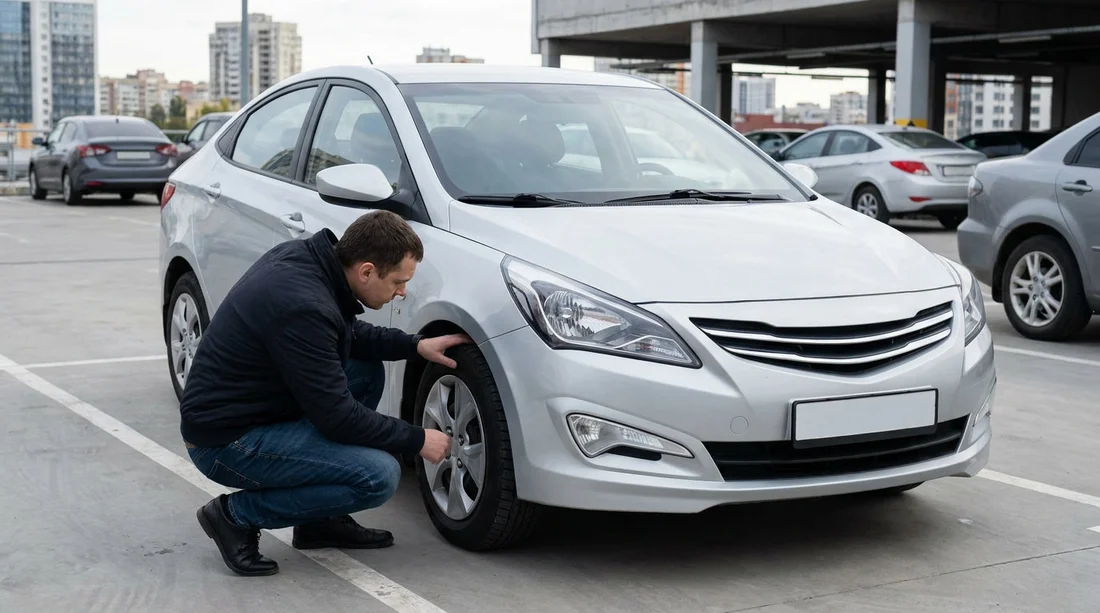
Begin outside the vehicle while you still have space. Look for obvious damage, tyre issues, or anything hanging loose. In multi-storey car parks, pay attention to scrapes on bumpers and wheel rims that can be hard to see later.
Check tyres for visible cuts, bulges, or a tyre that looks noticeably lower than the others. Glance at the windscreen for chips, and confirm the number plates are secure and readable. If you spot new damage, photograph it clearly and report it before you drive away.
2) Test all lights, indicators, and hazard flashers
Lights are one of the most common issues people only discover after leaving. In New York, you may enter tunnels, shaded avenues, or sudden rain, so working lights are non-negotiable.
With the ignition on, test:
- Headlights on dipped and main beam, checking both sides illuminate.
- Front and rear indicators, including the repeaters in the mirrors if fitted.
- Brake lights, use reflections in a wall or ask a passenger to confirm.
- Hazard flashers, useful if you need to stop unexpectedly.
- Reverse lights, especially if you will be parallel parking soon.
If you are alone and cannot easily see the rear lights, use a parked car’s reflective surface or a garage door behind you. Also confirm that the light switch works as expected, some models have automatic lights, but you should still know how to override them.
3) Wipers, washers, demisters, and climate controls
New York weather changes quickly. Even a short drive can involve drizzle, spray from trucks, or misty windows from humidity. Before leaving the bay, test the wipers at low and high speed, then trigger the windscreen washer to confirm fluid sprays properly.
Next, check the front and rear demister controls. Turn the fan up, select demist mode, and ensure air is directed to the windscreen. If the car has automatic climate control, verify you can adjust temperature and fan speed manually too.
It is worth checking the wiper blades for streaking. If they smear badly within the first wipe, ask for replacement blades or another vehicle while you are still onsite.
4) Mirrors, seat, steering wheel, and driving position
Set your seat position before you do anything else inside. Adjust the seat distance so you can fully depress the brake pedal without stretching. Confirm the steering wheel position is comfortable and that you have a clear view of the instrument cluster.
Then set mirrors to reduce blind spots, which matters on New York’s multi-lane routes and when merging. Adjust:
- Rear-view mirror for a full view out of the back window.
- Door mirrors so the side of your car is just barely visible.
- Any blind-spot mirror settings if the car supports them.
If you are collecting at a busy hub like Newark, you may be starting with immediate lane changes or ramp joins. For context on nearby pickups, see car rental Newark EWR and car rental airport Newark EWR.
5) Dashboard warnings, fuel level, and basic controls
Turn the ignition on and pause for a few seconds to let warning lights cycle. Some lights should briefly illuminate and then go out. If the check engine light, oil pressure light, battery light, or airbag light stays on, do not drive off until you have confirmation it is safe.
Confirm the fuel level matches what you were told at handover. Also verify the odometer reading is reasonable and that the gear selector display matches the actual position. Test the horn briefly, it is a legal requirement and a practical safety tool in city traffic.
Before moving, test the parking brake release and the foot brake feel. The pedal should feel firm, not spongy. Engage drive and roll a few metres at walking pace to confirm the car tracks straight and the steering feels normal.
6) Reverse camera, parking sensors, and safety features
In New York car parks, your first manoeuvre might be reversing out of a tight space. Put the car in reverse, keeping your foot firmly on the brake. Confirm the reverse camera image is clear and that guide lines appear if equipped. If there are parking sensors, listen for beeps and ensure they respond when you approach a wall or pillar slowly.
Also check for any driver assistance settings that may surprise you, such as lane keep assist or automatic emergency braking alerts. You do not need to disable them, but you should know how they behave and where their controls are located.
If you are hiring a larger vehicle for family luggage, sensors and mirror setup are even more important. For larger options, you can compare pickup types such as SUV rental New York JFK or minivan hire New Jersey EWR.
7) Phone pairing, navigation, and charging points
This is not strictly safety-critical, but it prevents distraction later. If you plan to use built-in navigation or Apple CarPlay or Android Auto, pair your phone while stationary. Confirm audio works for directions and that you can control volume from the steering wheel.
Locate charging ports and check that at least one USB port provides power. If the car only has USB-C and you do not, you will know before you leave the car park. If your first journey includes toll routes, consider setting up navigation preferences to avoid last-minute lane changes.
8) Know your first exit route before you roll
Finally, look at the car park signage and plan the first junction. In New York, the first minutes after pickup can involve one-way systems, sudden merges, and aggressive stop and go traffic. If you are leaving an airport complex, decide in advance whether you are heading towards Manhattan, New Jersey, or Brooklyn, and which ramps you need.
Take a moment to understand the headlight setting, wiper control, and hazard switch location. Familiarity reduces panic if rain starts or if you need to stop briefly. When everything checks out, depart smoothly and keep extra space until you are confident with the car’s braking and steering feel.
FAQ
How long should the pre-departure check take in a New York car park? Aim for two to five minutes. A faster check is fine if you cover lights, wipers, mirrors, warnings, and reversing aids.
What should I do if a warning light stays on after starting? Do not leave the car park. Take a photo of the dashboard and contact the rental staff immediately so the issue is logged and resolved.
Do I need to test parking sensors and the reverse camera every time? Yes, especially in tight New York garages. These systems reduce low-speed bumps, and faults are easiest to fix before you exit.
Should I record existing scratches or wheel scuffs before driving off? Yes. Photograph any marks you notice and report them straight away. It is much easier to confirm condition while the car is still at the pickup point.
Is it normal for some lights to appear briefly on the dashboard? Yes. Many cars illuminate warning icons during the self-check, then they disappear. The problem is when a critical light remains on while the engine is running.





























































































