


Quick Summary:
- Test every exterior light setting, then photograph any dim or failed bulbs.
- Run washers and wipers, checking for streaks, juddering, and low fluid.
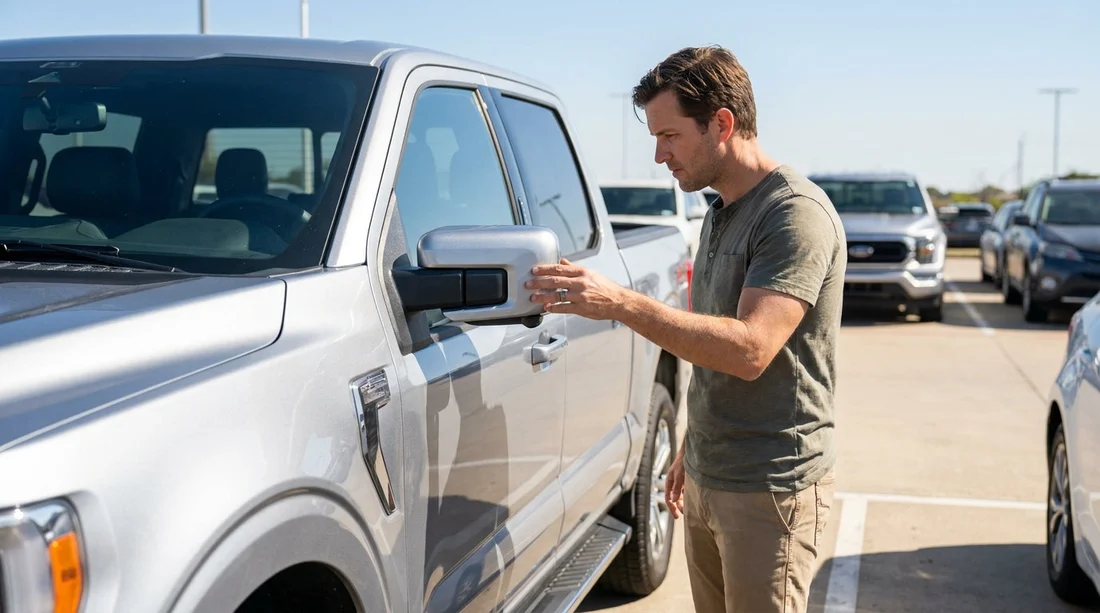
- Adjust mirrors for blind spots, confirming power controls and stability at speed.
- Match faults to the inspection form and get them noted before leaving.
In Texas, you might collect your car hire at a bright airport kerbside, then drive straight into glaring sun, a sudden Hill Country downpour, or heavy evening traffic. Lights, wipers and mirrors are the trio that keep you visible and aware, yet they are also common areas for minor faults that are easy to miss during handover. A practical counter side check helps you spot issues early and ensures they are written on the agreement before you drive off.
If you are picking up around Austin, San Antonio, Dallas Fort Worth, or Houston, the process is the same. Give yourself five to ten minutes before you load up fully, and do the checks in a consistent order so nothing is forgotten. If you are collecting near Austin Bergstrom, see local notes on car hire at Austin Airport (AUS). For other pick ups, Hola Car Rentals also provides guidance for car hire in San Antonio (SAT), car hire in Fort Worth (DFW), and SUV rental in Houston (IAH).
Before you start, set up a safe, repeatable routine
Parked in the bay, do a quick walkaround first to note obvious body damage, then focus on lights, wipers and mirrors while you still have staff nearby. Use your phone as both a torch and a camera. If you are alone, ask a staff member to stand behind the car for brake and reverse light checks, or use reflections in a window or glass wall.
When you find a fault, do three things: photograph it, capture a short video if it is intermittent, and ask for it to be written on the check out sheet or the digital condition report. Verbal assurances are not enough if the issue is later disputed. Keep the tone factual, you are simply confirming the car’s condition at handover.
Lights: what to check, and how to prove it works
Start with the ignition on and the headlight switch in each position. Make sure the dashboard illumination corresponds, and that warning indicators are not showing a bulb error. Then step outside and confirm each lamp is operating correctly.
Headlights should be checked on dipped beam and main beam. Look for a matched pair, not one bright and one weak. A noticeably yellow or dim lamp can indicate a failing bulb or cloudy lens. If the car has automatic headlights, cover the light sensor on the dashboard to trigger them, because daytime sun in Texas can prevent them turning on during a quick test.
Brake lights are a common miss. Press the brake pedal and confirm both rear brake lamps and the high mounted third brake light illuminate. If you are solo, back up close to a glass wall or another car and use the reflection, or ask staff to confirm.
Indicators and hazard lights should flash at a normal rate. A very fast flash often signals a bulb out. Check front and rear, plus the dashboard tell tale. Turn the wheel slightly left and right if the front indicator is partially hidden by a bumper angle.
Reverse lights matter for safety in busy parking structures. With foot on brake, shift into reverse and confirm the reverse lamps come on. If you cannot safely do this alone, ask the attendant to observe behind the car.
Licence plate light and interior lights are easy to overlook but worth a glance. A dead plate light can attract unwanted attention during nighttime driving. Open the boot and doors to confirm courtesy lights function, and note any cracked housings or missing covers.
When photographing, take one wide shot showing the whole car with the relevant lights on, and one close shot of the failed lamp. This helps show it is not user error with the switch.
Wipers and washers: test for storms, dust, and bug splatter
Texas driving can mean sudden rain, construction dust, and insects on rural roads. Wipers and washers are safety essentials, and faults are often only noticed after you have left the lot.
Wiper blades should sweep smoothly without skipping, juddering, or leaving heavy streaks. Run them on low and high speed. Listen for squeaks, which often indicate hardened rubber. Check the blades visually for splits or missing sections. If the car has a rear wiper, test that too, especially on SUVs.
Washer jets should spray promptly and aim at the windscreen, not over the roof or into a dead spot. Press the washer and watch for an even fan pattern. Weak output can indicate low fluid or a clogged nozzle.
Wiper controls should include intermittent settings. Test the intermittent speeds and make sure the wipers park fully at the bottom. If the blades stop mid screen, note it, because it can obstruct your view.
Mirrors: adjust for blind spots and confirm the mechanisms
Mirrors are your constant reference on multi lane highways around Dallas Fort Worth, Houston, and San Antonio. A mirror that will not hold position, a cracked housing, or a dead power adjuster should be documented immediately.
Glass condition comes first. Look for chips, cracks, delamination, or heavy scratching. Even small edge cracks can spread with vibration and heat. Photograph any damage close up and in context.
Power adjustment should work in all directions for both side mirrors. Move each mirror through its full range, then set it correctly for your driving position. If the switch is sticky or intermittent, note it.
Mirror stability matters at highway speed. After setting them, gently tap the housing to see if it flops or droops. A mirror that shifts in the wind is a safety issue and should be swapped or fixed.
Blind spot aids, if fitted, should illuminate briefly on startup. If a blind spot warning light stays on or shows a fault, take a photo of the instrument message. Do not rely on these systems in place of proper mirror adjustment, but do record malfunctions.
Getting issues noted on the agreement, the counter side checklist
Finding a fault is only half the job. The aim is to make sure the condition report matches what you observed, before you drive away.
1) Compare your findings to the existing report. Many companies pre mark chips or scuffs, but they may not list a dim headlight or a missing washer spray. Ask to see the digital diagram or paper form.
2) Use clear, specific wording. Instead of saying “light not working”, specify “right rear brake light out” or “left headlight noticeably dimmer than right”. For wipers, say “front wipers streak across driver view” rather than “wipers bad”.
3) Ask for an amendment, not a promise. A staff member can often add notes or photos to the rental record. Wait until you see the update on screen or on the printed page.
4) Keep your own evidence. Save photos and video, and if you receive an email condition report, keep it accessible offline. If you later need to discuss a charge, time stamped evidence from pickup is persuasive.
5) Decide whether it is a safety stop. A dead brake light, failed headlights, or wipers that cannot clear the screen should mean you request a different vehicle. Minor cosmetic marks are different from visibility and signalling equipment.
This approach is especially useful after long flights, when it is tempting to rush. A consistent checklist reduces the chance you miss something that becomes frustrating or unsafe on the road.
FAQ
Q: How long should these checks take before I leave the lot? A: Allow five to ten minutes. Lights take the longest if you need help confirming brake or reverse lamps, but it is time well spent.
Q: What if a bulb fails after I have already left the airport? A: Stop somewhere safe, photograph the issue, and contact the rental provider promptly. Ask them to note it on your file and advise the nearest swap or repair option.
Q: Do I need to test headlights in daylight in Texas? A: Yes. Use manual headlight settings, cover the light sensor if needed, and check beam brightness against a wall or shaded area.
Q: Should I accept worn wiper blades if there is no rain forecast? A: It is better to have them replaced or documented. Weather changes quickly, and dust or insects can force you to use washers and wipers unexpectedly.
Q: What mirror problems must be written on the agreement? A: Any cracks, missing glass, loose housings, non working power adjustment, or warning messages for blind spot systems should be recorded with photos.





























































































