


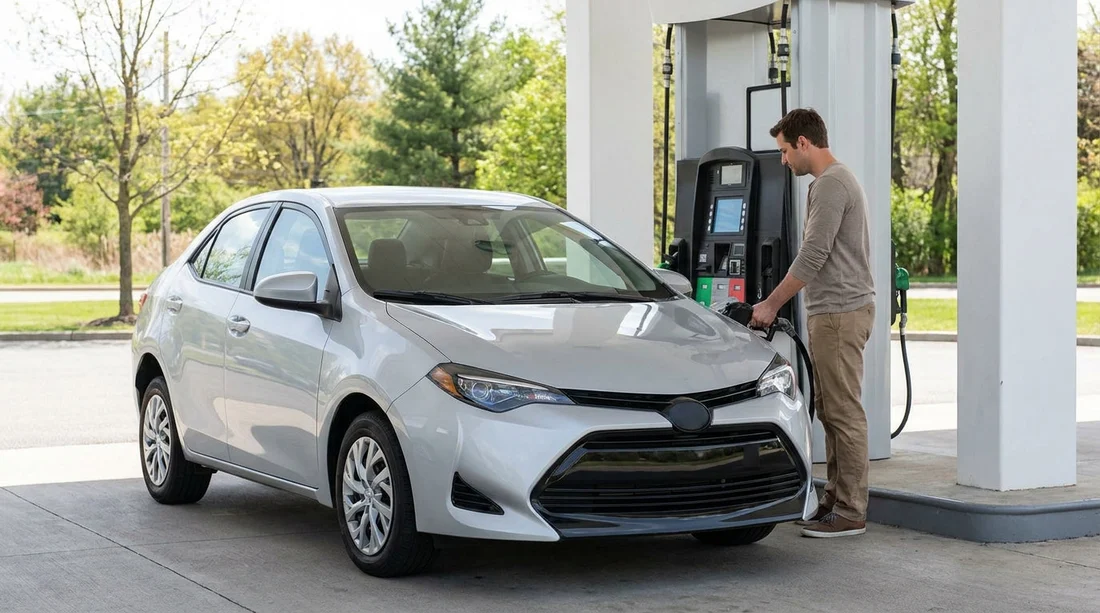
Quick Summary:
- Full-to-full is usually cheapest if you refuel near the return.
- Prepaid fuel adds convenience but can mean paying for unused petrol.
- Check the quote for refuelling fees, taxes, and fuel rates.
- Photograph the fuel gauge at pickup and return to prevent disputes.
Fuel policy is one of the easiest line items to overlook when arranging car hire in Pennsylvania, yet it can change the final bill more than you expect. The two most common options are full-to-full and prepaid fuel. Both can be sensible depending on your route, timing, and tolerance for admin, but they work very differently.
This guide explains how each fuel option works in practice across Pennsylvania, where hidden costs can appear, and what to confirm on the quote before you commit.
How full-to-full fuel works
With full-to-full, the rental car is supplied with a full tank and you agree to return it full. In theory, the fuel cost is simply whatever you buy at a petrol station during your trip. In practice, the savings come from controlling the price per litre and avoiding the rental company’s refuelling rates.
Full-to-full is common for airport and city collections, including Philadelphia. If you are comparing providers for arrivals into PHL, it helps to review the listing details alongside your fuel policy, for example on car rental at Philadelphia Airport (PHL) and car rental in Philadelphia.
Where full-to-full can get expensive
The main risk with full-to-full is not returning the tank as full as the agreement requires. If you bring it back even slightly under, most suppliers charge two things: the missing fuel and a refuelling service fee. The fuel itself is often priced higher than local pump prices, and the service fee can make a small shortfall disproportionately costly.
To reduce these risks, take a photo of the gauge at pickup, keep your refuelling receipt, and aim to fill up within 5 to 10 miles of the return location. Around Philadelphia, that typically means refuelling on the way back rather than near your accommodation, where timing is less predictable.
How prepaid fuel works
Prepaid fuel usually means you pay upfront for a full tank at the start, and you can return the car with any fuel level. It is designed for convenience: no searching for a station near the return site, no time pressure, and no worry about being charged a refuelling service fee for returning under full.
However, prepaid is not always “pay for what you use”. In many cases you are paying for an entire tank regardless of how much you actually burn. If you return with a quarter tank left, you typically will not receive a refund for the unused fuel. That is the core trade-off: convenience versus the likelihood of paying for fuel you did not use.
Where prepaid fuel can hide extra cost
Prepaid fuel looks simple, but there are three common cost traps.
First, the prepaid tank price may be higher than local pump prices, and it may include taxes or fees that are not obvious until checkout. Second, “prepaid” is sometimes offered alongside a separate “fuel service” product, which can be confusing. If the terms say you must still return with a minimum level, or that a service fee applies below a threshold, it is not the classic prepaid arrangement and should be treated with caution. Third, prepaid can be bundled into a package that makes comparisons harder, especially if you are simultaneously choosing a vehicle class or supplier.
If you are price-checking across providers, look for clear policy wording on fuel. On supplier-specific pages such as Avis car rental in Philadelphia and Thrifty car rental in Philadelphia, confirm whether prepaid is optional, included, or presented as an upgrade at checkout.
What to check on the quote before booking
To avoid surprises, scan the quote and terms for these fuel-specific items before you finalise your car hire.
1) Fuel policy label and wording
Look for clear language such as “Full to Full” or “Prepaid fuel”. If the description is vague, check the full rental conditions for how the tank is supplied and what is required at return.
2) Refuelling charges and fees
For full-to-full, confirm the refuelling service fee and the per-litre rate if you return under full. For prepaid, confirm whether unused fuel is refundable. In most prepaid cases it is not, but the quote should make this explicit.
3) Deposit and payment timing
Fuel choices can affect the amount charged at pickup. Prepaid fuel may increase the immediate charge, and some suppliers handle fuel products at the counter rather than in the initial total. Separate that from the security deposit so you understand what will be held on your card.
4) Taxes on fuel products
Depending on how the fuel product is treated, taxes can be included or added. Make sure you understand whether fuel is part of the headline price or an additional line item.
5) Vehicle type and likely consumption
A larger vehicle can make prepaid more expensive, because you are buying a bigger tank upfront. If you are considering a bigger option for comfort or winter capability, check how fuel policy interacts with tank size, for example when comparing categories like SUV hire in Philadelphia.
Choosing the best option for your trip
If your goal is the lowest expected total cost, full-to-full is usually the safer default, because you pay local pump prices and only for what you use. Prepaid is best viewed as a convenience product. It can still be cost-effective when you will finish close to empty or when time constraints make a final fuel stop inconvenient.
Whichever option you prefer, the key is to treat fuel policy as part of the overall quote, not a small add-on. In Pennsylvania, small differences in return timing, traffic, or the distance to a convenient petrol station can turn an apparently cheap deal into an expensive one if the fuel terms are not understood upfront.
FAQ
Is full-to-full always cheaper for car hire in Pennsylvania?
Not always, but it is often cheaper because you pay pump prices and only for fuel you use. It becomes expensive mainly if you return below full and trigger higher per-litre pricing plus a refuelling service fee.
Do I get a refund for unused fuel on prepaid fuel policies?
In many prepaid arrangements, unused fuel is not refundable, so any fuel left in the tank is effectively lost value. Check the rental conditions to see whether refunds are offered, as policies vary by supplier.
What should I look for on the quote to spot hidden fuel costs?
Look for the refuelling service fee, the supplier’s fuel price per litre if returned under level, and any taxes applied to fuel products. Also confirm whether prepaid fuel is optional or already included in the total.
How close to the return location should I refuel on a full-to-full policy?
Aim to refuel within about 5 to 10 miles of the return point, and keep the receipt. This helps show the tank was filled shortly before return and reduces gauge drop from driving farther.
Which fuel policy is better for early-morning returns at Philadelphia Airport?
Prepaid fuel can be more convenient for very early returns because you can skip the final petrol stop. Full-to-full can still be best value if you can refuel nearby without adding stress or delay.





























































































