Quick Summary:
- Most NYC bridges and tunnels charge tolls automatically, with no toll booths.
- Your rental may use E-ZPass or plate billing, plus admin fees.
- Ask which toll plan applies, and keep the fee schedule in writing.
- Track dates and crossings, then compare charges against your toll statement.
Driving in and around New York is often the easiest way to connect airports, suburbs, and day-trip routes, but it comes with a modern twist: most major crossings use cashless tolling. If you are arranging car hire for New York, understanding how those tolls are captured and billed can save you from surprise charges weeks after you return the keys.
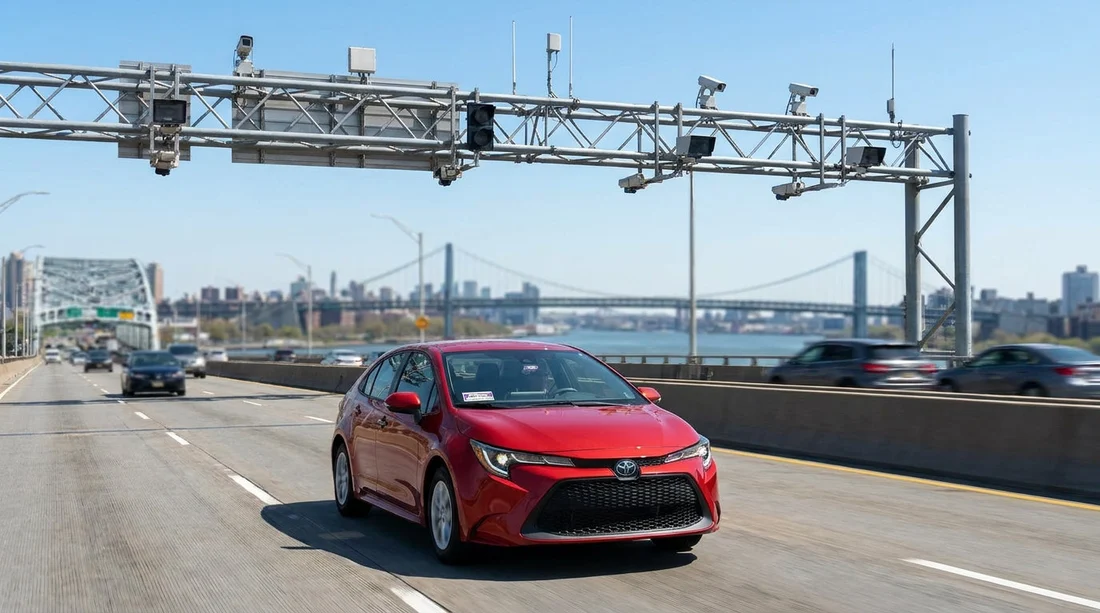
In the NYC area, “cashless tolls” usually means there is no option to stop and pay with cash. Instead, tolls are recorded by a roadside reader and camera system. The system detects either an electronic transponder (most commonly E-ZPass) or photographs the number plate and bills based on the plate. With a rental car, that bill usually flows through the rental company first, then on to you, often with extra service fees.
If you are picking up near the airports, it helps to check the rental brand’s toll policy before you drive away. Hola Car Rentals pages like car hire airport New York JFK and Avis car hire Newark EWR are useful starting points for comparing suppliers and reading the small print that affects tolls, add-ons, and post-rental billing.
What “cashless tolls” means on NYC bridges and tunnels
On many crossings in the New York region, the toll point is a gantry: a structure over the roadway with sensors and cameras. As you pass underneath at normal speed, the gantry records your vehicle details. That record then matches either:
A transponder read, where the rental vehicle has an E-ZPass tag assigned to it, or you have opted into a toll programme that activates it.
A plate-based record, where the number plate is photographed and billed as “Tolls by Mail” or an equivalent back-office process.
Either way, you do not pay on the spot. You pay later, and with a rental car, “later” can mean a delayed charge to your card after your trip, once the toll operator and rental company have processed it.
How tolls get charged on a rental car
Rental companies typically handle tolls in one of three ways. The details vary by brand and location, so treat these as common models rather than universal rules.
1) Built-in transponder with a daily fee model
Many vehicles have an in-car toll tag. If you choose the rental company’s toll programme, you might pay a daily charge for each day the car is in use, plus the tolls themselves. Some programmes only charge the daily fee on days you actually pass through a toll point, others charge per rental day once activated. The difference is important for longer stays.
2) Plate billing, then invoiced to you with an admin fee
If you do not opt into a toll programme, the rental vehicle may still be billed by plate. The rental company receives the toll notice, pays it or forwards it internally, then charges your payment card for the toll amount plus an administrative fee per toll or per notice.
3) You bring your own E-ZPass
Some travellers already have an E-ZPass account. Whether you can use your personal transponder depends on rental company policy and how the rental vehicle’s plate is registered in toll systems. In some cases, using your own tag can still generate plate bills if the wrong tag is detected or if the vehicle has a built-in tag that conflicts. Only do this if the rental counter confirms the correct procedure for that specific vehicle.
If you are collecting from JFK, compare providers and their toll policies while browsing pages such as car rental New York JFK or Payless car hire New York JFK, then confirm the exact toll plan at pick-up.
What to ask at pick-up to avoid surprise admin fees
The counter conversation matters, because your choice can change both the toll rate you effectively pay and the fees layered on top. Ask these questions clearly and get the answers noted on your paperwork or rental agreement summary.
Is the car equipped with E-ZPass, and is it active by default?
Some cars have a transponder physically present but only become “active” for billing if you opt into the programme. Others are always active and you are agreeing to be billed through their toll partner once you drive through a toll point.
What is the toll programme called, and how are fees calculated?
Ask whether fees are charged per day of rental, per day of toll use, per toll event, or per notice received. Also ask if there is a cap for the maximum admin fees during a rental.
How long after return can toll charges appear?
Toll systems can take days or weeks to post. Knowing the likely window helps you spot legitimate charges versus anything unexpected.
Can I decline the toll programme, and what happens if I do?
If you decline, confirm whether plate billing will still occur and what the admin fees are in that scenario. “Declining” rarely means “no toll charges”, it usually means “tolls plus admin fees later”.
What proof will I receive for tolls charged after the rental?
Ask whether you will receive a list of toll transactions, dates, and locations, or just a lump-sum charge. Itemised records are far easier to verify.
Practical ways to minimise toll and admin costs
Choose the right plan for your driving pattern
If you expect multiple crossings over several days, a toll programme with a predictable daily fee may be cheaper than repeated per-toll admin fees. If you only expect one or two crossings, a daily fee model can be expensive for short rentals if it triggers for every day.
Avoid unplanned crossings when possible
Mapping apps can route you through tolled tunnels or bridges by default. Check route options for “avoid tolls”, but be realistic: in the NYC area, toll-free routes can add a lot of time, and some key crossings simply have no free alternative.
Track your crossings in real time
Make a quick note of date and approximate time each time you cross a tolled bridge or tunnel. Even a simple list on your phone helps you reconcile charges later.
Keep your rental agreement and final invoice
If a toll charge appears later, you will want your rental contract number and the dates you had the vehicle. This makes it easier to query a charge if it looks wrong.
What to do if a toll charge appears after your trip
First, compare the charge date and amount with your own record of crossings. Then request an itemised toll statement from the rental company or its toll processing partner. If the toll locations or dates do not align with your rental period, raise it quickly with the documentation you kept.
If you are planning a trip that starts in New Jersey rather than New York, review your supplier options for that pick-up location as well, because toll programme terms can vary by state and by brand. For instance, travellers comparing people carriers may look at minivan hire New Jersey EWR to ensure the vehicle type, seating, and toll policies suit the itinerary.
FAQ
Do I need cash for NYC bridge and tunnel tolls in a rental car?
No. Most major NYC-area crossings are cashless, so the toll is recorded electronically and billed later through the rental company or its toll programme.
Will my car hire company automatically charge me for tolls?
Usually yes. Even if you do not opt into a toll package, the vehicle can be billed by number plate and the rental company can pass the tolls on to you, often with an admin fee.
Is it cheaper to opt into the rental company’s toll programme?
It depends on how often you cross tolled points and how the fees are structured. Daily-fee plans can suit frequent toll use, while infrequent use may cost less with plate billing plus a smaller admin fee, if available.
How long after returning the car can toll charges show up?
It can take days or several weeks. Processing time depends on the toll operator, whether billing is by transponder or plate, and how quickly the rental company posts charges.
What should I do if I think a toll charge is wrong?
Ask for an itemised list showing dates, times, and toll locations. Compare it to your rental period and travel notes, then dispute promptly with your rental company if anything does not match.