


Quick Summary:
- Expect toll-by-plate, cameras match the rental car number plate.
- Rental firms often add admin fees on top of each toll.
- Ask at pick-up about toll programmes, caps, and billing timing.
- Keep dates and routes, then dispute incorrect toll days promptly.
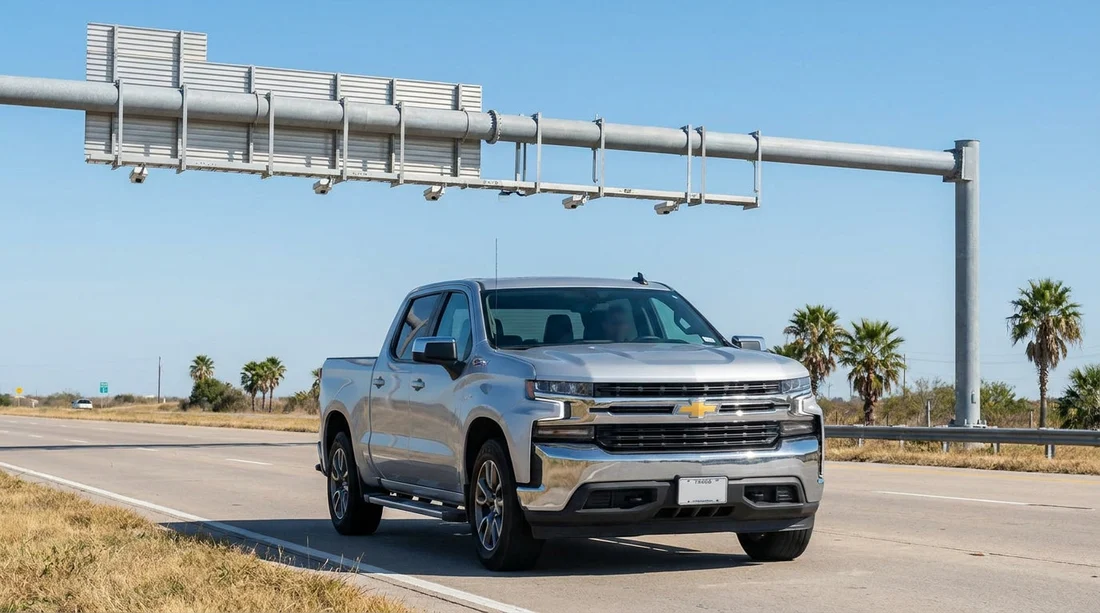
Texas has many cashless toll roads where you will not stop at a booth or pay an attendant. Instead, overhead gantries and roadside cameras capture your number plate (and sometimes the vehicle’s image) and the toll authority issues a bill. When you are driving a car hire vehicle without a transponder fitted, the toll charge is still collected, it just flows through a different chain, and that is where unexpected fees can appear.
The good news is that the process is predictable once you know how toll-by-plate works, what rental companies typically charge to process tolls, and what to confirm at the counter before you drive away.
What “cashless tolling” and “toll-by-plate” mean in Texas
On many Texas toll facilities, including major routes around Dallas, Fort Worth, Austin, Houston, and San Antonio, the system is designed for electronic collection. If a vehicle has a valid transponder, the toll is usually charged automatically to that account. If no transponder is detected, the road operator uses toll-by-plate.
Toll-by-plate relies on automatic number plate recognition. The toll authority reads the plate, identifies the registered owner, and creates an invoice. For a privately owned car, that invoice goes to the keeper’s address. For car hire, the registered owner is typically the rental company or its fleet management partner, so the invoice goes to them first.
That is why you can drive through a cashless toll point with no device and still be billed later. The toll is not “free”, it is simply deferred and routed via the vehicle record.
How the bill reaches you when the rental company owns the plate
The usual chain looks like this:
First, the toll authority generates a toll transaction for the rental vehicle’s plate and invoices the registered owner. Second, the rental company matches that plate and date-time to your rental agreement, sometimes using the check-out and check-in timestamps, sometimes using the time you actually collected keys. Third, the rental company charges your payment card on file for the toll amount plus any fees described in your rental terms.
The key point is that you are rarely paying the toll authority directly when using car hire. You are reimbursing the rental company after they pay or process the toll notice. This is also why charges can appear weeks after your trip, depending on how quickly the toll operator issues invoices and how frequently the rental company batches them.
If you are collecting in North Texas, it is worth checking location-specific guidance when you arrange car hire at Fort Worth DFW, because the Dallas Fort Worth area has extensive toll networks and it is easy to trigger multiple transactions in a single day.
Typical admin fees and toll programmes, what to expect
Admin fees vary by rental brand, vehicle class, and the toll programme applied to your agreement. In general, you might see one of these models:
Pay-per-use admin fee: you pay each toll plus a processing fee for each day you used toll roads, or for each toll event. This model can add up if you take frequent short toll segments.
Daily toll package: once you use a toll road on a given day, a flat daily fee applies, sometimes capped at a maximum number of days per rental. This can be good value if you expect many tolls in one day, but poor value if you only hit a single gantry.
Opt-in transponder plan: some rentals offer a built-in transponder option or partnership pass. You pay a daily or weekly fee, and tolls are charged at the transponder rate. Transponder rates can be lower than toll-by-plate rates on some facilities, but you still pay the tolls themselves.
No programme, toll notices processed after the fact: this can lead to toll-by-plate invoices, plus admin fees, and sometimes higher toll-by-plate pricing from the operator.
Because each rental company structures this differently, the practical advice is to ask for the toll policy in writing at the counter, then keep it with your rental paperwork. If you are picking up in Central Texas, check what is standard for car hire in Austin AUS, as Austin-area toll roads are widely used for airport access and cross-city journeys.
What to ask at pick-up to avoid surprises
Most surprises happen because drivers assume “no transponder” means “no tolls”, or because they accept a toll programme without understanding the fee trigger. At pick-up, ask these specific questions and listen for precise answers:
1) Is a transponder fitted, and is it active on this agreement? Some vehicles have a device in the windscreen, but it may be disabled unless you opt in.
2) If I do not opt in, will I be billed toll-by-plate later? Confirm whether the company processes toll notices automatically, and whether any additional admin fee applies.
3) Are admin fees charged per toll, per day, or per rental? This is the biggest determinant of your final cost.
4) Is there a cap on toll admin fees? Some plans cap daily fees, others do not. If there is a cap, confirm the maximum and when it resets.
5) How long after return might charges post? Knowing the billing window helps you recognise legitimate post-rental charges.
6) What happens if a toll is disputed or misread? Ask about the dispute process, documentation needed, and timelines.
These questions are especially relevant if your trip includes busy toll corridors around Houston. If you are choosing a larger vehicle, check any plan differences for SUV hire in Houston IAH, because some operators group vehicles differently and the rental plan may vary by class.
Why toll-by-plate can cost more than transponder tolls
Toll roads often price toll-by-plate higher than transponder transactions because plate billing has additional processing costs and a higher risk of non-payment. Even if the toll authority applies the same base toll, toll-by-plate invoices can include service charges or different rate tables. Then, the rental company’s own admin fee sits on top.
This means a “no transponder” approach may be convenient, but not always cheaper. If you expect to use toll roads repeatedly, it can be worth comparing the rental company’s daily toll package against the likely toll-by-plate plus admin total.
How to keep records and check toll charges later
You do not need to log every gantry, but a little record-keeping can help if something looks wrong. Save your itinerary and keep the dates you drove on toll roads. If you used navigation, your map timeline or trip history can help match time and location to a toll day. Keep your rental agreement, return receipt, and fuel receipt, because they support the period you had the vehicle.
When toll charges appear, check whether the charge is itemised by date. If you see toll days outside your rental period, or a toll day on a date you did not drive, contact the rental company promptly and ask for the underlying toll notice details, including date-time stamps and the plate used.
If your trip involves South Texas routes, similar questions apply when arranging car hire in San Antonio SAT, as the city has tolled segments that can be easy to enter during peak traffic diversions.
FAQ
Will I get a bill in the post for Texas toll roads when using car hire?
Usually not. The toll operator bills the plate owner, which is the rental company, and the rental company then charges your card on file.
How long after returning the car can toll charges appear?
It varies, but it is common for tolls and admin fees to post days or even weeks later, depending on the toll authority’s invoicing cycle and the rental company’s processing.
Are admin fees avoidable if I never use a toll road?
In most cases, yes. Admin fees are typically triggered by toll usage or by opting into a toll programme, so avoiding tolled routes should prevent toll-related charges.
What should I do if I think a toll charge is wrong?
Contact the rental company with your rental agreement number, rental dates, and the charge date. Ask for the toll transaction details and dispute any entries outside your rental period.
Is it cheaper to take a toll package or pay toll-by-plate?
It depends on how often you will use tolled roads. A daily package can be better for frequent toll use, while toll-by-plate may cost less for occasional single trips.





























































































