


Quick Summary:
- Read the prohibited use section for off-road and unpaved road bans.
- Check collision and underbody exclusions, they can void cover on gravel.
- Ask at pick-up about dirt roads, written permission, and vehicle suitability.
- Inspect and photograph tyres and undercarriage, then note existing damage.
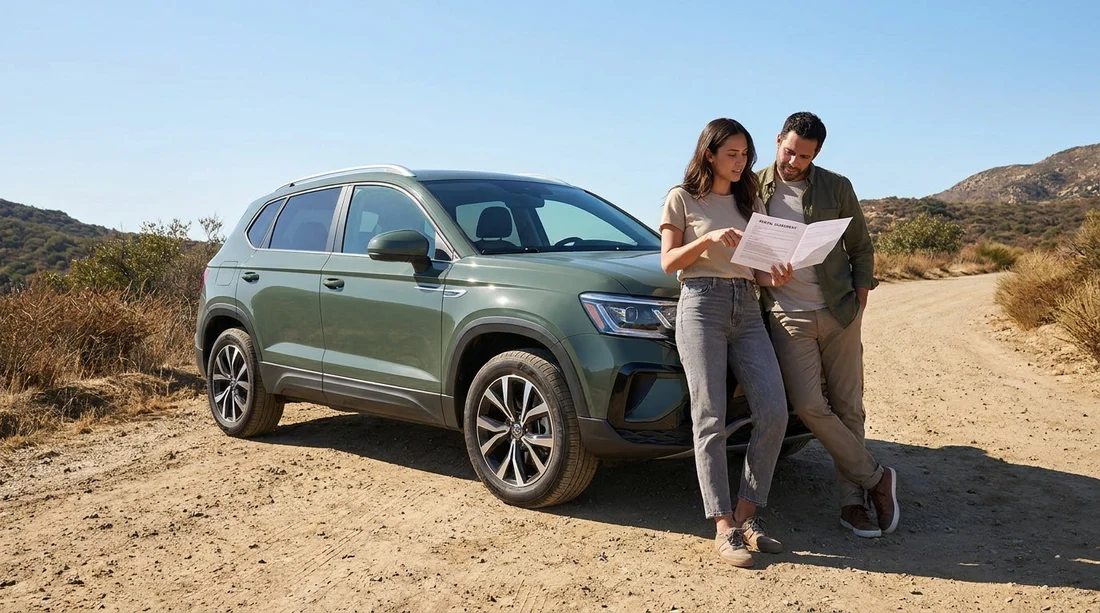
In California, “unpaved road” can mean anything from a well graded forest access route to a sandy track leading to a remote trailhead. The important point for car hire is that rental companies often treat any road that is not paved, sealed, or publicly maintained as higher risk. That can trigger restrictions in the rental agreement and, more critically, exclusions in the damage and insurance terms.
This guide shows exactly where to look in your rental documents and what to confirm at the counter, so you can decide whether a gravel or dirt section is permitted, and what happens if it is not. If you are arranging California airport car hire through Hola Car Rentals, the same checks apply whether you are picking up near Los Angeles LAX, San Diego SAN, or Sacramento SMF.
Start with the rental agreement sections that usually contain the answer
Most drivers search the agreement for the phrase “dirt roads”. Sometimes it is there, but the rule is often written using broader terms. Look for these headings and phrases, usually in the main rental agreement or the terms linked in your confirmation email:
1) “Prohibited Use”, “Use Restrictions”, or “Where you can drive”. This is the primary place to confirm whether unpaved roads are allowed. Typical wording includes “off-road”, “unsealed roads”, “non public roads”, “not regularly maintained”, “beach driving”, or “four wheel drive tracks”. If any of these appear, read the entire paragraph because exceptions may exist for short access roads to lodges, campsites, or car parks.
2) “Vehicle misuse” and “Negligence”. Even if unpaved roads are not explicitly prohibited, the company may treat driving on certain surfaces as misuse. That matters because misuse can void any collision damage waiver you have, and can also affect roadside assistance coverage.
3) “Geographic restrictions”. These are not just about crossing into Mexico or other states. Some agreements define restricted areas that include remote desert regions, mountain passes during winter, or specific national park routes. These restrictions may indirectly capture unpaved sections that are common on scenic routes.
4) “Care of the vehicle” clauses. Phrases like “use the vehicle only on properly maintained roads” can be interpreted as excluding rough tracks even if they are publicly accessible. If the clause is vague, you should clarify at pick-up and ask for the answer in writing.
Check the coverage terms, because permission and cover are different
Many drivers assume that if an unpaved road is not prohibited, damage will be covered. In car hire, those are separate questions. You need to check the damage waiver, insurance, and exclusions pages for language that removes cover on certain surfaces or for certain damage types.
Underbody, suspension, and tyre exclusions are the most common. Gravel roads can throw stones that chip paintwork, crack windscreens, or damage headlights. Rough surfaces can scrape the undercarriage. If your terms exclude underbody, tyres, wheels, glass, roof, or the interior, you could be allowed to drive the road but still be financially responsible if something goes wrong.
Dust, sand, and water exclusions are also important in California. Some agreements specifically exclude damage caused by sand or water ingestion, which is relevant for desert tracks and beach approaches. Even shallow water crossings can be treated as misuse.
What to ask at pick-up, and how to get a usable answer
The counter or desk at pick-up is where unclear language can be clarified. The key is to ask questions that produce a specific, recordable answer.
Ask the surface question clearly. For example, ask whether “graded gravel roads” are allowed, and whether “dirt access roads to trailheads or campsites” are allowed. Avoid only saying “off-road”, because staff may interpret that as aggressive 4x4 use rather than any unpaved surface.
Ask what happens to cover. If they say unpaved roads are allowed, follow up with whether the damage waiver remains valid on those roads, and whether tyres, windscreens, and underbody are covered or excluded.
Ask for written confirmation. The most reliable form is an annotation on the rental agreement or a printed note from the desk that matches your rental contract number. If the answer is “not allowed”, ask them to point to the exact clause so you can make an informed route decision.
Ask about the specific vehicle you are receiving. Some companies restrict certain classes, for example sports cars or low clearance vehicles, even if a different class could use a graded gravel road. If you are picking up through an affiliated supplier page such as Enterprise car hire at Los Angeles LAX, you still need to check the class-specific notes on the final agreement you sign.
Do the right walkaround checks, especially if you might drive on gravel
Whether unpaved roads are permitted or not, documenting vehicle condition protects you if stone chips or tyre issues are later disputed.
Photograph tyres and wheels. Get clear photos of all four tyres, the sidewalls, and the rims. Gravel can cause sidewall cuts and rim scuffs, and pre-existing damage should be recorded.
Photograph the lower bumpers and rocker panels. Scrapes underneath the front bumper and along the sides are common, and these areas are sometimes overlooked in quick walkarounds.
Check the windscreen and headlights. Small chips are easy to miss. Use an angle that catches reflections so chips are visible.
Ask how to report damage after leaving. Some companies require you to report issues within a short window. Knowing the process reduces risk if you discover a puncture repair kit missing or notice a warning light.
Practical route planning if the agreement is restrictive
If your car hire agreement prohibits unpaved roads, treat that as a hard boundary. In California, it is often possible to reroute to stay on paved roads, even if the last mile to a viewpoint is dirt.
Verify the access road surface before you go using offline maps you have already downloaded, and park before the surface changes if needed. Do not rely on a sat-nav that may route you onto an unmaintained shortcut.
Be cautious with “seasonal” roads. After rain or snowmelt, a road that is usually graded can become rutted or washed out. Even if unpaved roads are allowed, damage from flooding or water can still be excluded.
Consider the cost trade-off. Sometimes the cheaper daily rate comes with stricter exclusions. If you are comparing suppliers, keep terms consistent, for example when looking at options like Dollar car hire at Los Angeles LAX.
FAQ
Where is the unpaved road rule usually written in a California car hire contract? It is most commonly in a section titled “Prohibited Use”, “Use Restrictions”, or “Where you can drive”. It may also be referenced under negligence or vehicle misuse clauses.
If unpaved roads are allowed, does that mean damage is covered? Not necessarily. Many agreements allow travel on certain roads but exclude damage to tyres, wheels, glass, roof, and underbody, which are common damage points on gravel.
What should I ask at the pick-up desk to get a clear answer? Ask whether graded gravel or dirt access roads are allowed for your vehicle class, and whether the damage waiver remains valid on those surfaces. Request written confirmation on the agreement.
Can I rely on a verbal promise from staff that gravel roads are fine? Verbal assurances are hard to prove later. If it matters to your trip, ask them to show the clause in the terms or add a note to your contract before you leave.





























































































