


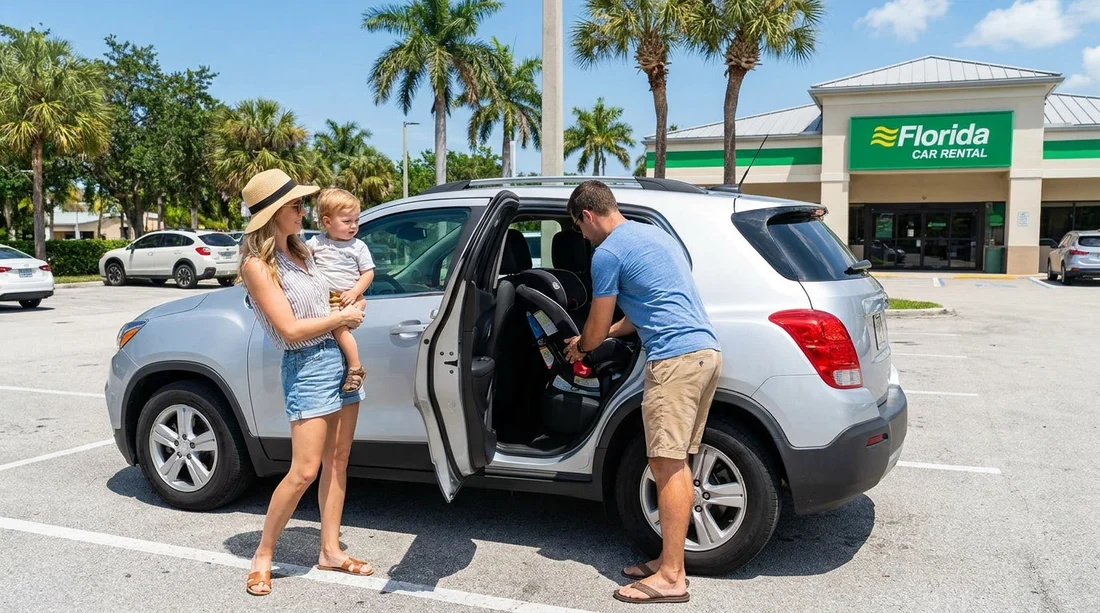
Quick Summary:
- Bring your own seat, but confirm it has clear US approval labelling.
- Choose a lightweight FAA-approved model for easier flights and transfers.
- Match Florida child restraint expectations to your child’s height and weight.
- Confirm vehicle fit, seat belts, and LATCH or tether points before pickup.
Yes, you can bring your own child seat to Florida and use it with car hire, and it can be a straightforward way to avoid daily hire fees for add-ons. The key is making sure the seat is legal to use in the United States, suitable for your child’s current height and weight, and practical for air travel and quick installation after you land.
Florida is a drive-heavy destination, with airport pickups, toll roads, and plenty of family day trips. If you are collecting a vehicle at Fort Lauderdale Airport (FLL) or arriving on the Gulf Coast via Tampa Airport (TPA), having your own seat can mean you leave the terminal ready to go, rather than waiting for a rental counter to locate the right size or wrestling with an unfamiliar model.
Will your own child seat meet US rules in Florida?
For Florida driving, the most practical compliance question is whether the seat is approved for use in the US and is appropriate for your child’s age and size. US seats typically show a label stating they meet Federal Motor Vehicle Safety Standards (FMVSS 213). If you are bringing a seat from outside the US, check the stickers and manual before you travel. Some seats sold in other regions may be approved to different standards, which can create uncertainty if you are asked to confirm compliance.
Florida’s child passenger safety rules generally require a child restraint device for young children, then a booster for older children until seat belts fit properly. Because age thresholds and best-practice guidance can differ from what you are used to at home, match your child’s height and weight to the seat’s limits, not only their age. If your child is at the upper end of a harnessed seat, bringing a high-back booster may be more practical, but only if the child is mature enough to sit correctly for the whole drive.
For visitors, the safest approach is to travel with a seat that is clearly labelled for US compliance and that you already know how to install securely. If you are unsure about your current seat’s labels, consider buying a US-approved model before departure, or planning to obtain one on arrival.
Airline-friendly child seat options that work well with car hire
Travelling with a car seat is mainly about balancing safety, compliance, and how far you will be carrying it. The right choice depends on the child’s stage and your itinerary.
Infant seats and travel systems can be convenient because the base stays with the seat and you may already use it daily. The downside is bulk, and the base can be awkward if you are moving between vehicles or fitting three seats across.
Convertible seats often provide the best fit and comfort for toddlers and younger children, and they can keep children rear-facing for longer. Many are heavy, so look for a lighter model if you expect long walks through airports.
Combination forward-facing seats (harness to booster) can be a good compromise for children nearing booster readiness. They may be easier to keep consistent across multiple days of driving, and you can continue using the harness in Florida even if you switch to booster mode later.
Backless boosters are usually the lightest option for air travel, but they rely on the vehicle’s shoulder belt positioning. In some cars, belt geometry or low seat backs can make a high-back booster the better pick.
What to confirm with car hire before you land
Bringing your own seat removes one cost, but you still need to confirm the vehicle will work with it. Before finalising car hire, check these details.
Seat belt type and length. Some installations need longer belts, especially with bulky convertibles. If you are considering a large SUV or a smaller saloon, belt length and buckle placement can vary.
LATCH availability. In the US, lower anchors and tethers are common, but not universal in every seating position. A top tether is important for many forward-facing harness installations, so check whether the vehicle you will receive is likely to have tether anchors in the seating position you need.
Third-row and three-across plans. If you have multiple children, think about how many seats you need across one row. A minivan can be a practical solution for space, access, and consistent anchor points. If you are collecting around Miami, this guide to minivan hire in Doral can help you compare options for family layouts.
Airport versus city pickup. If you are collecting near your accommodation, confirm parking and loading access so you can install calmly. For example, travellers staying near business districts may look at car rental in Doral rather than an airport desk, depending on their schedule.
Finally, confirm whether the car hire provider allows you time to check the vehicle before leaving the lot. You want to verify the rear seat belts, head restraints, and whether the belt buckles are accessible once the child seat is in place.
Installation tips for Florida driving
Once you land, aim for a careful first installation, then keep it consistent. Install the seat tightly, and follow the manual for either a seat belt installation or LATCH, not both at the same time unless your seat manufacturer explicitly allows it. Ensure the correct recline for rear-facing seats, and check that the harness is at the right height and snug enough that you cannot pinch slack at the shoulder.
Florida driving often includes longer motorway stretches, short city hops, and frequent in-and-out stops for attractions. A properly adjusted harness each time matters more than the model you chose. Also consider sun and heat, as parked cars can get very hot. A light cover over the seat when parked can keep buckles and straps more comfortable, but do not add padding or accessories that did not come with the seat, as they can affect fit.
Making Florida car hire smoother with the right pickup plan
Choosing a convenient pickup point reduces the time you spend installing in a busy area. If your trip starts in Miami, you can compare providers and locations via National Car Rental in Florida (MIA), which is useful for travellers aiming to coordinate flight arrival with a family-friendly vehicle class. If you prefer a familiar brand and will be in the Doral area, you might also review Hertz car rental in Doral as part of your wider comparison.
The goal is not just saving money on add-ons, it is ensuring the seat you bring is compatible with the vehicle you collect, and that you can install it correctly without rushing.
FAQ
Can I bring my own child seat to avoid car hire fees in Florida? Yes. You can travel with your own child seat and use it in your hire car, which can avoid daily add-on charges, as long as it is suitable and compliant.
What label should I look for to confirm US compliance? Look for a statement that the seat meets US Federal Motor Vehicle Safety Standard FMVSS 213. If you cannot find a clear US approval label, consider a US-approved seat.
Is it better to use the car seat on the plane or check it? Using it on the plane can protect it from rough handling and keeps your child securely seated, but it must be FAA-approved and fit airline requirements. Checking is common, but use a protective bag.
Do all Florida hire cars have LATCH anchors? Many do, but not every seating position will. If you need a top tether for a forward-facing harnessed seat, check likely anchor availability and plan your seating position.
What should I confirm before finalising car hire with a child seat? Confirm rear seat belt access, head restraints, likely tether anchor locations, and whether the vehicle class will comfortably fit your seat, especially if you need three-across.





























































































