


Quick Summary:
- E‑ZPass bills tolls electronically, often at discounted cashless toll rates.
- Toll‑by‑plate photographs your number plate and bills later, often with fees.
- Rental toll add-ons can include daily charges, sometimes even without toll use.
- Before driving, confirm admin fees, billing delays, and dispute steps.
New York’s toll roads and bridges are largely cashless, which means you rarely pay at a booth. Instead, you pay through a transponder system, or your number plate is photographed and billed later. When you are using a car hire in New York, that later bill often routes through the rental company, and the details matter because small differences in billing can change the final cost.
The two terms you will see most are E‑ZPass and toll‑by‑plate. Both can work, but they are not the same for pricing, timing, or fees. Knowing how each option is billed helps you decide whether to accept a toll add-on at the counter, rely on the plate billing process, or bring your own E‑ZPass where permitted.
How E‑ZPass works for a rental car in New York
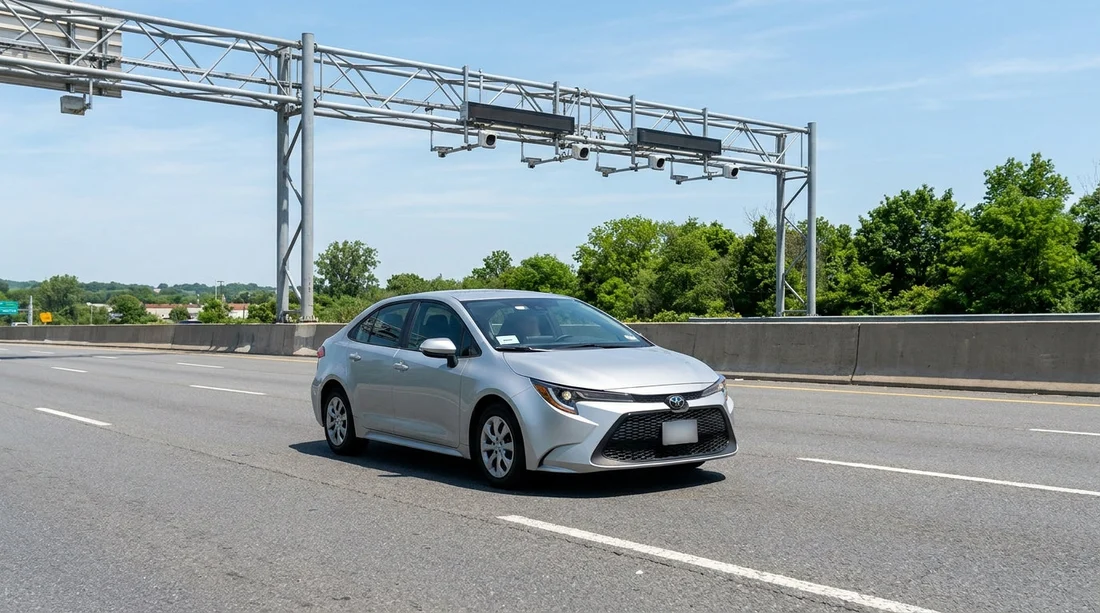
E‑ZPass is an electronic toll collection system used across New York and much of the US Northeast. A transponder communicates with overhead readers as you pass through a toll point, then the toll is charged to the associated account. In a rental, the transponder may be built into the windscreen, integrated into the vehicle, or issued as part of the rental company’s toll programme.
From a driver’s perspective, the practical benefit is that E‑ZPass transactions are recognised immediately by the toll authority, and the toll rates are typically lower than toll‑by‑mail rates on many crossings. Just as important, E‑ZPass reduces the chance of a mismatch between the number plate and the vehicle record, which can happen when plates are dirty, photos are unclear, or registration data is delayed.
However, E‑ZPass with a rental car rarely means free from extra charges. Many rental companies charge a daily fee to activate their toll service, plus the tolls themselves. The daily fee can apply only on days you pass a toll, or on every day of the rental once the service is enabled, depending on the provider.
If you are collecting at an airport location, the counter staff may mention toll coverage quickly as part of the add-ons. If you are comparing options for car hire near major pickup points such as New York JFK or Newark EWR, treat tolls as a separate cost line and ask how the programme is triggered and priced.
How toll‑by‑plate works, and why rentals feel different
Toll‑by‑plate (also called toll‑by‑mail) uses cameras to read the vehicle’s number plate and generate a bill. For privately owned cars, that bill goes to the registered keeper. For a rental, the toll authority typically bills the rental company, and the rental company then bills you using the payment method on file.
This is where the rental experience diverges from driving your own car. The toll itself may be the same crossing amount, but the rental company can add an administrative fee per toll, per day, or per billing period. There may also be a delay, because the toll authority needs time to process the plate read, issue the invoice, and send it to the rental company.
Toll‑by‑plate is convenient when you only expect one or two tolls, or when you do not want to pay a daily toll-service fee. The risk is that multiple crossings can produce multiple admin charges, and it becomes harder to predict the total cost in advance.
Billing differences that change your total cost
The core difference between E‑ZPass and toll‑by‑plate is not just the technology, it is the way charges are packaged. For E‑ZPass, toll authorities often apply lower rates, and charges post quickly to the account tied to the transponder. For toll‑by‑plate, authorities may apply a higher rate and post later, and the rental company may add processing fees.
1) Daily programme fees versus per-toll admin fees. A daily fee can be better value if you expect multiple tolls on several days. Per-toll fees may be cheaper if you only cross one tolled bridge once.
2) When the fee clock starts. Some programmes charge only on days you use toll roads. Others charge from the moment you enable the transponder, even if you take toll-free routes later.
3) How charges appear on your card. With toll‑by‑plate, expect delayed billing after the rental ends. Make sure your card remains valid and check how disputes are handled.
4) Coverage area and vehicle class. If you are driving a larger vehicle, toll rates can be higher. This matters if you are comparing a standard car hire with something bigger such as a van rental at JFK.
What to check before accepting a toll add-on at pick-up
Counter discussions can be fast, especially after a long flight. A few targeted checks will help you avoid surprises later.
Ask for the toll programme name and its charging rules. You want to know if it is charged per day, per toll, or both, and whether the daily fee applies only when tolls are incurred.
Confirm whether the car already has a transponder installed. Some vehicles have an integrated device that can be set to on or off. If it is always active, you may effectively be enrolled even if you did not intend to be.
Check how plate-based tolls are handled if you decline the programme. If you do not take the toll add-on, you will likely still be billed for toll‑by‑plate through the rental company, often with admin fees. Clarify what those fees are, because declining does not mean no extra cost.
Understand deposit and authorisation practices. Some companies place a pre-authorisation for anticipated tolls. Ask whether that is separate from your rental security deposit, and when unused funds are released.
Get the policy in writing. Ask for the toll terms on your rental agreement or a printed summary. This is particularly helpful if you are mixing states, for example collecting from an EWR location with a brand such as Thrifty at Newark and doing day trips into New York City.
Which option is usually better for car hire in New York?
There is no single best option, because it depends on how many tolls you expect and how the rental company prices its service. E‑ZPass tends to be better if you will drive frequently on tolled crossings and parkways where the discounted electronic rate applies, or if you value predictable processing and fewer plate-read issues.
Toll‑by‑plate can be acceptable if your route is mostly toll-free and you may only hit a tolled crossing once. But the economics can flip quickly if admin fees apply per toll transaction. If you plan to do multiple crossings in a day, or you are unsure where your navigation will take you, the daily fee model may be easier to live with.
Practical New York driving tips to reduce toll surprises
Review your likely routes before you leave the car park. In and around New York City, bridges and tunnels can carry significant tolls, and some routes funnel you onto tolled crossings with limited ability to turn off at the last second.
Use navigation settings thoughtfully. Many apps allow avoid tolls, but that can add time and mileage. Decide whether you prefer paying tolls to save time, or taking longer toll-free routes. Either way, your choice impacts whether a daily toll programme fee makes sense.
Track crossings as you travel. A quick note of dates and crossings can help you verify later charges. This is useful if you are balancing multiple providers, for example comparing pricing between car hire at JFK and alternative pick-up locations.
FAQ
Can I use my own E‑ZPass in a rental car in New York? Often yes, but it depends on the rental company policy and whether the car has an integrated transponder that cannot be disabled. Confirm at the counter how to avoid double billing if you bring your own device.
If I decline the rental toll programme, will I avoid all extra fees? Not necessarily. You may still be charged toll‑by‑plate through the rental company, and that can include administrative or processing fees. Ask for the exact fee schedule before you decide.
Why do toll charges appear after I return the vehicle? Toll‑by‑plate invoices take time to be processed by the toll authority and then forwarded to the rental company. The rental company then charges your card once it receives and matches the toll records.
Are E‑ZPass tolls always cheaper than toll‑by‑plate in New York? Frequently, electronic rates are lower than toll‑by‑mail rates on many New York crossings, but it varies. Your final cost also depends on any daily toll programme fee charged by the rental company.
What should I do if a toll charge looks wrong? First, compare the date and time to your trip notes. Then contact the rental company using your agreement details to request the toll record and dispute process, because they are usually the billing intermediary.































































































