


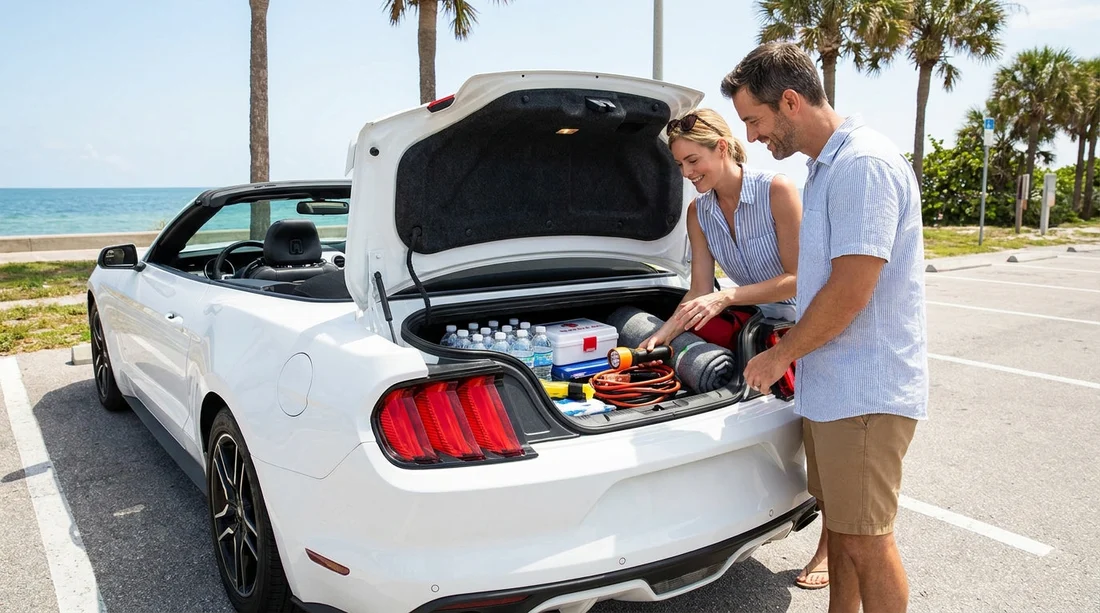
Quick Summary:
- Pack water, electrolytes, and sun protection for Florida heat delays.
- Bring phone power backups, charging leads, and offline navigation essentials.
- Carry visibility and signalling items like a torch, vest, and whistle.
- Add first-aid, hygiene, and document backups in one grab pouch.
Picking up a car hire in Florida often means stepping straight into heat, sudden rain, heavy traffic, and long distances between services. An emergency kit is not about preparing for worst-case drama, it is about being self-sufficient if you get stuck on I-4, hit a storm near the Gulf coast, or find yourself waiting for roadside assistance with limited shade.
The best time to build your kit is before you reach the counter. You can then keep it with you, not buried under luggage, and you can check it against what the vehicle already includes.
If your trip starts at Orlando MCO or Tampa TPA, assemble your kit so it is easy to pull out at the kerb. For Miami collections such as Miami MIA or Miami Beach, prioritise compact items that cope well with humidity and occasional downpours.
1) Heat, hydration, and storm-ready basics
Florida’s biggest everyday risk on a road trip is heat. Even short delays can become uncomfortable if the engine is off or you are outside the vehicle. Pack for staying hydrated and protected from sun exposure.
Water and electrolytes: Bring sealed, shop-bought water bottles and a small electrolyte powder or tablets. Plan for at least one litre per person available in the cabin, not only in the boot.
Sun protection: Include high-SPF sunscreen, lip balm with SPF, and a light cap. A small microfibre towel is useful for sweat, sudden rain, or cleaning fogged windows.
Light rain protection: Florida showers can be intense. A compact poncho or folding rain jacket keeps you dry if you need to check tyres or wait outside for assistance.
2) Power, navigation, and communications
Your phone is your map, camera, wallet, and emergency contact tool. Assume it will overheat, run low on battery, or lose signal in spots. Pack redundancy so you can still navigate and communicate.
Power bank: A reliable power bank (fully charged before pick-up) is the single most valuable emergency item. Bring a short cable that fits your device.
12V car charger: Many rentals have USB ports, but do not rely on finding the right cable or a working port. A simple 12V adapter with USB-A and USB-C covers most devices.
Offline maps and key addresses: Download offline maps for your first day, plus save the address of your accommodation. Write crucial details on paper too, especially if your phone is your only reference.
3) Visibility, signalling, and roadside safety
Most minor roadside problems become risky because drivers are distracted and visibility is poor in heavy rain or at night. Keep a small set of items that help you be seen and heard.
Torch: Pack a compact LED torch or headtorch. A headtorch keeps both hands free if you are searching in the boot or checking a tyre.
Reflective vest: A lightweight reflective vest takes almost no space and can make a big difference at night or during a storm. Keep it accessible in the cabin, not under suitcases.
Whistle: If you break down in a poorly lit area, a whistle is a simple, legal signalling tool that works when your voice does not.
4) First aid and personal comfort
Keep first aid focused on common travel issues: blisters, small cuts, headaches, allergy symptoms, and dehydration. Avoid packing anything that could be classed as a weapon.
First-aid pouch: Plasters, sterile wipes, gauze pads, medical tape, blister pads, and a pair of nitrile gloves cover most small injuries.
Medicines: Bring any personal prescriptions in original packaging. For over-the-counter options, consider pain relief and antihistamines for allergies.
Hand hygiene: Hand sanitiser, tissues, and a few wet wipes are useful after refuelling, snacks, and rest stops.
5) Documents, payments, and backup access
When something goes wrong, the delay is often administrative, not mechanical. Make it easy to prove who you are, pay for what you need, and keep moving.
Photocopies and digital backups: Carry a photocopy of your driving licence and passport photo page separately from the originals. Store secure digital copies too.
Spare payment method: Keep a second card or a small amount of cash tucked away. Even if you prefer contactless payments, a back-up is useful if your main card is blocked or lost.
Pen: A simple pen is surprisingly helpful for forms, exchanging details after a minor incident, or writing down directions when signal drops.
6) What to check at the counter before you drive away
Even with a great kit, a few counter and forecourt checks will prevent common headaches. Before you leave the pick-up area, confirm what the car already has and what you should not use.
Spare tyre or inflator: Many vehicles now carry an inflator kit rather than a spare. Ask where it is and how to use it.
Roadside assistance process: Know who to call and what information they will ask for. Save the number to your phone immediately.
Fuel type and controls: Confirm whether it takes regular unleaded and where the fuel door release is. Misfuelling causes delays and potential charges.
7) Packing method: keep it reachable and organised
A kit is only useful if you can reach it quickly. Use a small grab bag that lives in the footwell or on a seat behind the driver, and a second bag in the boot for bulkier comfort items.
Grab bag (cabin): phone power bank, cables, torch, reflective vest, whistle, water, electrolytes, key documents, and a small first-aid pouch.
Boot bag (luggage area): ponchos, spare clothes, microfibre cloths, extra water, and non-urgent supplies.
This approach keeps your essentials accessible if you are pulled over safely on the shoulder, or if you simply need to handle a quick problem without unloading everything.
FAQ
Do rental cars in Florida come with an emergency kit? It varies by company and vehicle type. Many include a basic tyre solution and jack tools, but not items like first aid, torches, or reflective vests, so bringing your own compact kit is sensible.
What is the most important item to pack for a Florida road trip emergency kit? A charged power bank is the most broadly useful, followed closely by water. Together they help with navigation, calls, and comfort during delays in heat or storms.
Are there any items I should avoid carrying when using car hire? Avoid anything that could be considered a weapon or that might damage the vehicle, such as large blades or harsh chemicals. Stick to first-aid basics, visibility gear, and safe, vehicle-friendly tools.
How much water should I keep in the car? Keep at least one litre per person within reach, then store extra in the boot if space allows. In hot months or with children, increase that amount and add electrolytes.
When should I check my kit during the trip? Do a quick check each morning and after long driving days. Replace used first-aid items, recharge the power bank, and restock water before heading into less developed areas.































































































