


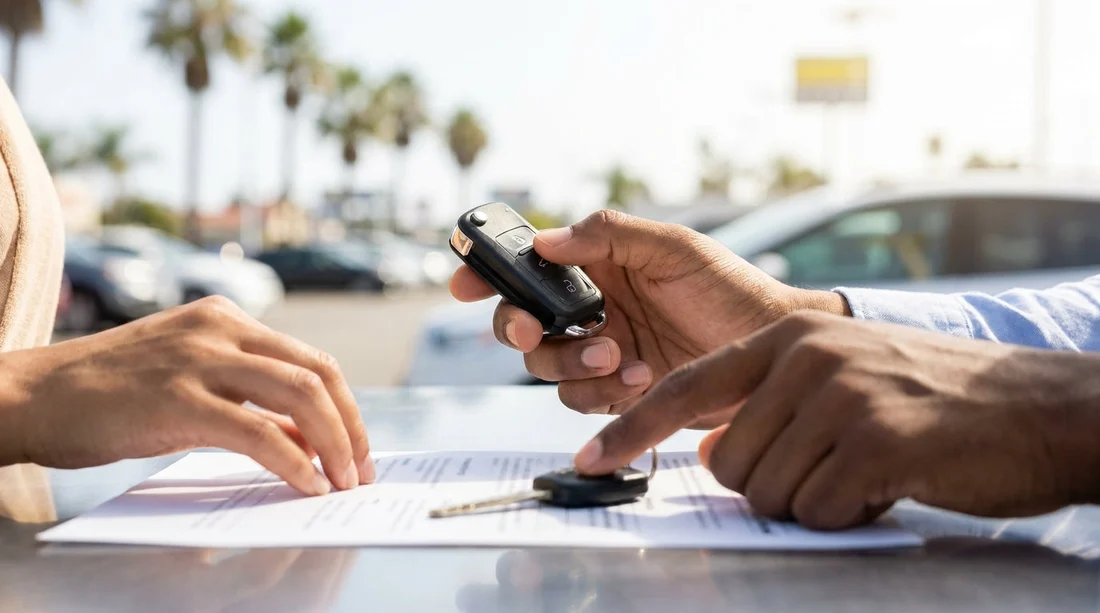
Quick Summary:
- Test lock, unlock, panic and boot release before leaving the lot.
- Confirm push-button start works, and locate the emergency key blade.
- Check remote start availability, range and any required app pairing.
- If no spare key, document it and save roadside contact details.
At pick-up, most drivers focus on the fuel level and any existing body damage, but the key fob deserves the same attention. In California, you may be collecting your vehicle in a busy airport garage, heading straight onto a freeway, and parking later in a tight beach lot or a hotel basement. A weak fob battery, a missing emergency key blade, or a boot release that does nothing can quickly turn a simple car hire into an avoidable delay.
This quick checklist covers keyless entry, push-button start, remote start, boot release, and what to do if you are not provided a spare. Take two minutes at the pick-up bay, while staff are nearby and the vehicle is still easy to swap.
If you are arriving by air, pick-up locations can be crowded and noisy. Allow yourself space to test the fob properly, especially at major hubs where you might collect from Los Angeles LAX or San Francisco SFO, where multi-storey car parks can affect range and make it harder to hear the lock actuators.
1) Confirm you have the correct keys, and identify the emergency backup
Start by confirming what you have been handed. Some vehicles come with one smart fob only, others include a second fob, and a few provide a traditional metal key.
Does the fob include an emergency key blade? Many smart fobs hide a small metal key inside. It usually slides out by pressing a latch. Find it now, then slide it back in. If the car battery or the fob battery dies, that blade may be the only way into the car.
Is there a second fob? If a spare is provided, keep it separate from the main fob. Do not store both in the same bag, otherwise one loss becomes two.
In many California rentals you will receive only one fob, which is not automatically a problem. The key is knowing your backup entry method and documenting what you received.
2) Test keyless entry and locking functions, including range
Stand next to the driver’s door and test lock and unlock. Then step a few metres away and try again. In enclosed garages, range can be shorter, so test both nearby and slightly further out.
Lock, unlock, and visual confirmation. The indicators should flash, mirrors may fold, and you should hear the locks. If it is hard to tell, check the door handle to confirm it is actually locked.
Keyless touch sensors. If the car has a touch-to-unlock handle sensor, try unlocking with your hand on the inside of the handle, and locking by touching the external sensor.
Panic/alarm button. Briefly press it to confirm it works, then immediately cancel it.
If anything is inconsistent, try again after moving away from other vehicles. If the fob still fails to lock or unlock reliably, request a battery change or another fob before leaving.
3) Verify push-button start and the “fob not detected” backup spot
For push-button start cars, get into the driver’s seat, close the door, and start the vehicle with the brake pedal pressed. Watch the dash for any warning such as “Key not detected” or “Key battery low”. If you see a low battery message at pick-up, ask for a replacement fob or battery immediately.
Also find the backup start location for a depleted fob. Many vehicles can start if you hold the fob against a marked area, often the start button itself, a slot in the centre console, or a specific spot on the steering column. Ask staff if it is not obvious.
If you are collecting at a high-throughput location such as San Diego SAN, do the start test before you exit the pick-up lane. It is much easier to swap vehicles when you are still in the facility.
4) Check the boot release and tailgate behaviour
In California you may load luggage, shopping, prams, or hiking gear. Boot access that only works intermittently becomes a daily annoyance.
Fob boot button. Press and hold as required. Some cars require a long press, others a double-press.
External boot button. With the car unlocked and the fob nearby, press the tailgate button to confirm it opens.
If the vehicle has a powered tailgate, check it opens fully, closes smoothly, and does not stop halfway. For drivers picking up larger vehicles, such as those arranged through van rental Sacramento SMF, a reliable tailgate and lock function matters even more.
5) Remote start, if present, and common reasons it does nothing
Remote start is not available on every rental, and it can be disabled by trim level, settings, or subscription. If the car hire listing or vehicle features suggest it exists, test it at pick-up so you know what you have.
Doors and boot must be closed and locked. Many systems will not remote start unless the car is locked first.
Button sequence matters. Some require lock, then a long-press on the remote start button. Others use a double-tap.
Range and interference. In multi-storey car parks, remote start range may be shorter.
If remote start requires a phone app, consider whether you want to pair your personal phone. If you do, ask how to remove your details at return.
6) What to do if no spare key is provided
It is common to receive only one fob. The important part is reducing the risk of a lockout or an expensive replacement process.
First, confirm it is officially “one key only”. Ask staff to note on the agreement that only one fob was supplied.
Second, store the fob safely. Use a consistent pocket or bag compartment. Avoid leaving it loose in a cupholder, where it can fall out when you exit.
Third, learn the lockout plan. Save the roadside assistance number and the location phone number. Ask what happens if the fob is lost, damaged, or locked inside.
If you are travelling between cities, a missing spare becomes more important. A single lost fob can interrupt your trip, and a two-minute check now prevents hours of calls later.
7) Document issues before you drive away
As with any car hire inspection, document key problems immediately. Use your phone to record a short video showing the fob failing to lock, the boot release not responding, or a dashboard warning about key battery. Then report it at the counter or to the exit gate staff.
Also take a photo of the fob itself, including any ID label or barcode if present. This can help if you later need to report loss, confirm which fob you were issued, or reconcile return questions.
Finally, keep your paperwork and receipts together. If your pick-up is through a branded desk, such as Avis car rental Los Angeles LAX, procedures can be efficient but busy, and having clear notes helps resolve any confusion quickly.
FAQ
Q: Is it normal to get only one key fob with a rental in California?
A: Yes, it is common. The important step is having it noted on your agreement and learning the emergency entry and backup start method.
Q: What if the car says “key fob battery low” at pick-up?
A: Report it before leaving. A weak battery can fail suddenly, so request a replacement fob, a battery change, or a different vehicle.
Q: How do I open the car if the fob battery dies?
A: Use the hidden emergency key blade to unlock the door, then start using the vehicle’s backup fob detection spot, often near the start button.
Q: My boot button on the fob does nothing, what should I check?
A: Confirm the car is unlocked, try a longer press, and test the external boot handle button. If it still fails, document it and report it immediately.
Q: Should I pair my phone to an app for remote start?
A: Only if you are comfortable doing so. Ask how to remove your account at return, and ensure the car works normally without the app.































































































