


Quick Summary:
- Confirm the seat shows a valid US FMVSS 213 compliance statement.
- Match label height and weight limits to your child today.
- Check manufacture date, expiry guidance, and any crash replacement warnings.
- Inspect labels, straps and shell for damage, wear, or missing parts.
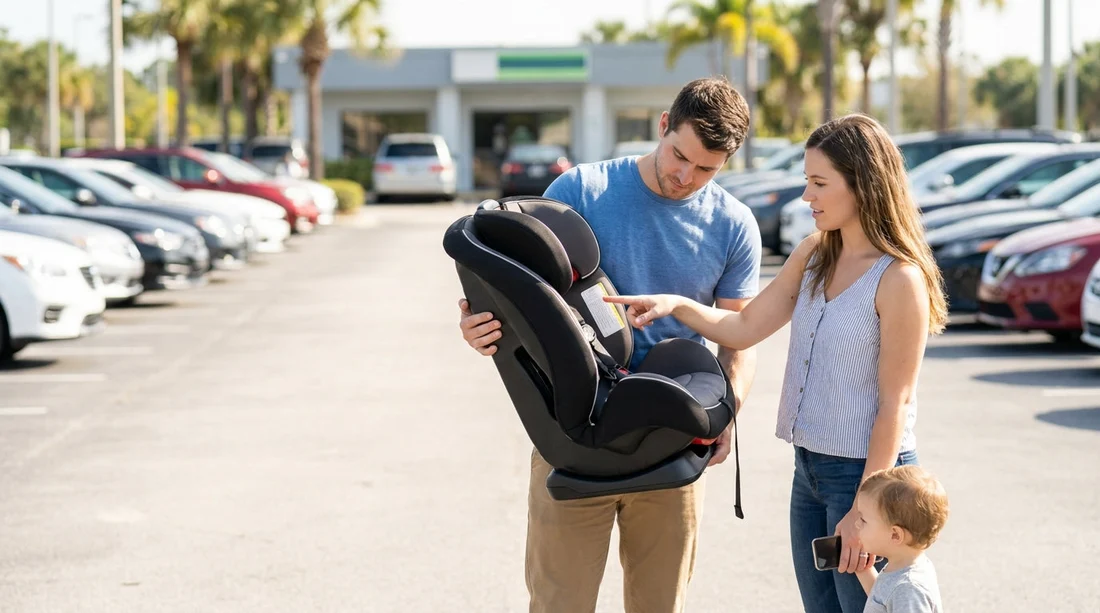
Picking up a child seat with your car hire in Florida can feel like one more item on a busy travel checklist. But the label on the seat is not decoration, it is your fastest way to confirm the seat is appropriate, compliant, and still serviceable. Before you leave the rental location car park, spend a few minutes reading every label and matching it to your child and your plans for the journey.
Florida law requires children to be restrained appropriately, but the label tells you whether the seat itself is designed and certified for use in the US, which is the foundation for safe installation and crash performance. The label also confirms the limits you must not exceed, such as the maximum weight for harness use or whether the seat allows rear facing for smaller children. If anything looks inconsistent, faded, or missing, raise it immediately and ask for a different seat.
If you are collecting from a busy hub, it helps to plan for a short inspection window. Whether you are arriving through Miami Airport or picking up in town, checking the label first can prevent a mismatch that only becomes obvious after you have installed it.
1) Confirm the US approval statement on the label
The most important thing to look for is a clear statement that the restraint complies with US safety requirements. In the US, child restraints are certified to Federal Motor Vehicle Safety Standard 213. On most seats, the label includes wording along the lines of “This child restraint system conforms to all applicable Federal Motor Vehicle Safety Standards” and may reference FMVSS 213 directly.
Why this matters: seats sold in other regions may look similar but are tested and labelled to different standards. For a Florida car hire, you want a seat intended for US use, with instructions and belt paths that match US vehicles and typical seat belt designs.
If you cannot find the compliance statement because the label is missing, heavily worn, or peeling, treat that as a red flag. A missing compliance label makes it hard to confirm the model, the limits, and the correct use instructions. Ask for another seat rather than guessing.
2) Check the seat type and the exact child size range
Child seats are used in different modes, and the label should state the permitted ranges for each. Do not rely on the counter description alone. Use the label to verify the seat matches your child’s current measurements and not just their age.
Look specifically for:
Rear facing limits, often listed as a weight range and sometimes height or head position guidance.
Forward facing harness limits, usually a higher weight range with a minimum age guidance.
Booster mode limits, if the seat converts, including minimum weight and height notes.
If your child is close to a limit, do not “round down”. Choose a seat with comfortable margin so you are not unintentionally outside the approved range during your Florida drive. If you are collecting in a busy location such as car hire in Miami, being ready to verify the label helps you assess what you are handed.
3) Verify the manufacture date, model details, and traceability
Most child seats have a label or sticker with the date of manufacture, model name, and a serial number. This information is essential for judging whether the seat is still within its recommended service life and for identifying relevant safety notices.
What to check:
Date of manufacture. Some seats include an explicit “Do not use after” date, while others require you to consult the manual for the lifespan.
Model number and serial number. These should be legible so faults can be reported clearly.
Recall and registration wording. Complete, readable information is a good sign the seat is intact and properly maintained.
If the key identification label is missing or unreadable, you cannot confirm age or model, and you should request a different unit.
4) Look for crash replacement and “do not use” warnings
Child seats are often subject to replacement guidance after a crash. Labels or instruction panels may state that the seat must be replaced after any accident, or they may specify conditions for a “minor crash” exception depending on the brand.
For a car hire seat, you likely do not know its history, so warnings matter. Also scan for other “do not use” notices, such as not using the seat if parts are missing, if harness straps are cut or frayed, or if the seat has been modified.
5) Confirm installation method, belt path, and weight limits for anchors
Florida rentals will commonly have LATCH anchors in suitable seating positions, but you still need the label to confirm how the seat should be installed and whether there are specific limits.
Check the seat’s label and instruction diagrams for the correct belt path for rear facing versus forward facing, tether guidance, and any LATCH weight limit notes. If the label states a LATCH limit and your child is above it, install using the vehicle seat belt and use the top tether where required.
If you are not confident installing the seat, take the time while still at the branch to read the diagrams on the seat itself. This is easier than troubleshooting in a hotel car park later. It also helps if you are swapping vehicles during your trip, for example picking up near Downtown Miami and changing category later.
6) Check the physical condition that the label hints at
Use the label as a checklist to assess condition and completeness. Inspect harness webbing for frays or cuts, check the shell for cracks or deformation, and confirm instruction panels are readable. If an accessory is required for a certain weight range, ensure it is actually present.
For families using larger vehicles, you may be pairing a child seat with people carriers or vans. Space helps, but the seat still must be installed tightly and in an approved seating position, so checks are just as important when using van hire in Miami Beach.
7) A quick “before you leave” label and fit checklist
Compliance: FMVSS 213 statement present and readable.
Limits: Your child fits within the stated mode limits.
Date and ID: Manufacture date, model, and serial number are legible.
Warnings: Crash replacement and “do not use” warnings understood.
Installation: Correct belt path, tether guidance, and LATCH limits confirmed.
Condition: No cracks, no missing parts, harness and buckle operate smoothly.
If any single item fails, request a different seat. A car hire child seat is only as safe as its labelling, condition, and correct installation allow.
FAQ
Do Florida rental child seats have to show an FMVSS 213 label?
For a seat intended for use in the US, it should show a compliance statement indicating it meets applicable Federal Motor Vehicle Safety Standards, typically FMVSS 213. If the compliance label is missing or unreadable, ask for another seat.
Is the child’s age enough to choose the right seat at pick-up?
No. Use the label’s weight and height limits for the exact mode you will use, rear facing, forward facing harness, or booster. Children of the same age can vary widely, so size limits are the reliable check.
What if the seat has no manufacture date on the label?
If you cannot find a legible manufacture date or model identification, you cannot judge its service life or confirm instructions. In that situation, it is sensible to reject the seat and request one with clear traceability.
Should I use LATCH or the vehicle seat belt in Florida?
Either can be safe if used correctly, but follow the seat label and diagrams. If the label indicates a LATCH weight limit and your child exceeds it, install with the vehicle seat belt and use the top tether where required.
Can I accept a seat if the instruction labels are peeling off?
Peeling labels can mean you will not be able to confirm belt routing or recline guidance during installation. Because correct use depends on those instructions, it is better to request a different seat with intact, readable labels.































































































