


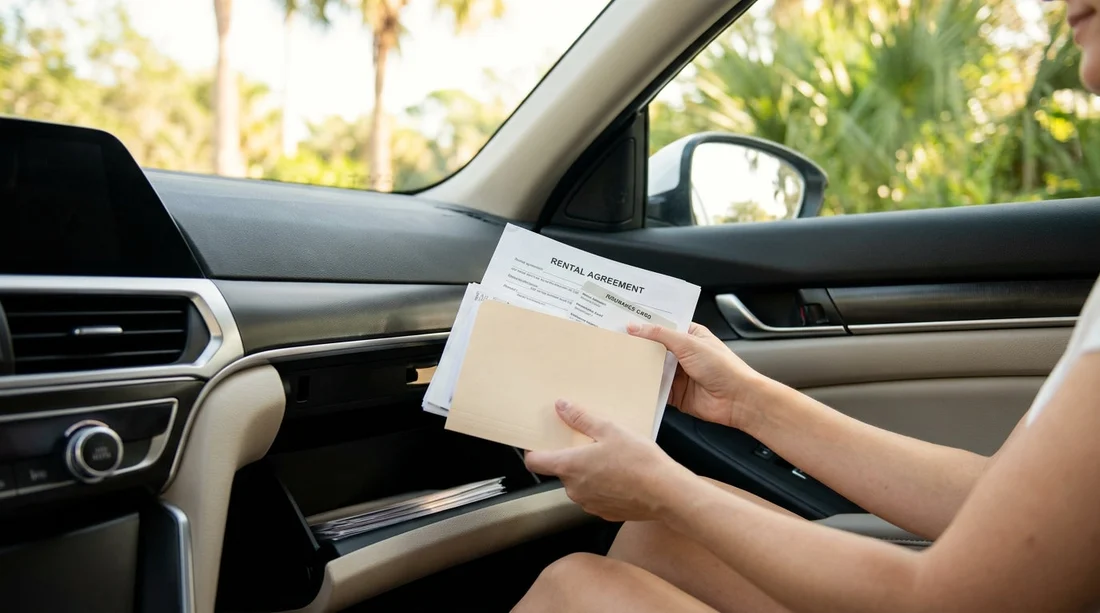
Quick Summary:
- Confirm the registration card is present, current, and matches the vehicle.
- Locate insurance or financial responsibility proof and the claims number.
- Find roadside assistance instructions and the 24/7 contact number.
- Keep the rental agreement accessible, with emergency contacts noted.
When you collect a Florida rental car, it is tempting to focus on the fuel level and the first sat nav destination. The smarter move is to open the glovebox and confirm the key documents are there before you drive away. In most cases you will never need them, but if you do get stopped, have a minor bump, or break down at night, having the right paperwork in the car saves time and reduces stress.
This guide explains what documents should be in the glovebox for Florida car hire, what each one is for, and what to do if something is missing. Requirements vary slightly by rental company, but the practical checks stay the same.
1) Vehicle registration: proof the car is properly registered
The single most important glovebox item is the vehicle registration document. In the US this is usually the registration card issued by the state where the vehicle is registered, and it is often a copy rather than an original. You want the registration in the car in case a police officer asks for it during a traffic stop or after a collision.
What to check at pick-up: confirm there is a registration card and that the licence plate number and vehicle details (make, model, VIN or partial VIN) appear consistent with the car you are driving. Also check the registration is in date. If you cannot easily match the details, ask the desk or exit gate staff to verify it for you.
Why it matters: if registration proof is missing, a routine stop can take longer while the officer confirms information another way. It can also complicate an accident report if you cannot readily provide the car’s details.
2) Insurance proof or “financial responsibility” information
Insurance for rental cars is not always presented as a traditional insurance card in the glovebox, because coverage can depend on what was purchased at the counter, what is included in the rate, and what the driver already has through a personal policy or card benefits. Even so, you should have some form of proof or guidance available in the car, such as an insurance certificate, a brochure that describes the coverage, or a sheet that identifies the insurer and how to report an incident.
What to look for: a document that clearly states the insurance provider or administrator, a policy or certificate reference (where applicable), and a claims reporting phone number. Some rental companies include a “renter’s information” booklet with accident and incident steps. If there is no document in the glovebox, make sure the coverage details are at least present in your rental paperwork, and keep a photo on your phone.
If you are arranging a car through Hola Car Rentals for a trip starting at Orlando International Airport (MCO) or elsewhere in Florida, the key is consistency. The glovebox documents and your rental agreement should not contradict each other on who to call or what steps to follow.
3) Roadside assistance and breakdown instructions
Florida driving can mean long distances, heavy rain, and intense heat. Tyre issues and battery problems are among the most common reasons renters need help. Your glovebox should include breakdown guidance that tells you who to contact, what information to provide, and what to do for safety while you wait.
What to check: a roadside assistance leaflet or card with a 24/7 phone number, plus any membership or reference number needed. Look for guidance on towing, flat tyres, lockouts, jump starts, and what is and is not covered. Many modern vehicles have tyre inflator kits instead of spares, so the instructions matter.
For example, if you are collecting from Tampa International Airport (TPA) and heading towards the Gulf Coast, it is worth knowing the roadside steps before you hit a busy bridge or motorway.
4) Accident report steps and incident forms
Many rental companies include an accident information pack in the glovebox. This can be a form you fill in, a checklist, or simply clear instructions. Even if you hope never to use it, take 30 seconds to confirm it is there.
What to look for: a simple set of instructions that covers immediate safety, contacting emergency services when needed, notifying the rental company, and documenting the scene. Some packs include a blank incident form or a guide to what information to collect, such as other driver details, witness contacts, and photos of damage.
Why it matters: in a stressful situation you may forget steps or miss key details. Having a checklist in the glovebox reduces mistakes, especially around who to call and what you must not do, such as agreeing fault at the scene.
5) The rental agreement and key terms, keep it accessible
Your rental agreement is not always stored in the glovebox, but it should be accessible in the car, either as a printed copy or as a saved PDF. It is the document that ties the vehicle to you as the authorised driver and sets the rules on additional drivers, toll programmes, fuel, and what to do in an incident.
What to check: ensure the agreement shows the correct vehicle class or plate number (depending on how the company records it), the rental dates, and your name. Confirm any additional drivers are listed if required. Keep the agreement somewhere you can retrieve quickly, but do not leave it on display when parked.
If you are planning longer drives or carrying more luggage, you might be looking at options like SUV rental in Orlando (MCO) or SUV rental in Florida (MIA). Bigger vehicles can mean different tyre specs, towing rules, or roadside considerations, so it is worth checking the agreement and glovebox guidance line up.
6) What to do if a document is missing
If you cannot find a key document, do not assume it is fine. Missing registration, unclear insurance contact details, or absent roadside instructions are simple to fix at pick-up and much harder to fix later.
Practical steps: return to the counter, exit booth, or the lot attendant and explain what is missing. Ask for a replacement copy or written instructions. Take clear photos of any paperwork they provide and store it offline on your phone. If the document is normally digital, ask where it is accessible and what number to call if you are offline.
Finally, if you are comparing providers for downtown pick-ups, pages like Alamo car hire in Downtown Miami can be useful for planning, but the glovebox checks remain the same whichever company you use.
FAQ
Do I legally need to carry the rental agreement in the car in Florida? It is not typically a statutory requirement like registration, but keeping it accessible is sensible. It helps show you are an authorised driver and provides the correct incident and roadside steps.
Is an insurance card always in the glovebox of a Florida rental car? Not always. Coverage may be documented on your rental agreement or a separate information sheet. You should still have clear proof of who administers coverage and which number to call after an accident.
What if I am stopped by police and the registration is missing? Stay calm and explain it is a rental vehicle. The officer may verify details electronically, but it can prolong the stop. It is best to return to the desk immediately if you notice the registration is not in the car.
Where do I find the roadside assistance number if there is no glovebox leaflet? Check your rental agreement, key tag, or any printed handover paperwork. If nothing shows a 24/7 number, contact the rental company before you leave the pick-up location and request the official roadside contact details.
Should I keep the documents in the glovebox while parked? Keep the standard vehicle documents there if that is where they are stored, but do not leave personal documents or anything with your home address visible. Store your own paperwork out of sight and lock the car.































































































