


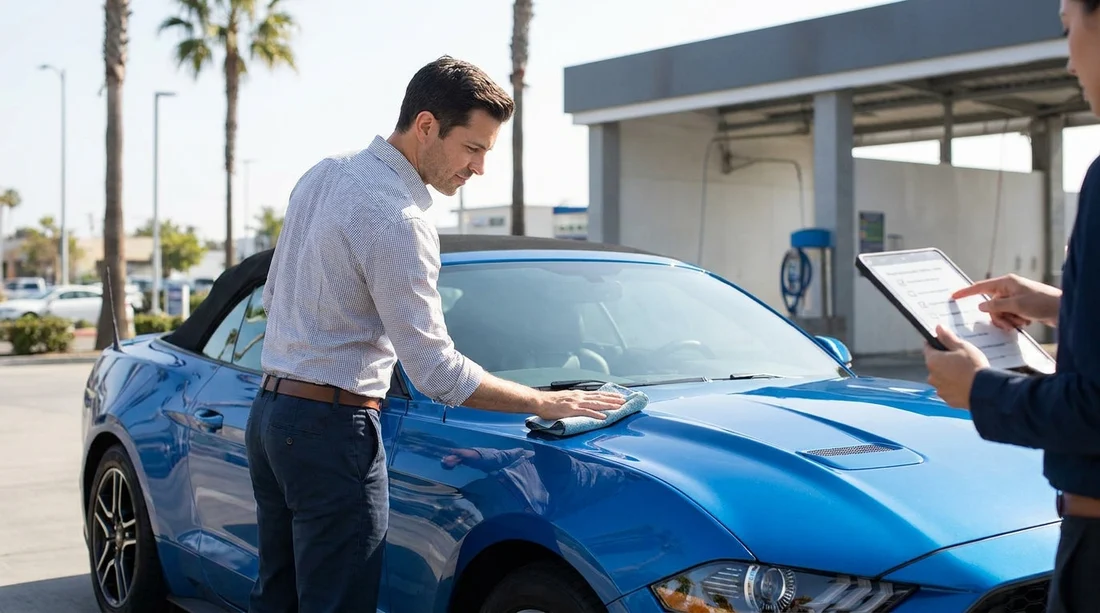
Quick Summary:
- Ask what triggers cleaning fees and request the written fee schedule.
- Confirm whether a basic wash is required and what proof counts.
- Check rules for automatic washes, beach sand, pets, and smoke odours.
- Inspect, photograph, and record existing stains, smells, and exterior marks.
Cleaning fees can be one of the most avoidable surprises in car hire, especially in California where beach trips, dusty roads, and long drives are common. Most rental agreements separate normal “wear and tear” from conditions that require extra labour, specialist products, or time out of service. Before you sign, it helps to understand what the company considers “excessively dirty”, whether you must wash the car, and how to prove you did.
This guide focuses on the practical questions to ask at the counter and the checks to do before and after your trip. If you are comparing airport pick-ups, Hola Car Rentals publishes location pages such as San Diego Airport car rental and Santa Ana SNA car hire, where you can review provider options and plan return timing.
1) Confirm the difference between “normal dirt” and a chargeable condition
Start by asking how the company defines a cleaning fee. In most policies, ordinary road grime is fine, but extra cleaning is charged when the vehicle needs deep cleaning, odour removal, stain treatment, or specialist work to restore it for the next customer.
Ask for the triggers in plain terms. Common chargeable conditions include:
Spills and stains: coffee, sugary drinks, milk, wine, sunscreen, makeup, and muddy footprints that soak into fabric.
Smoke or vaping odour: this often carries the highest fixed fee, and it can apply even if you did not smoke but the car is returned smelling of smoke from passengers or clothing.
Pet hair and dander: not always prohibited, but frequently chargeable if embedded in seats, vents, or carpets.
Beach sand: sand in boot seams, seat tracks, air vents, and carpet fibres takes time to remove.
Food debris: crumbs in seat crevices and sticky residues can trigger a charge even if the cabin looks “mostly fine”.
Also ask whether there is a separate “excessive dirt” fee for exterior issues such as thick mud, sap, tar, or bug build-up.
2) Get the fee schedule, not just a verbal reassurance
Policies can be vague, so ask for the actual amounts or ranges. Some companies use fixed fees, others assess by severity, labour time, or whether the car must be taken out of service.
Is the fee fixed or variable? A fixed fee is easier to plan for, but it may feel harsh for minor issues.
Are there different tiers? For example, light interior cleaning vs deep shampooing, or standard odour vs smoke remediation.
How is evidence recorded? Ask if staff take photos at return, and whether you can receive a copy if a charge is applied.
When will you be notified? Clarify whether charges can appear days later after a detailer inspects the car.
If you are comparing providers across trips, it can help to read the rental conditions associated with major brands, for instance the pages for Hertz at Chicago O’Hare or Budget at Miami, then use the same checklist at collection in California.
3) Ask if a car wash is required, and what “clean return” actually means
Many renters assume they must wash the car before returning it. In standard car hire, you are usually expected to return the vehicle in a reasonable condition, not freshly detailed. Confirm these points before you drive away.
Is an exterior wash required? Some agreements say the vehicle must be returned in the same general cleanliness as collected, allowing for normal road dirt.
Are there restrictions on certain washes? Some vehicles may have restrictions on automated car washes. Ask whether brush washes are discouraged and whether touchless is preferred.
What about the interior? Clarify whether you are expected to vacuum after a beach trip or family drive.
What proof is accepted if you wash it? If you choose to wash, ask whether a receipt is useful and whether it needs to show date and time.
Also confirm the practical side, such as what happens if you return after hours. After-hours returns can increase risk because you cannot discuss condition in person.
4) Clarify “no smoking” and odour rules, and protect yourself
California rentals almost always have strict no-smoking rules, and “smoking” can include vaping or cannabis. These fees are often non-negotiable because the vehicle may need ozone treatment and may be unavailable for the next hire.
Before you leave the lot, smell the cabin and check the ashtray area, door pockets, and seat creases. If you notice any odour, request a different vehicle or have the agent note it on the agreement. Take clear photos of the interior at collection, including seats and floor mats, so you can show you returned it in similar condition.
If you plan to carry passengers who smoke, set expectations. Also avoid leaving the car near smoke, such as standing next to outdoor smokers with windows open.
5) Sand, hiking dust, and outdoor gear, set return-friendly habits
California is made for outdoor trips, but sand and dust are exactly what rental firms target with cleaning fees. A few simple habits reduce risk.
Use floor mats correctly: place mats flat and shake them out frequently.
Contain sand and dirt: keep beach gear in bags or a plastic tub in the boot.
Quick vacuum before return: a basic vacuum is usually enough to remove loose sand and crumbs.
Wipe high-touch areas: steering wheel, touchscreen, cup holders, and door pulls can get sticky from sunscreen or snacks.
These steps are not about making the vehicle spotless, they are about avoiding the “extra labour” threshold that triggers fees.
FAQ
Do I have to wash a car hire before returning it in California? Usually no, as long as it is reasonably clean and only has normal road grime. Confirm the policy, because heavy mud, sap, or excessive dirt can still trigger a fee.
What is the most common cleaning fee renters get charged for? Smoke or vaping odour is often the most expensive, followed by interior stains, excessive sand, and pet hair. Ask for the fee schedule so you know what is considered chargeable.
Can a rental company charge a cleaning fee without showing evidence? They may apply a fee based on their inspection process, but you can ask how they document it. Taking your own photos at pick-up and return helps if you need to dispute a charge.
Are automatic car washes safe for rental cars? Many are fine, but some providers discourage brush washes or have restrictions for certain vehicles. Ask whether touchless is preferred and whether there are any vehicle-specific limitations.
How can I avoid sand-related cleaning charges after a beach day? Shake out mats, keep gear in bags, and do a quick vacuum of footwells and seat rails before return. Focus on removing loose sand from the boot and carpet edges.































































































