


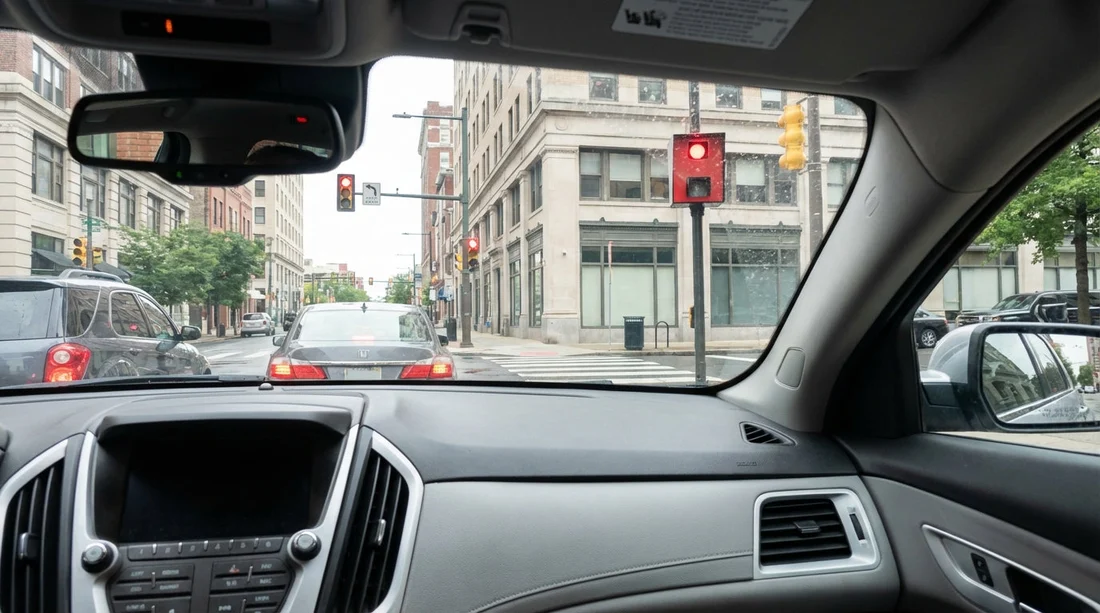
Quick Summary:
- Philadelphia red-light cameras ticket the vehicle, so rental cars can be cited.
- Rental firms usually transfer liability to you, plus an admin fee.
- Check dates, plate, location, and signal timing before disputing.
- Appeal quickly using the notice instructions, keep copies of all evidence.
Hiring a car in Pennsylvania is a straightforward way to get around, but automated enforcement can surprise visitors who are unfamiliar with local rules. In Philadelphia, red-light cameras can issue violations to the vehicle’s registered owner, which is usually the rental company. The practical question for car hire customers is what happens next: how the notice reaches you, what charges you might see, and whether you can challenge a ticket that looks wrong.
This guide focuses on Philadelphia’s red-light camera process, how rental agreements typically handle traffic and camera violations, and the realistic steps to contest mistakes without missing deadlines. If you are arranging a vehicle in the city, these basics are useful whether you are collecting from an airport counter such as car hire at Philadelphia Airport (PHL) or from downtown locations via car hire in Philadelphia.
Do Philadelphia red-light cameras ticket rental cars?
Yes. A red-light camera citation is issued to the vehicle, based on the number plate captured by the camera system, so a rental car can be ticketed in the same way as any privately owned vehicle. The fact that you were the driver does not prevent the system from generating a notice to the registered owner, which is typically the rental company for a car hire fleet.
Philadelphia’s automated enforcement is designed around evidence from the camera, usually including still images and a short video clip showing the vehicle entering the junction after the light has turned red. The notice is normally civil rather than criminal, which matters because civil camera citations typically do not involve points on a driving licence, but they still require payment or a successful challenge.
If you are unsure whether the junction you used was camera enforced, you will often see posted signage warning drivers that a red-light photo enforcement system is in operation. The absence of a sign does not guarantee there is no camera, but clear warning signs are common at enforced intersections.
How a camera violation is issued, step by step
Understanding the chain of events helps you assess whether a charge arriving weeks later is legitimate and whether you still have time to appeal.
1) The camera records an event. The system detects a vehicle crossing the stop line after the signal turns red. Evidence is captured to show the signal phase, the vehicle position, and the plate.
2) The notice is mailed to the registered owner. For a rental vehicle, this usually goes to the rental company’s address on file with the state motor vehicle agency. Mailing times vary, and delays can happen during peak periods.
3) The rental company matches the notice to your agreement. The rental firm checks the vehicle plate and the date and time against its rental records. If you had the car at that moment, the firm may either pay the fine and recharge you, or transfer liability by providing your details to the issuing authority, depending on the company’s policy and the notice type.
4) You are notified and charged according to the rental terms. Many car hire agreements allow the company to charge your card for the fine amount, plus an administrative fee for processing. In some cases you may instead receive a reissued notice in your name, with instructions to pay or contest directly.
5) Deadlines begin from the notice date, not your travel date. This is the most common point of confusion. By the time you hear about the violation, the appeal window may already be running, so act quickly.
How fees reach you through the rental agreement
Most car hire contracts contain a section covering parking tickets, tolls, traffic citations, and automated camera violations. While wording differs by company, the key practical points are similar.
You can be charged in two parts. First is the underlying fine or civil penalty set by the issuing authority. Second is an administration fee charged by the rental company for handling the paperwork, identifying the renter, and processing payment or transferring liability.
The admin fee is not the same as the fine. Even if you successfully challenge the citation with the city, the rental firm may still keep an admin fee if it already spent time processing the notice. Read your rental terms carefully so you know what is refundable and what is not.
Timing can be later than you expect. Because the notice is mailed to the registered owner, it can arrive after you have returned the vehicle. That means the first sign might be an email from the rental company, a charge on your card, or a forwarded notice. If you used a popular airport location, such as via car rental at Philadelphia (PHL), you are still responsible for violations occurring during your rental period, even if you are already home.
Multiple notices can stack up. If you pass through several enforced intersections on different days, each event is usually its own citation. The rental firm may process them separately, resulting in multiple admin fees.
What to do first when you receive a notice or charge
Whether you receive the actual citation or just a rental company notification, take a structured approach before paying or disputing.
1) Confirm the basics match your rental. Check the plate number, vehicle description, date, time, and intersection. Compare with your itinerary, hotel check-in, meeting times, or any receipts that place you elsewhere. Mistakes are uncommon but possible, particularly with plate misreads.
2) Identify who currently controls the appeal. If the rental company already paid the fine, your dispute may need to be with the rental firm rather than the city, because the case may be closed. If liability was transferred and you received a fresh notice, you can usually challenge directly with the issuing authority.
3) Get the evidence. Red-light camera citations typically provide a way to view photos or video. Use the citation number to access the images, then look for what actually matters: the signal state, the moment the front wheels cross the stop line, and whether your vehicle is clearly identifiable.
4) Note the deadline immediately. Write down the pay-by date and the contest-by date. If you plan to dispute, submit within the window, even if you are still gathering supporting documents.
5) Ask the rental firm for documentation. Request a copy of the notice they received, the date it arrived, and their action taken. If they charged your card, ask for an invoice showing the fine amount and the admin fee separately.
Common reasons a Philadelphia camera ticket might be wrong
Successful appeals are not guaranteed, but some issues are more persuasive than simply saying you did not notice the light.
Plate or vehicle mismatch. If the plate in the image is unclear or does not match your rental vehicle, that is a strong basis to dispute. Compare the plate characters carefully.
Wrong date or time relative to your rental period. If the violation time falls outside your contract, for example after you returned the vehicle, raise it immediately with both the rental company and the issuing authority.
Vehicle not actually entering on red. Review the video. Some disputes hinge on whether the vehicle entered the junction while still yellow and only cleared the intersection on red. The legal standard generally focuses on entry after the signal turns red, not when the vehicle leaves the junction.
Emergency vehicle context or directed traffic. If you proceeded under instruction from a police officer or to allow an emergency vehicle through, include that context. Provide any supporting information you have.
Duplicate processing. Occasionally, renters see a city notice and a separate rental-company charge relating to the same event. If that happens, gather documentation and challenge the duplication promptly.
How to appeal a Philadelphia red-light camera ticket as a car hire driver
The exact appeal method depends on the notice you have. Follow the instructions printed on it, because requirements can change and missing a step can forfeit your chance.
Step 1: Determine whether the notice is in your name or the rental company’s. If it is still in the rental company name, you may need the rental firm to transfer liability. Some firms do this automatically, others pay and recharge. Ask what they have done and when.
Step 2: Collect a focused set of evidence. Aim for materials that directly address the alleged violation: the citation images, your rental agreement showing dates and times, return receipt, and any proof you were not in that location. Avoid sending large collections of unrelated travel documents.
Step 3: Write a concise explanation. State what is wrong and why, referencing the evidence. For example, if the time is outside your rental, quote the return time from the agreement. If the plate is misread, specify the characters that differ.
Step 4: Submit within the deadline and keep confirmation. If the process is online, screenshot the confirmation. If by mail, use a trackable method and keep copies. This is especially important if you are no longer in Pennsylvania when you discover the notice.
Step 5: Track outcomes and be realistic about admin fees. If the issuing authority cancels the citation, forward proof to the rental company and request review of any related charges. If the rental firm’s fee is non-refundable under the contract, you may still be liable for that portion even if the underlying fine is removed.
What if the rental company already charged your card?
This is common with civil camera enforcement, because it is simpler for the registered owner to pay promptly and then recharge under the rental terms. If that happens, you still have options, but they narrow.
Ask whether the citation can still be contested. If the case is closed due to payment, the issuing authority may not accept a late challenge. Policies vary.
Request itemisation. You should be able to see the fine amount and the rental company admin fee. If you cannot match the fine to a specific citation number and date, ask for the notice copy.
Dispute only clear errors. If the rental firm charged you for a date outside your rental, for the wrong vehicle, or for a duplicate, raise it as a billing dispute with supporting documentation. If you simply disagree with the camera finding, you may have limited recourse once it is paid.
Practical driving tips to avoid red-light camera problems in Philadelphia
When you are new to a city, what helps most is predictability: plan for lights, leave extra following distance, and avoid rushed decisions.
Do not accelerate to beat yellow. If you are close enough that braking is safe, slow down. If you are too close to stop safely, continue smoothly. Sudden changes create both safety risks and enforcement risk.
Watch the stop line, not just the signal head. In camera enforcement, the crucial point is when your front wheels cross the stop line after red.
Know your vehicle type. Larger vehicles need longer stopping distances. If you are travelling with family and using a bigger option like minivan hire in Philadelphia, increase your buffer to the car ahead and anticipate lights sooner.
Share driving responsibilities carefully. If more than one authorised driver is on the rental, keep a simple log of who drove when, especially on busy city days. It helps if a notice arrives later and you need to reconstruct events.
Keep your contact details current. Make sure the rental company has your correct email and phone so any notices reach you quickly.
Finally, remember that different suppliers can have slightly different approaches to fines processing. If you are comparing providers for car hire, it is worth checking how violations are handled in the terms, for example with Hertz car rental in Philadelphia or Avis car hire in Philadelphia.
FAQ
Do Philadelphia red-light camera tickets add points to my licence? Red-light camera citations are typically civil penalties tied to the vehicle, so they usually do not add driving licence points. Always read the notice details.
How long after my car hire will I hear about a camera violation? It can take weeks because the notice is mailed to the registered owner first, then processed by the rental company. Delays are common during busy periods.
Can I appeal if the rental company already paid the fine? Sometimes, but it may be harder because payment can close the case. Ask the rental company for the citation number and whether the issuing authority still allows a challenge.
Why was I charged an extra fee on top of the ticket amount? Many rental agreements allow an administrative fee for handling violations, in addition to the fine itself. The fee is set by the rental company, not the city.
What should I do if the ticket time is outside my rental period? Gather your rental agreement and return receipt, then contact the rental company immediately. Also follow the notice instructions to contest, citing the mismatch clearly.































































































