


Quick Summary:
- Ask for LATCH-equipped vehicles, then confirm rear-seat lower anchors by touch.
- Look for anchor symbols, check the seat bight, and feel metal bars.
- Confirm top-tether points in the boot, rear shelf, or seatback.
- Test-fit your child seat, tighten properly, and check movement at the belt path.
When you arrive for car hire pick-up in Florida with a child seat, the safest time to confirm ISOFIX or LATCH anchors is before you drive off the lot. In the UK you may think in ISOFIX terms, but in the US the system is usually called LATCH, which stands for Lower Anchors and Tethers for Children. Functionally, it is the same concept, two lower anchors between the seat back and seat cushion, plus a top tether anchor for forward-facing seats.
Because hire fleets change, trims differ, and staff are busy, it helps to use a quick counter checklist you can run in a couple of minutes while the vehicle is still parked. The aim is simple, confirm that the anchor points exist, are accessible, and match how your seat installs, then do a fast stability check.
If you are collecting at a busy hub such as Orlando Airport, building this check into your handover routine saves stress later, especially if you have a tired child and luggage to organise.
Know what you are looking for, ISOFIX versus LATCH in Florida
LATCH has two parts. The lower anchors are usually hidden in the rear outboard seating positions, left and right. You may see a small label or icon on the seat fabric showing where they are. The top tether anchor is separate, and its location depends on the vehicle, it can be on the back of the rear seat, in the boot area behind the seat, on the rear shelf, or on the ceiling in some SUVs.
Most US vehicles have LATCH for the two outer rear seats. The centre rear seat often does not have its own dedicated lower anchors, and it can be unsafe to borrow anchors from the left and right unless the manufacturer explicitly allows it in the vehicle manual. Your checklist should therefore focus on installing in an outer rear seat unless you have a specific reason not to.
One-minute counter checklist at the pick-up bay
1) Confirm the right seating position before you touch the seat. Decide where the child seat will go. In Florida driving, the rear seat is generally preferred for children, and the safest default is the rear outboard position that gives you easiest access. If you are installing a rear-facing seat, check front-seat travel so you are not forced to move the seat into an unsafe angle later.
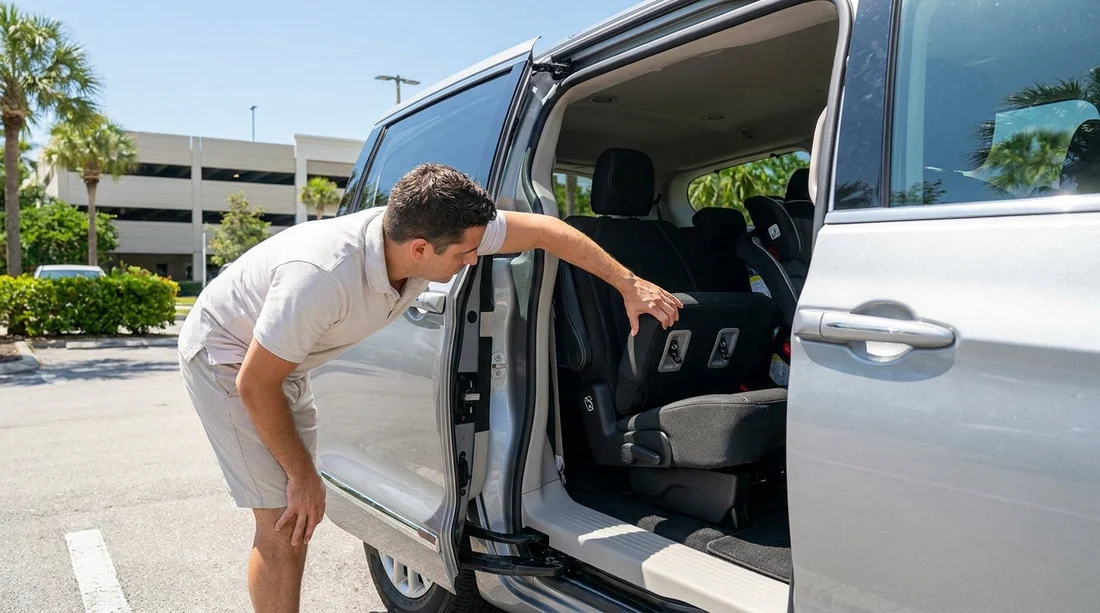
2) Find the lower anchors, do not rely on “it should have them”. Slide your fingers into the seat bight, the crack where the backrest meets the cushion. Feel for two solid metal bars about a handspan apart. Some vehicles have plastic guides that make this obvious, others hide the anchors behind upholstery. If you only feel fabric and foam, keep searching along the bight near the anchor icon, or switch to the other rear outboard seat.
3) Look for markings that confirm you are in the correct place. Common indicators include a stitched tag, a small button, or an embossed icon. Markings help you align the connectors and reduce the risk of clipping onto something else under the seat. If the markings are missing, do not panic, some trims are subtle, but you must still physically locate the metal bars.
4) Check the top tether anchor location and access. For a forward-facing harnessed child seat, the top tether is critical. Open the boot or rear hatch, then look behind the relevant rear seat position for an anchor symbol. You may need to lift a flap, remove a cover, or look on the seatback. Make sure the tether strap can route cleanly without twisting and without crossing sharp edges.
5) Check that the anchors are not obstructed or damaged. Look for missing trim pieces, bent metal, or items jammed in the bight. Also check the seat belt buckles, a long buckle stalk can interfere with some installations even if you are using LATCH. If anything looks odd, ask for a different vehicle while you are still at the handover point.
If you are collecting in South Florida, you may be dealing with compact saloons, convertibles, or premium SUVs depending on availability. In areas such as Brickell, tight rear cabins can make anchor access harder, so plan a couple of extra minutes for the physical check.
Compatibility checks that catch the most common problems
Check the “angle and bite” for rear-facing seats. Rear-facing seats often need a specific recline angle. After clipping the lower anchors, press down where the child’s feet go and tighten. Ensure the base sits flat and does not teeter on a raised seat contour. If the vehicle cushion is heavily bolstered, you may get movement that does not tighten out, in that case, consider switching sides or using a different installation method as permitted by the car seat manufacturer.
Do a true tightness test at the belt path. The standard check is movement of less than 2.5 cm when you push and pull at the belt path with one hand. Test at the point where the LATCH strap passes through the seat, not at the top of the seat. If it slides more than that, loosen and re-tighten with your body weight in the seat, and re-check.
What to ask at the counter, and what to check in the car
Counter staff can often note “child seat” on the booking, but they may not know the exact anchor layout of every model on the lot. Use clear, quick questions: does the vehicle have rear outboard LATCH anchors, and does it have top tether anchors for forward-facing seats. Then still verify in the vehicle, because a yes at the counter is not a substitute for finding the metal anchors and the tether point yourself.
If you are collecting on the Gulf Coast, such as Tampa, family travel often includes longer drives. A correct installation matters even more when children will nap, shift position, and you will stop and restart. Spend the extra minute to re-check tightness after you have loaded the boot, as heavy items can change how you access or tension the straps.
Practical Florida pick-up tip, do the check before you leave the parking row
Once you drive out, it is harder to swap vehicles or ask for help. A good habit is to park in a safe bay, open all rear doors, locate lower anchors and tethers, and do a test fit before you pair your phone and set sat-nav. If you are using a provided child seat, inspect it quickly for missing parts or worn straps, and ensure the harness adjusts smoothly.
For trips that include theme parks, the stop-start rhythm can lead to rushed re-installs. Consider keeping the seat installed throughout your Orlando stay where possible, and only remove it when you genuinely need the space. Details on available fleets around the parks can vary by supplier, including options referenced on National near Disney Orlando.
Finally, remember that not every “family-sized” vehicle makes anchor access easy. Some third-row seats have anchors only in specific positions. If you need three seats across, confirm in advance that your intended seating plan is realistic, because many vehicles do not have three full sets of lower anchors across the second row.
FAQ
Q: Are ISOFIX and LATCH the same thing for car hire in Florida?
A: They are closely related systems. In Florida you will usually see the US term LATCH, meaning two lower anchors plus a top tether anchor, which serves the same purpose as ISOFIX with tether support.
Q: Where exactly are the lower anchors located in most hire cars?
A: Typically in the rear left and rear right seats, in the seat bight. Look for a small anchor icon and feel for two fixed metal bars between the cushion and backrest.
Q: Do I always need the top tether anchor?
A: For forward-facing harnessed child seats, yes, you should use the top tether when the seat and vehicle provide it. For rear-facing seats, the top tether is usually not used unless your seat design specifies it.
Q: What if the centre rear seat has no lower anchors?
A: Install in a rear outboard seat using LATCH, or use the vehicle seat belt installation method in the centre if your child seat allows it. Do not assume you can borrow inner anchors unless the vehicle manual allows it.
Q: If the counter says the car has anchors, can I skip checking?
A: No. You should still locate the metal anchors and the correct tether point yourself, then perform a tightness check at the belt path before leaving the pick-up area.































































































