


Quick Summary:
- Many credit-card CDWs exclude vans, pickups, and large commercial-type vehicles.
- Confirm the rental vehicle class code, not the model name.
- Check whether cover is primary or secondary, and what excess applies.
- Pay fully on the card, keep documents, and follow benefit rules.
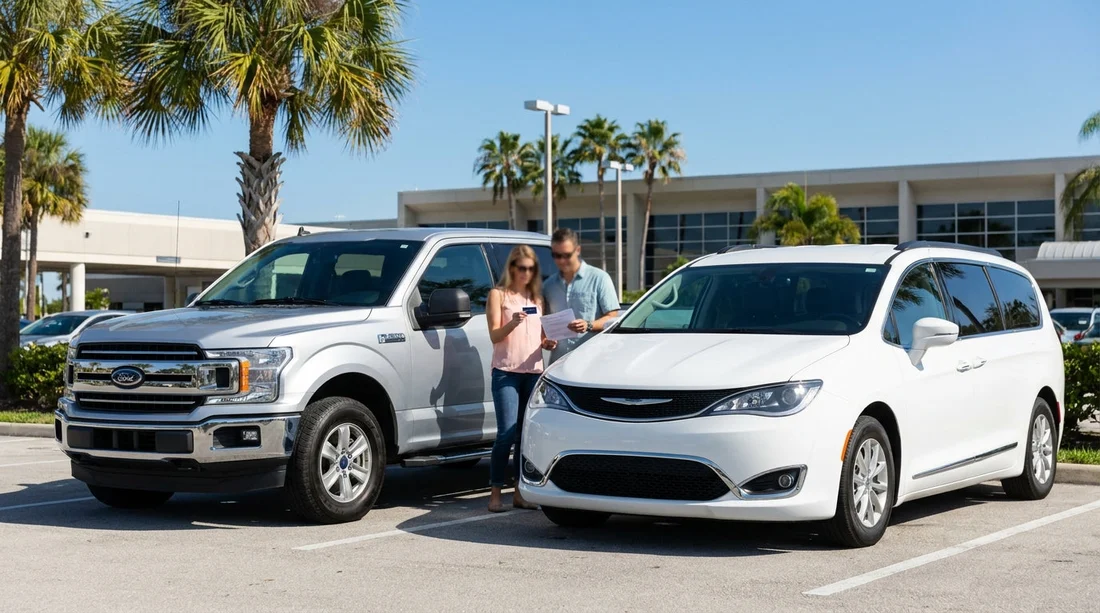
When arranging car hire in Florida, it is tempting to rely on the collision damage waiver (CDW) benefit that comes with many UK issued credit cards. The catch is that credit-card CDW is usually written for standard private passenger cars, and it can exclude specific vehicle types. Pickup trucks and vans sit right in the grey area where assumptions cause problems at the counter or, worse, during a claim.
This guide explains the most common vehicle type exclusions, why “pickup” and “van” are not always treated the same way, and exactly what you should confirm before you rely on your card’s cover. The goal is simple, to avoid paying for cover you thought you already had, or discovering too late that you did not.
What credit-card CDW actually covers, in plain terms
Credit-card CDW is typically an insurance benefit that reimburses the cost of damage or theft to the hired vehicle, subject to the policy rules. It often does not cover injuries, third party liability, personal belongings, or some fees charged by the rental company. Many policies are also “secondary”, meaning they pay only after any other insurance responds, or they reimburse you after you have paid the rental company.
Because it is benefit led, not the same as buying a rental company waiver, the details are governed by the card issuer’s terms and the insurer’s certificate. For Florida car hire, the most important point is that coverage eligibility frequently depends on the vehicle class, the country of rental, and whether the hire is for personal use.
Do credit-card CDWs cover pickup trucks in Florida car hire?
Sometimes, but not always. A “pickup truck” can fall into several buckets depending on weight, seating, intended use, and how the rental company classes it. Credit-card policies often exclude “trucks”, “commercial vehicles”, or vehicles above a certain value or weight. Unfortunately, the word “truck” in US usage can include light pickups that look similar in size to an SUV.
Here are the most common reasons pickup trucks are excluded:
Policy language excludes trucks outright. Some benefits exclude “trucks” without further definition. In those cases, even a small pickup may be outside cover.
Commercial use exclusions. If the policy interprets a pickup as a vehicle “designed for carrying goods”, it may be treated as commercial, even for leisure travel.
Weight and size limits. Some certificates set limits, such as vehicles above a set gross vehicle weight rating, or above a certain purchase price. Larger pickups can breach these thresholds.
Off-road or unpaved use. Even if the pickup is covered, damage from off-road use is commonly excluded. That matters in Florida if you plan beach access roads, boat ramps, or unpaved trails.
If you are collecting near Tampa and comparing vehicle options, it helps to check the class you are being offered and how it is described, for example when reviewing car hire Tampa TPA listings.
Do credit-card CDWs cover vans in Florida car hire?
Vans are even more commonly excluded than pickups. Many credit-card CDW policies exclude “vans”, “minibuses”, “people carriers” above a passenger count, or any vehicle that seats more than a set number of people. The insurer’s reasoning is usually that larger vehicles cost more to repair and may be used for group travel, business, or transporting goods.
Passenger minivan versus cargo van. Passenger minivans may be included where cargo vans are excluded, but many policies exclude both.
Seating capacity. Some benefits cover up to 7 seats, others exclude anything over 5. A typical US minivan often seats 7 or 8.
Vehicle classification wording. A rental company might call something a “minivan”, “people carrier”, “MPV”, or simply “van”. Your card benefit may use different terms.
If you are considering a people carrier in Miami, compare the class carefully, for example on van rental Brickell BRK, then cross-check that class with your insurer’s eligibility list.
Why vehicle class codes matter more than the model name
Credit-card insurers and rental companies both use category logic, but not always the same labels. At the counter you might be shown a model name, yet your CDW benefit may hinge on whether the vehicle is classed as a “full size”, “premium”, “SUV”, “truck”, or “van”.
Ask for the vehicle category in writing on your booking confirmation or rental agreement. If you can get the SIPP code (a four letter vehicle classification code used widely in car hire), keep it with your policy documents. Your insurer may not mention SIPP specifically, but having the code can help when you ask them to confirm eligibility.
If you think an SUV could substitute for a pickup or van, review categories on pages such as SUV rental Florida MIA, then check if your card benefit treats SUVs differently from trucks or vans.
What you must confirm before relying on credit-card CDW in Florida
1) Vehicle eligibility by type. Ask the card insurer, not the rental desk, whether “pickup truck” and “minivan” are covered categories under your specific card. Provide the class description and, if possible, the SIPP code.
2) Maximum seats, value, and weight. Confirm any thresholds. A standard minivan can exceed seat limits, and a large pickup can exceed value or weight limits.
3) Rental duration limit. Many benefits cap coverage at 15, 21, or 31 consecutive days. Florida trips sometimes run longer, especially if you are doing a road trip across the state.
4) Payment rules. Most benefits require you to pay the full hire on the eligible card and be the primary renter. Using a debit card at the counter, splitting payments, or paying with points can cause issues.
5) Declining conflicting cover. Some policies require you to decline the rental company’s CDW/LDW for the benefit to apply. Others allow it but remain secondary. Check the wording carefully.
When you are collecting near the coast, keep documents tidy and accessible. If you are hiring around Miami Beach, having everything in one place helps, including your confirmation from car hire Miami Beach MBC pages and your card benefit certificate.
Documentation to keep, so a claim is not rejected
Even if the vehicle type is eligible, missing paperwork can lead to a denial. Keep digital and printed copies of: the rental agreement showing the vehicle class, the damage report, photos from pickup and return, police report number if required, repair estimates if provided, and itemised charges including loss of use and admin fees. Save the card statement line showing the hire charge paid with the eligible card.
Finally, if the rental company offers an upgrade at the counter, treat it as a new decision. A last minute switch from a standard car to a pickup or van could move you from “covered” to “excluded” instantly under your credit-card CDW.
For those flying into Tampa, it can help to compare vehicle categories and supplier terms early, particularly if you are picking up at the terminal via car hire airport Tampa TPA options.
FAQ
Does credit-card CDW usually cover a standard US minivan in Florida? It depends on the policy, but minivans are commonly excluded, especially with 7 to 8 seats. Confirm seat limits and whether “vans/MPVs” are eligible categories.
Is a pickup truck treated the same as an SUV for credit-card CDW? Often no. Many benefits exclude “trucks” but allow SUVs, even if they are similar in size. The insurer’s category wording is what matters, not the look of the vehicle.
What happens if my credit-card CDW is secondary? You may have to pay the rental company first, then claim reimbursement. Check whether loss of use, admin fees, and towing are included, as these are frequently disputed items.
Do I need to decline the rental company’s CDW/LDW for my card cover to apply? Many card benefits require you to decline it, but not all. Read your certificate, because accepting LDW may make your card cover secondary or void it.
Can I rely on credit-card CDW if I upgrade to a van at the counter? Only if the upgraded vehicle type is still eligible under your policy. Ask for the new vehicle class in writing and verify it matches what your insurer covers.































































































