


Quick Summary:
- Check your rental agreement for ferry, island, and off-road exclusions.
- Ask the desk to note ferry permission and destinations on contract.
- Confirm cover for loading ramps, saltwater exposure, and unattended parking.
- Keep ferry receipts and photos to support any damage claim.
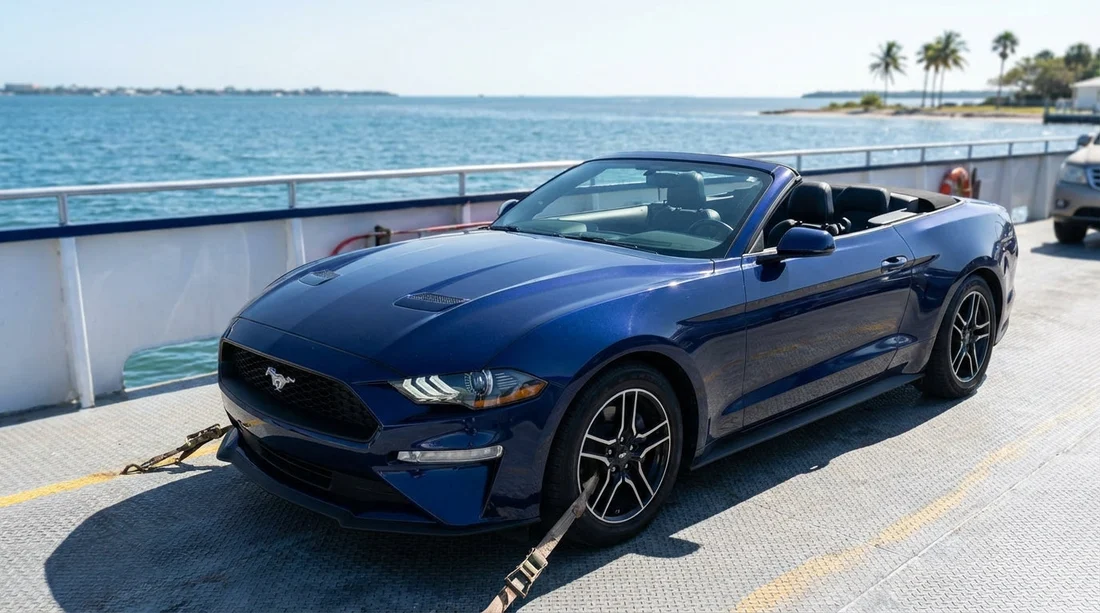
Florida has plenty of reasons to consider a ferry with a car, from Gulf Coast barrier islands to connections that avoid long drives. The key issue is that a ferry trip can change the risk profile of your journey. That matters because car hire insurance is not just about the vehicle, it is also about where and how it is used. Some rental agreements treat ferry travel as standard driving, while others restrict it entirely, restrict specific routes, or require advance permission. If you assume it is automatically allowed, you can accidentally breach the rental terms and reduce or void cover.
This guide explains typical ferry and island restrictions you may encounter in Florida, what to ask before you leave the desk, and how to document your trip so any claim is easier to handle. Policies vary by supplier and location, so treat this as a checklist to apply to your specific rental agreement and provider.
Why ferries can affect car hire cover
Most disputes after a ferry trip come down to whether the driver complied with the rental contract and whether the loss fits within covered events. Ferries introduce a few extra hazards compared with ordinary road use:
Loading and unloading damage, steep ramps, tight turning, and staff directing traffic can lead to bumper scrapes or underbody contact. Some agreements exclude damage caused by driving on “restricted surfaces” or “unapproved areas”, and a ramp can be argued either way depending on wording.
Saltwater and corrosion, coastal ferries mean salt spray, windy decks, and wetter conditions. Corrosion is rarely treated as a sudden accidental event, and claims can be denied if the damage is gradual or maintenance-related.
Unattended vehicle risk, on some crossings you leave the car locked while passengers move to seating areas. Theft or vandalism cover may require evidence of forced entry, and leaving valuables inside can breach conditions.
Jurisdiction and recovery, if something goes wrong on an island, recovery to the mainland can be slow and expensive. Many suppliers limit roadside assistance or towing to certain areas, even if the island is still within Florida.
The point is not that ferries are “bad”, it is that they create scenarios where exclusions, limitations, and documentation requirements are more likely to matter.
Common Florida ferry and island restrictions to watch for
Florida’s ferry services range from short shuttle crossings to longer passenger services that may or may not take vehicles. Restrictions usually come from rental terms rather than the ferry operator, but both matter. Typical issues include:
Vehicle ferries vs passenger-only ferries. Many well-known island ferries do not carry cars at all. If the only service is passenger-only, you may end up paying to park the rental for hours or days. Long-term unattended parking can raise questions if damage occurs while you are away.
Barrier islands with limited access roads. Some islands are accessible by bridge and by ferry. Even if a ferry is optional, the rental company may only permit travel via public roads. Ask whether using a ferry is treated differently to driving a bridge route.
Beaches, dunes, and unpaved tracks. A frequent exclusion in car hire agreements is driving on sand, beaches, or unpaved roads. Islands often have tempting sandy access points. Even if the ferry crossing is permitted, a short drive onto compact sand can be enough to void cover for a later incident.
Time limits and destination limits. Some suppliers allow ferries only on certain routes, or only if the vehicle stays within Florida. While international crossings are not part of most Florida itineraries, destination limits can still apply to remote areas or specific islands where recovery is difficult.
Commercial or private ferries. Public, scheduled vehicle ferries are more likely to be considered acceptable than private, barge-style transport. If your journey involves a private boat transport arranged by a third party, treat that as a red flag and ask for written approval.
If your trip starts in a major airport location, it is worth checking the local desk’s rules early. For example, travellers collecting near Orlando can review practical pickup information before discussing permitted destinations at car hire Orlando MCO. If you are arriving on the Gulf Coast, policies may be discussed at pickup when you arrange car hire Tampa TPA.
Questions to ask at the desk before you leave
To avoid accidental breaches, ask direct questions and request that any approval is recorded. These are the most useful desk questions for ferry use:
1) Is taking the car on a ferry permitted in my agreement? Ask them to confirm based on your vehicle class, supplier, and pickup location. “Ferries allowed” can differ between categories.
2) Are specific routes or islands excluded? If you have a particular destination in mind, name it. Generic answers can miss local exclusions.
3) Does my cover apply during loading and unloading? Some drivers assume damage on the ramp is automatically treated like any other collision. Clarify whether it is covered under collision damage provisions, and whether any excess applies.
4) What happens if I need roadside assistance on the island? Ask whether towing is included, whether there are distance limits, and whether you must use a specific provider.
5) Are there requirements about parking while I am away? If you will leave the vehicle in a ferry terminal car park, ask about locking requirements, key handling, and whether overnight parking is permitted.
6) Can you note “ferry permitted” and the route on my contract? A simple note can prevent confusion later. If the staff cannot amend the paperwork, ask for a printed or emailed note.
If you are comparing providers, it can help to look at supplier pages and the locations they serve. For instance, if you are collecting in Miami and considering island day trips, you might be hiring via Thrifty car hire Miami MIA or another supplier with its own policy wording. The important part is to treat ferry permission as supplier-specific, not a universal Florida rule.
How ferry travel can void cover, and how to prevent it
Voided cover usually results from a contract breach rather than the ferry itself. Here are the most common pitfalls and the practical fixes.
Driving onto restricted surfaces. If you leave paved roads and drive on sand, gravel tracks, or beach access routes, you may breach the “off-road” exclusion. Prevention: plan routes that stay on paved public roads, and avoid beach driving even if it looks normal locally.
Unreported changes to travel plans. If your agreement says ferry use requires permission and you do it anyway, the supplier may treat it as unauthorised use. Prevention: get clear approval before departure, ideally in writing or noted on the rental agreement.
Improper key handling. Some losses occur when drivers leave keys with ferry staff or in unattended areas. Prevention: keep keys with you unless the ferry operator requires otherwise, and follow their official procedures only.
Damage without documentation. A bumper scrape on a ramp can be hard to attribute. Prevention: take time-stamped photos of the vehicle before boarding and after disembarking, focusing on bumpers, wheels, and underbody edges.
Ignoring warning lights after a crossing. Salt spray and water can cause temporary issues, and continuing to drive may worsen damage. Prevention: if you see warning lights, stop safely, contact the assistance line, and document what happened.
Even if you do everything right, remember that your financial exposure can still include an excess and any items not covered by your chosen protection. The goal here is to avoid the bigger problem, being told the protection does not apply at all because the trip was outside permitted use.
Practical steps on the day of travel
Once you have permission, treat the crossing like a mini risk-managed event. These habits reduce the chance of a claim and strengthen your position if something happens.
Inspect and photograph before you board. Take clear photos of all four sides, wheels, and any existing marks. Do the same on arrival. If a new scrape appears, you will know exactly when it happened.
Remove valuables and hide nothing in sight. Theft claims can be complicated if items were visible. Take essentials with you and keep the cabin clear.
Follow ferry staff instructions precisely. Many minor incidents happen when drivers rush or deviate from directions. Drive slowly, keep distance, and avoid sharp steering on metal ramps.
Keep the receipt and booking confirmation. If later asked to prove the route, your receipt and timestamped photos are helpful evidence.
Watch for low clearance and underbody contact. Some vehicles sit lower than you expect. If your car is a larger vehicle, confirm whether its size is acceptable and whether special boarding lanes exist.
If you are travelling as a group and need more space, it is worth considering whether a larger vehicle changes the ferry decision. Larger vehicles can be heavier, longer, and more prone to ramp contact. People carriers or vans may have different permissions or fees. For Miami city pickups, you can check options such as van rental Brickell BRK and then confirm ferry suitability with the desk.
What to do if there is damage on a ferry crossing
If you notice damage, handle it as you would any incident, but with a few ferry-specific additions.
Document immediately. Take photos from multiple angles, including the ramp or deck area if safe and permitted. Capture the ferry name, time, and any identifying signs.
Notify the ferry operator if appropriate. If damage appears to be linked to the boarding process or another vehicle, ask the staff for the incident process. You may need a report number.
Contact the rental company as soon as practical. Follow the instructions in your agreement for reporting, especially if the damage affects safety.
Do not authorise repairs yourself. Rental agreements typically require the supplier to control repairs and approvals.
Keep all paperwork. Receipts, reports, and notes make it easier to resolve the claim fairly.
Picking the right Florida starting point for ferry-friendly planning
Ferry rules are driven by the supplier and contract, but your pickup location affects how easy it is to get answers and support. Airport desks are used to itinerary questions, while smaller locations may have shorter hours. If you are landing at Orlando International, start by reviewing what to expect at car hire airport Orlando MCO, then ask your ferry questions at the counter while staff and documentation are readily available.
Similarly, if you are collecting in a business district location rather than an airport, confirm how support works outside opening hours. If you hire through a specific supplier, ensure you understand their processes, for example Enterprise car hire Brickell BRK has its own desk procedures and documentation standards. The practical takeaway is that ferry permission is easiest to sort out before you drive away.
FAQ
Q: Are rental cars allowed on ferries in Florida?
A: Sometimes. It depends on your rental agreement, vehicle class, and supplier rules. Always confirm at the desk and ask for the permission to be noted on your contract.
Q: If I take a ferry without permission, will my car hire cover be void?
A: It can be. Unauthorised use is a common reason for a claim to be declined or limited. Get approval in advance and keep proof of your route and receipts.
Q: Is damage on the ferry ramp covered the same as road accidents?
A: Often it is treated as collision damage, but not always. Some terms exclude damage caused on restricted surfaces or during loading. Ask specifically about ramps and underbody damage.
Q: Do I need to tell the rental company which island I am visiting?
A: Yes, if you plan to use a ferry or visit a remote area. Naming the destination helps the desk confirm any excluded islands and whether roadside assistance applies there.
Q: What documents should I keep after a ferry crossing?
A: Keep the ferry receipt, booking confirmation, and time-stamped photos taken before and after the crossing. If there is an incident, also keep any ferry operator report details.































































































