


Quick Summary:
- Roof and underbody damage is often excluded from standard LDW cover.
- Low-clearance car park strikes may be classed as misuse, voiding waivers.
- Ask for written confirmation of roof coverage, exclusions, and excess amounts.
- Photograph the roofline at pickup and note any existing marks.
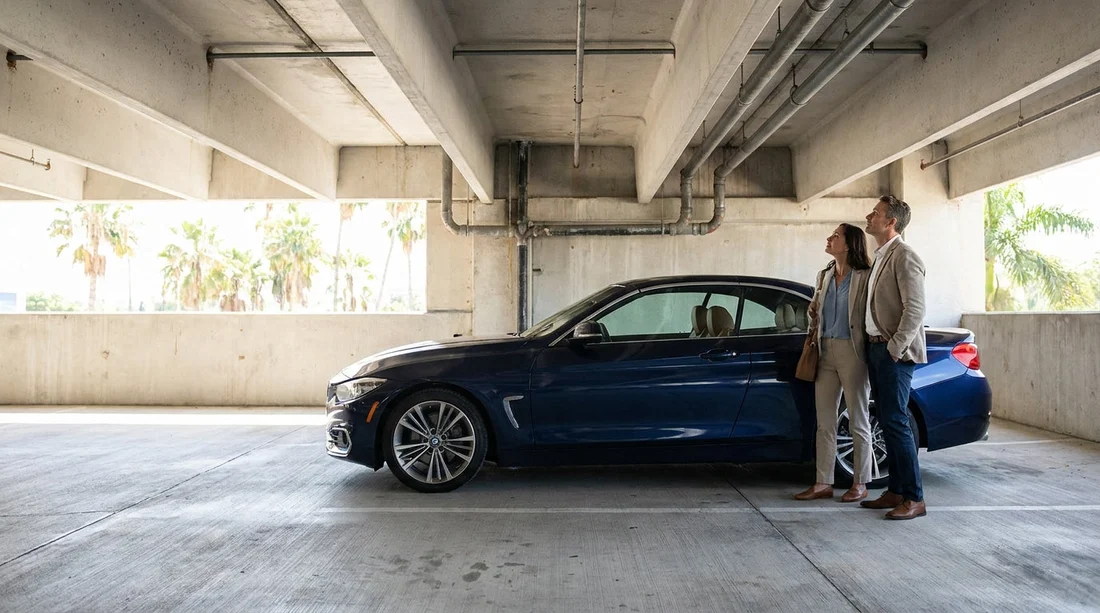
When you pick up a car hire in Florida, it is easy to focus on queues, toll options, and getting onto the highway. But many expensive claims happen at walking pace, especially in multi-storey car parks with low beams, hanging signs, or clearance bars. The big question is whether LDW, often called Loss Damage Waiver, would cover roof damage caused by a low-clearance strike.
The most accurate answer is: sometimes, but often not. LDW terms vary by supplier and by the specific package you purchased. Even when LDW reduces or removes your financial responsibility for collision damage, many agreements treat the roof as a high-risk area and exclude it, along with the underbody. That makes it essential to confirm the exact wording before you drive away.
If you are collecting around Miami, the details can vary between downtown and airport desks. For local context on collection points, see Miami, Florida car rental or Thrifty car hire downtown Miami, then focus your attention on the protection terms at the counter rather than assumptions.
What LDW typically covers, and why roofs are different
LDW is usually a waiver that limits what you pay if the vehicle is damaged or stolen. It is not always a regulated insurance policy, and it rarely covers every scenario. A typical rental agreement will list covered damage in broad terms, then list exclusions that take priority. Roof damage is frequently excluded because it is often linked to driver error in height judgement, and because it can involve wider repair work than a simple panel replacement.
Even if the rental desk staff describe LDW as “covering damage”, the contract text may still exclude specific areas. It is common to see language such as “damage to roof, undercarriage, wheels, tyres, glass, interior” excluded or subject to separate coverage. That means a roof scrape in a car park could be treated similarly to tyre or windscreen damage, depending on the provider.
Florida also has a high volume of rental traffic around airports and attractions, so suppliers can be strict about preventable incidents. If a car park has a clearly posted height limit and the driver enters anyway, the incident may be classified as negligence or misuse, which can void the waiver entirely.
Low-clearance car park strikes, the most common exclusion triggers
Overhead strikes can happen in hotel garages, shopping centres, cruise terminals, and even airport short-stay structures. They are not always dramatic, sometimes it is a slow scrape along a pipe or a sharp impact on a concrete beam. From a contract perspective, suppliers often look at three factors.
1) Was there a posted clearance? If the car park showed a height limit you exceeded, the supplier may argue the incident was avoidable.
2) Was the vehicle type appropriate? Large SUVs, people carriers, and vans can exceed older car park limits. If you have a bigger vehicle for luggage or family travel, be extra cautious. For Orlando trips where travellers often choose larger vehicles, it helps to understand your vehicle height and typical garage clearances near attractions. If you are collecting at the airport for theme parks, see van rental Disney Orlando MCO for vehicle category context, then check height details on your specific model at pickup.
3) Does the agreement exclude roof damage regardless of fault? Some terms exclude roof damage outright. Others exclude it only when caused by “overhead impact”, “driving into restricted areas”, or “off-road use”. A multi-storey car park is not off-road, but an overhead impact clause can still apply.
What to confirm at the counter before you drive away
Because LDW wording is not universal, the safest approach is to ask targeted questions and get clear answers supported by the paperwork. Keep the conversation factual and specific, rather than general.
Ask these questions:
Is roof damage included in LDW? Do not accept a vague response. Ask the agent to point to the relevant clause in the agreement or coverage summary.
Are overhead strikes excluded? Some agreements exclude “overhead damage” even if “roof damage” is not separately listed. Clarify both phrases.
What is the excess if roof damage is covered? Some packages cover it but with a higher excess, or with an excess that still applies to specific parts.
Does any optional cover remove exclusions? In some cases, an added protection product reduces excess but does not remove exclusions for roof, glass, tyres, or underbody. You want to know whether exclusions remain, not just whether the excess is reduced.
What is considered misuse or prohibited use? If the agreement defines prohibited areas, towing, or driving in restricted-height structures, an overhead incident could be treated as a breach. Ask what behaviour would void protection.
If you are collecting in the Tampa area, counter procedures can still differ by supplier, so allow time to review documents. Useful pickup references include car hire airport Tampa TPA and Budget car hire Tampa TPA.
Practical steps to reduce the risk of being charged
Even with good coverage, preventing roof damage is better than disputing a claim later. These steps are quick and realistic when starting a Florida car hire.
Check the vehicle height and add a buffer. Height is not always obvious from the driver’s seat, particularly with roof rails. If you cannot find a stated height, assume it is taller than you think and avoid marginal clearances.
Avoid older garages with low beams. Many coastal and downtown structures were built for smaller cars. If you are in an SUV, minivan, or van, prefer open-air parking when possible.
Go slowly, and stop early. If you are unsure, stop before the clearance bar. Reversing out slowly is cheaper than scraping forward.
Photograph the roofline at pickup. Most people photograph bumpers and wheels, but roof marks are easy to miss and hard to prove later. Take angled shots showing the roof edge and upper door frames, plus any existing scuffs.
Get damage noted in writing. If you see existing scratches near the roof edge or above the windscreen, ask for the condition report to include them. Do not rely on a verbal “it’s fine”.
Key takeaway for Florida car hire
LDW may cover roof damage, but it often does not, especially for overhead strikes in car parks. The only safe approach is to check the specific exclusion list on your agreement, ask the desk agent to confirm roof and overhead impact wording, and document the vehicle condition before leaving the lot. A few minutes at pickup can prevent a stressful and expensive return.
FAQ
Does LDW usually cover roof damage on a Florida rental car? Often it does not. Many agreements exclude roof damage or overhead impacts, even when LDW applies to general collision damage.
If I hit a low clearance sign in a car park, can LDW be voided? Yes. If the contract treats it as negligence, misuse, or a prohibited use, the waiver can be invalidated and you may be charged for full repair costs.
What wording should I look for in the rental terms? Look for exclusions mentioning roof, overhead damage, underbody, prohibited use, and negligence. Also check whether optional cover changes exclusions or only reduces excess.
If roof damage is excluded, is there anything I can do at pickup? Ask whether any available protection includes roof damage, and request written confirmation of what is covered and the excess. If it remains excluded, avoid low-clearance parking.































































































