


Quick Summary:
- Many Miami rentals provide a repair kit or space-saver, not both.
- Check the boot, underfloor tray, and side cubbies before leaving.
- Confirm jack, wheel brace, and locking-nut key are present.
- Verify tyre damage rules, roadside support, and reporting steps on contract.
When you collect a car hire vehicle in Miami, it is reasonable to expect some way to deal with a flat tyre. However, what you actually get varies by vehicle type, rental company policy, and even the specific car you are assigned that day. Some cars come with a compact spare wheel, others have a tyre inflator and sealant kit, and some modern models are set up without either because they use run-flat tyres or rely on roadside assistance.
The key is to treat tyre equipment as something to confirm at pick-up, not something to assume. A two-minute check in the car park can save a long delay later, especially if you are heading out of Miami on I-95, the Turnpike, or over to the Keys where services can be less convenient.
What is commonly provided with car hire in Miami?
In Miami, the most common set-ups you will encounter are:
1) Tyre repair kit (sealant plus inflator). This is frequent in smaller cars and newer models that prioritise boot space and fuel efficiency. The kit usually includes a bottle of sealant and a 12V compressor. It is intended for small punctures in the tread, not sidewall damage or blowouts. After using sealant, the tyre normally needs professional inspection and may require replacement. Some companies treat sealant use as a chargeable item, so it is worth confirming how it is handled.
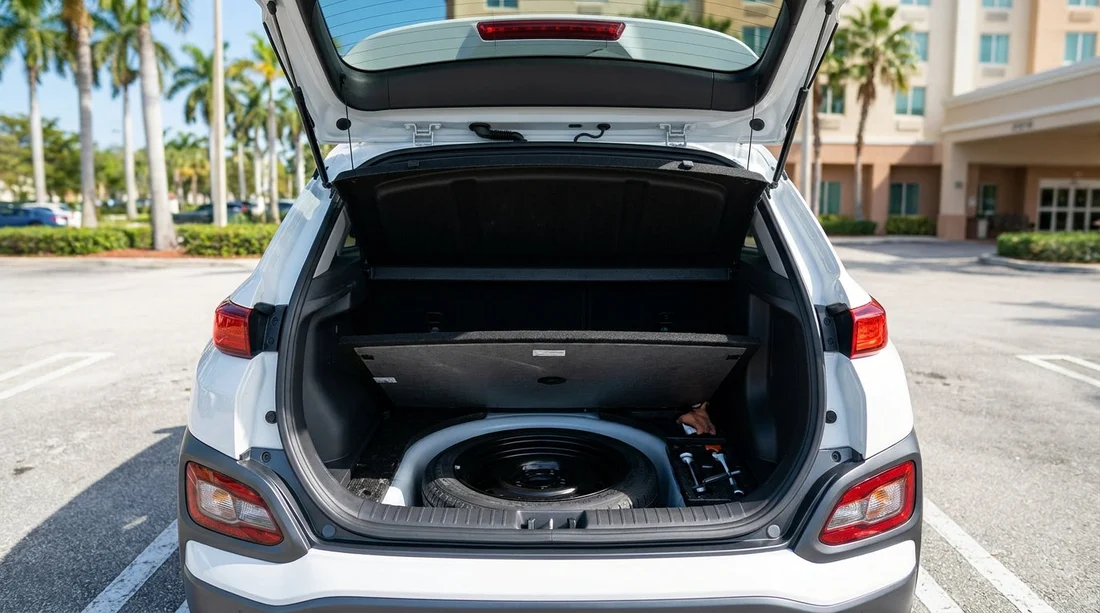
2) Compact spare tyre (space-saver) plus tools. Some vehicles still have a small spare wheel stored under the boot floor, along with a jack and wheel brace. A space-saver is designed for short, low-speed use only, so it is a get-you-moving option rather than a long-distance solution.
3) No spare and no kit, but roadside assistance. Certain vehicles may be supplied without tyre equipment, especially if they have run-flat tyres or if the fleet policy is to dispatch help instead of expecting drivers to change a wheel. This can be fine in central Miami, but you should know exactly what number to call and whether there are any fees.
Where you collect your car can influence what is available, because airport locations often have higher fleet turnover. If you are collecting at the airport, it can help to review pick-up expectations for car rental at Miami Airport (MIA) and plan a quick inspection before you join traffic.
Where to check for the spare tyre or puncture kit at pick-up
Before leaving the car park, do a simple, consistent check. Aim to confirm the equipment, its condition, and that you can access it.
Start in the boot. Lift the boot floor panel or open any underfloor tray. In many cars, the repair kit is strapped to the side, tucked into a foam insert, or stored in a small pouch. A compact spare is typically under the floor. If the car is a hatchback or SUV, also check side cubbies and the area near the tailgate.
Look for the essential tools. A spare tyre is not useful without the correct tools. You want to see a jack, wheel brace or lug wrench, and towing eye (often a threaded hook). If the vehicle has locking wheel nuts, confirm the locking-nut key is present as well. If you cannot locate these items quickly, ask staff before you exit.
Check the compressor kit details. If you have a sealant and inflator kit, confirm the sealant bottle is sealed and within date if a date is printed. Make sure the compressor has the correct plug for the car’s 12V socket. Some cars have the socket inside the cabin, others in the boot.
Confirm access to wheel-nut information. Some fleets store tool kits in a way that is not obvious, for example behind a trim panel. If you are unsure, ask for a quick walk-through. This is especially sensible if you are picking up in a busy area such as Doral, where you may want to be on your way quickly. For local context, see car rental in Doral (DRL).
What to confirm on the rental agreement before leaving the counter
Even if you can see a spare or kit in the car, you should still confirm how tyre incidents are handled contractually. Policies vary, and the contract is what determines who pays for what.
Tyre damage responsibility. Ask whether punctures, sidewall damage, and blowouts are treated differently. Some agreements place tyre and wheel damage outside standard coverage unless you take an additional product. You do not need to buy anything on the spot, but you should understand the baseline responsibility and any exclusions.
Roadside assistance terms. Confirm the roadside number, what is included, and whether there is a call-out fee. Clarify if changing a wheel is something you are expected to do yourself, or if they dispatch help. If you are not comfortable changing a wheel, it is better to know the official approach in advance.
What to do after a puncture. Ask what steps to follow: whether you must call immediately, whether you can visit a tyre shop directly, and whether you need approval before any repair. Also confirm whether you need to keep receipts and whether repairs are reimbursed or deducted from a deposit.
Documentation of equipment. Some contracts list equipment items. If yours does, scan it for references to a spare tyre, jack, or repair kit. If it is listed but missing, report it immediately so the record can be corrected. If you are collecting from a brand-specific counter, policies can differ by operator, so it is useful to review the location page for context, such as Dollar car hire in Miami (MIA).
How vehicle type affects what you get in Miami
Equipment often correlates with the class of car hire vehicle:
Small and compact cars frequently come with a sealant and inflator kit, partly because the underfloor space is limited. These kits are convenient for small punctures but are not a cure-all.
Saloons and larger SUVs are more likely to have room for a compact spare, but this is not guaranteed. Some newer SUVs still ship without spares due to design choices.
Minivans may be used for family trips and longer distances, so some renters expect a spare, but many models still use repair kits. If you are hiring a people carrier for Miami Beach or longer runs, it is worth double-checking at pick-up. See minivan hire in Miami Beach (MBC) for the typical usage profile.
Practical tips if you do get a puncture
If you notice a tyre pressure warning light or feel vibration, slow down and find a safe place to stop. In Miami traffic, prioritise safety over diagnosing the issue immediately. Take clear photos of the tyre and wheel once stopped, and note the location and time.
If the car has a repair kit, read the instructions carefully before using sealant. Sealant is usually for tread punctures only, and using it on a damaged sidewall can make things worse. If you have a spare and you are confident changing it, use the correct jack points and place the vehicle on firm, level ground. If you are not confident, call the roadside number from your agreement.
Finally, keep the rental company informed. Many disputes come from delays in reporting rather than the puncture itself. Prompt reporting also helps if you need authorisation to visit a tyre shop or to swap the vehicle.
FAQ
Do rental cars in Miami usually have a spare tyre? It depends on the vehicle. Many have a puncture inflator and sealant kit, while some have a compact spare, and some rely on roadside assistance or run-flat tyres.
Where exactly should I look for the puncture kit or spare? Check the boot underfloor compartment first, then side storage cubbies. Also look for a jack, wheel brace, towing eye, and locking-nut key if applicable.
Can I use the sealant kit and keep driving normally? Sealant is typically a temporary measure for small tread punctures. You should drive cautiously and arrange inspection or replacement as soon as possible, following the rental company’s instructions.
Will I be charged for a puncture on a car hire vehicle? Charges depend on the rental agreement, your coverage, and the type of damage. Confirm whether tyres and wheels are excluded, and what the process is for repairs or call-outs.
What should I confirm on the agreement before leaving the counter? Verify tyre damage responsibility, roadside assistance contact details and fees, reporting steps after a puncture, and whether the vehicle is listed as having a spare or repair kit.































































































