


Quick Summary:
- Most New York rentals allow interstate driving, but always check your agreement.
- Confirm restricted areas, mileage rules, and any one-way return conditions.
- Insurance and roadside cover usually carry across states, but verify exclusions.
- Flag Canada plans, toll routes, and long-distance driving at pick-up.
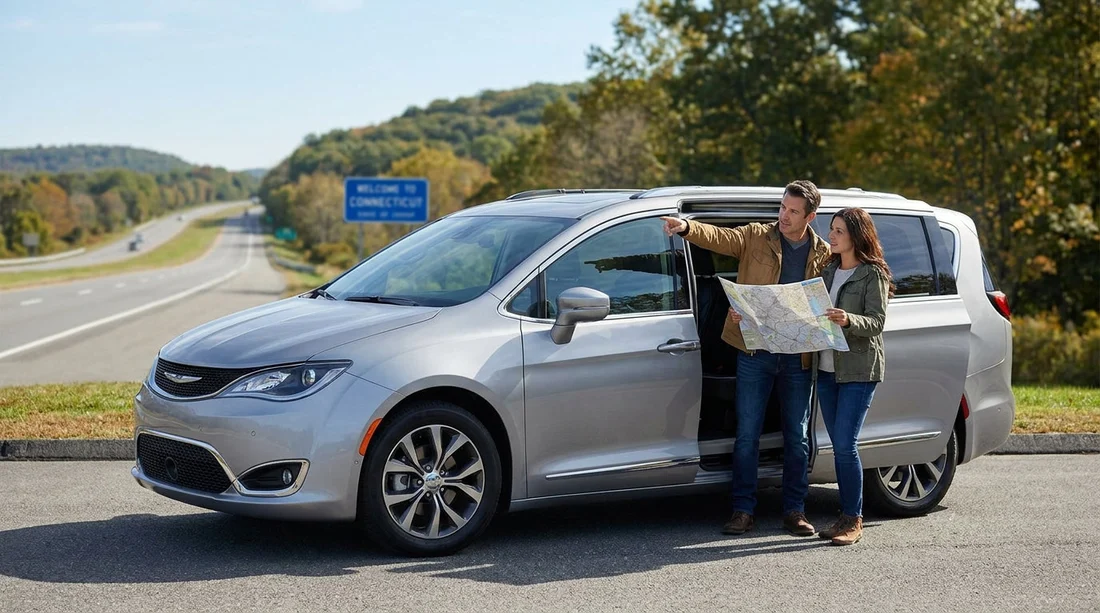
If you are arranging car hire in New York and you expect to cross state lines, the good news is that interstate driving is usually allowed in the US. You typically do not need special permission before pick-up just to drive from New York into New Jersey, Connecticut, Pennsylvania, Massachusetts, or further afield. However, “usually allowed” is not the same as “always covered”, and the details sit in the rental agreement, the vehicle type rules, and the cover you choose.
This article explains what to expect when taking a New York rental car into other states, what to confirm at the counter, and how insurance and add-ons commonly work once you cross a border.
Is extra permission required to leave New York State?
For most mainstream rentals collected in New York, crossing into other US states does not require you to ask in advance. In practice, the rental company expects that drivers will move between states, especially around the New York City area where New Jersey and Connecticut are part of many normal itineraries.
That said, there are exceptions and trip-wreckers, and they are the reason it is worth confirming your plans at pick-up. Restrictions tend to relate to:
Vehicle class. Some specialty vehicles may have tighter rules on where they can go, or how far they can travel.
One-way travel. Driving to another state is often fine, returning the car there may change pricing, availability, and permitted drop-off locations.
Cross-border travel outside the US. Canada rules, Mexico restrictions, and paperwork requirements are different from interstate rules.
Commercial use or towing. Rental cars almost never allow towing, and commercial usage can invalidate cover.
If you are collecting near the main airports, start by reviewing the key terms shown during the booking flow and then ask the desk to confirm any geographic limitations for your specific reservation. For location context, Hola Car Rentals provides New York airport pages such as car rental airport New York JFK and car rental New York JFK.
What restrictions should you confirm at the counter?
Even when interstate travel is allowed, it is smart to treat the pick-up counter as your final check. Ask questions in plain language and get clear answers. Here are the main points to confirm.
1) Restricted areas and prohibited use
Some agreements have rules about where the vehicle may not be taken, which can include certain high-theft areas, unpaved roads, or specific zones outside the continental US. While these limits are more common for international borders, you still want to know if any state-level restrictions apply to your car class.
2) Mileage policy and trip length
Many US rentals include unlimited mileage, but not all. If your plan is New York to Chicago, or New York to Florida, confirm your mileage policy and any long-rental servicing expectations. Long drives also increase the value of confirming what roadside assistance covers and how to get help.
3) One-way drop-off rules
Driving out of state and returning to New York is straightforward. Dropping off in another state is a different product, sometimes with a one-way fee and specific allowable drop-off locations. If you might change plans, ask what your options are before you leave the lot.
4) Tolling and admin fees
New York-area travel often involves toll roads, bridges, and tunnels, and your route may include additional toll systems in other states. Confirm how tolls are handled, what device or plate billing is used, and whether there are admin fees per toll or per day. This is especially important if you will cross multiple toll jurisdictions in a short trip.
5) Additional drivers across state lines
State laws on spouse or partner driver eligibility can vary, and rental-company policies vary even more. If someone else might drive in another state, make sure they are properly added to the contract at pick-up, because cover may not apply if an unauthorised person is driving.
How insurance and coverage typically work across state lines
Interstate travel usually does not change the fundamental insurance position, but it can expose misunderstandings. Your protection depends on what is included with the rental, what you purchase at the counter, and what your personal policy or card benefits provide.
Liability cover (damage or injury you cause to others) is generally structured to comply with the state minimums where the car is rented, and it is intended to respond while you are travelling legally. However, limits and terminology can be confusing. If you want higher limits, ask what options exist and get the limit amounts in writing.
Damage to the rental car is where travellers most often assume the wrong thing. A collision damage waiver (or similar) typically reduces your financial responsibility for damage or theft, but it still has exclusions. Common exclusions include driving under the influence, using the car for prohibited purposes, or leaving keys in the vehicle.
Roadside assistance can be separate from insurance. Ask what is included for flat tyres, lockouts, towing due to breakdown, and battery issues, and whether there is a number to call that works nationwide.
Personal policies and credit cards may provide some cover, but eligibility and claims requirements vary. If you are relying on these, check whether interstate use is fine (it usually is), and what documentation you must keep, such as the rental agreement, damage report, and proof of payment method.
If you are comparing options, Hola Car Rentals has brand and budget-focused pages that can help you understand typical inclusions and choices for car hire around New York, such as budget car rental New York JFK and National car hire New York JFK.
New York to nearby states: practical considerations
Crossing into neighbouring states is common, but a few practical factors are worth planning for.
New Jersey and Connecticut driving. Expect toll roads and heavy traffic patterns, especially around bridges and tunnels. If your trip includes Manhattan, confirm whether your toll plan covers the most-used crossings, and whether congestion-related charges apply to your planned routes.
Parking rules. Parking enforcement can be strict and varies by city. Tickets, towing, and admin fees can become more expensive than expected. If you plan to visit multiple cities, it helps to decide when you will actually need the car versus using rail for day trips.
Winter weather. If you are travelling between states in colder months, ask about tyres and whether chains are permitted or prohibited. Even if you never plan to drive in a snowstorm, having clarity matters if conditions change.
FAQ
Can I drive a New York rental car into New Jersey or Connecticut without permission?
In most cases, yes. Interstate driving is usually allowed, but you should still check your rental agreement for any geographic restrictions.
Does my insurance or damage waiver still apply if I cross state lines?
Generally, yes, cover is intended to apply across US states. It can be invalidated by prohibited use, unauthorised drivers, or other contract breaches, so confirm key exclusions.
Do I have to tell the counter I am leaving New York State?
Usually not for normal interstate travel. You should mention it if you plan a one-way return, very long mileage, or any border crossing outside the US.
Can I return the car in another state if my plans change?
Sometimes, but it depends on the rental company, vehicle availability, and the locations they allow for one-way drop-off. There may be an additional one-way fee.
Will toll charges follow me across different states?
Yes. Tolls are billed according to the rental company’s toll programme and each state’s system. Ask how charges and admin fees are applied before you drive.































































































