


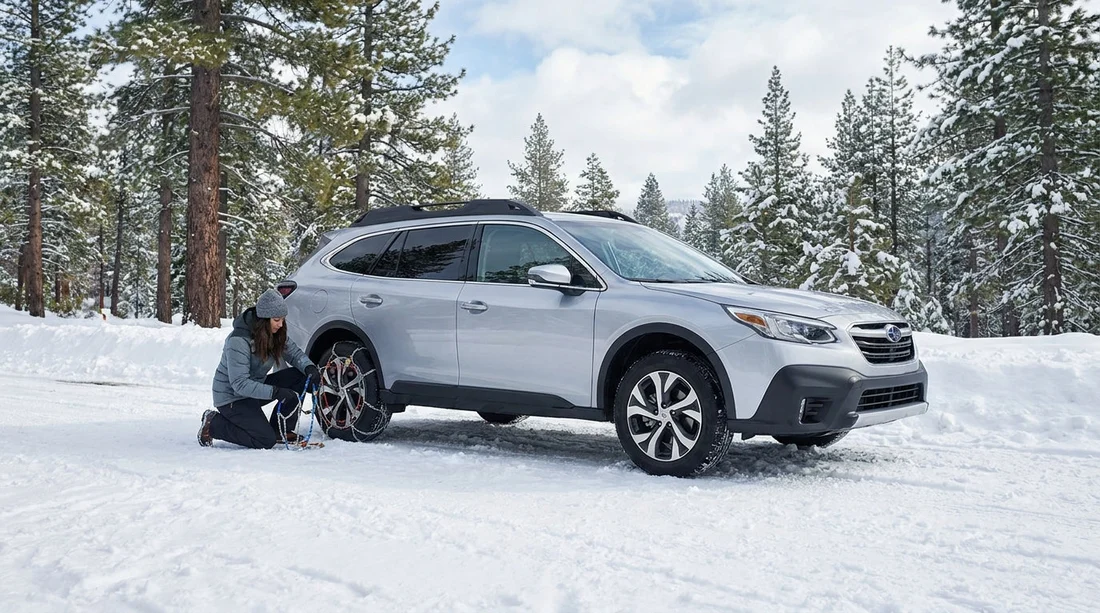
Quick Summary:
- Chain controls can require snow chains, even for many 4WD vehicles.
- Most rental cars do not include chains as standard, ask early.
- Check your rental agreement for chain permission, liability, and fitting limits.
- Plan mountain routes with alerts, and carry the correct chain size.
When you are arranging car hire in California for winter travel, snow chains can be the difference between continuing safely and being turned around at a checkpoint. The tricky part is that “allowed”, “required”, and “provided” are three separate questions. California permits chains, but chain controls are enforced by road authorities, and rental companies often set their own restrictions or do not supply chains with the vehicle.
This guide explains the most common chain-control rules you will see in California, what typically happens with rental cars, and the practical checks to make before you commit to a mountain route. It is written for travellers heading towards the Sierra Nevada, Lake Tahoe, Yosemite approaches, Big Bear, Mammoth Lakes, or any high-elevation pass where conditions can change quickly.
How chain-control works in California
Chain control in California is most commonly implemented and signed by Caltrans and the California Highway Patrol. You will see electronic message boards, roadside signs, and checkpoints that specify which “level” is in effect. While exact details can vary by location and weather, the concept is consistent.
R1 generally means chains are required on all vehicles except passenger vehicles with snow tyres on the drive axle. In practice, many visitors do not have dedicated snow tyres, so they must fit chains.
R2 generally means chains are required on all vehicles except 4WD or AWD with snow tyres on all four wheels. Many SUVs are AWD or 4WD, but they rarely have true winter tyres. That means a large number of vehicles will still need chains or may not be compliant.
R3 generally means chains are required on all vehicles, no exceptions. Under R3, travel may be heavily restricted, and in some areas roads may close entirely soon after.
The important takeaway for car hire customers is that an SUV badge does not automatically remove chain requirements. On many routes, authorities can require you to carry chains and may check that you have them before allowing you to proceed.
Are snow chains allowed on rental cars?
California law and chain-control rules allow the use of chains, but rental permission depends on the rental agreement. Many rental companies restrict chain use on certain vehicle types, limit where chains may be used, or require you to use approved traction devices. The reason is simple, chains fitted incorrectly can damage wheel arches, brake lines, bodywork, and tyres.
Before you finalise car hire, look for wording on “snow chains”, “traction devices”, “winter driving”, “restricted roads”, and “damage and liability”. If the agreement forbids chains and you fit them anyway, you may be responsible for any resulting damage, even if road signs required chains. That is why it is vital to confirm policy before you rely on a mountain route.
If you are collecting a vehicle after arriving at a major airport, ask the counter staff to confirm what is permitted for your exact vehicle class, not just a general statement. Policies can differ between compact cars, SUVs, and premium models. For example, travellers picking up near Northern California mountain corridors often start from car hire at San Francisco SFO or from Sacramento SMF airport rentals, where winter trips to Tahoe are common.
Do rental companies usually provide snow chains?
In California, it is more common for rental cars to be supplied without chains as standard. Some suppliers may offer chains as an optional extra, others may not stock them at all, and some may provide information that you must purchase your own from local stores. Availability also varies sharply by season and location.
If chains are offered, treat them as limited inventory. During storms or holiday weeks, they can run out. Also note that “chains” might mean different things, including cable chains or other traction devices. What matters is whether the device is compliant for the chain-control level you expect to encounter, and whether it fits the exact tyre size on your vehicle.
Also consider vehicle choice. Many people assume an SUV solves everything, but chain-control can still apply. If your trip involves mountain driving, it can help to compare options such as SUV hire in San Jose SJC or SUV rental in California LAX if you are starting from Southern California and heading towards higher elevations.
What to check before booking car hire for mountain routes
1) Chain permission in writing. Ask whether chains or cables are permitted on your reserved class, and whether there are restrictions on speed, roads, or conditions. If permission depends on vehicle type, confirm the tyre size and clearance, because some low-profile tyres and tight wheel wells are not suitable for chains.
2) What is included, what is optional, and what is not available. If chains are not supplied, plan where to buy them and keep the receipt. Some travellers buy chains and return them unopened if unused, depending on the retailer’s policy, but you should never assume returns will be accepted.
3) How you will fit them safely. Many drivers only discover how awkward chains can be when it is snowing at night on the roadside. Practise fitting before you reach the mountains, and pack gloves, a torch, and a waterproof layer. Incorrect fitting is a common cause of damage and fines.
4) Tyres and drivetrain are not the same as winter tyres. “M+S” all-season markings and AWD can help you move off, but they do not guarantee shorter braking distances. Chain control is about traction and safety for everyone, not just getting uphill.
5) Your route and alternates. Some routes see stricter enforcement, especially approaches to ski resorts and passes. Check current conditions and be ready to delay travel if controls intensify. Choosing a different departure time often matters more than vehicle type.
Cost, damage, and liability considerations
The cost of chains is usually modest compared with the cost of bodywork damage. The biggest financial risk for car hire customers is using chains when the rental agreement prohibits them, or fitting them incorrectly. Damage commonly includes scuffed wheel arches, broken clips, snapped chains wrapping around suspension parts, and shredded tyres.
For this reason, if you anticipate chain controls, it can be worth selecting a vehicle with more clearance and confirming what traction devices are permitted. If you are focused on keeping costs predictable, compare the full winter-readiness, not just the daily rate. Travellers starting in the capital region sometimes weigh options such as budget car hire at Sacramento SMF while still planning for the extra cost of chains if a storm arrives.
Practical tips for carrying and using chains on a hire car
Buy or obtain chains that match your tyre size exactly, and verify the size on the sidewall of the tyres fitted to your rental. Keep the packaging and instructions in the boot. Fit chains on the driven wheels unless your vehicle manual specifies otherwise. Drive slowly, avoid sudden acceleration, and stop after a short distance to re-tighten and check for clearance.
If you are unsure whether you will encounter snow, carrying chains is still often required by signs even when roads look clear. Conditions can change quickly after sunset, and shaded corners can ice over long after a storm has passed.
FAQ
Are snow chains legally required for car hire driving in California mountains? They can be. When chain-control signs are active, you must comply, even if your car is a rental, and even if you are driving an SUV.
Do rental companies in California include snow chains automatically? Usually not. Some locations offer chains as an optional extra, but many do not include them by default, and availability can be limited in peak winter periods.
Can I buy my own chains for a rental car? Often yes, but only if your rental agreement allows chain use on that vehicle. Ensure the chain size matches the tyres fitted, and keep proof of purchase.
Do AWD or 4WD rentals avoid chain requirements? Not always. Under common R2 controls, AWD or 4WD may still need chains unless fitted with suitable winter tyres, which most rentals do not have.
What should I confirm before setting off on a snowy route? Confirm chain permission in the agreement, whether chains are supplied, the correct tyre size, and current road conditions, then practise fitting before reaching higher elevations.































































































