Quick Summary:
- Ask the agent if personal dashcams are permitted under that agreement.
- Mount only where it does not obstruct your view or airbags.
- Disable cabin audio unless every occupant clearly consents to recording.
- Remove the camera and all mounts before returning the car.
Putting a dashcam in a rental car can be a sensible precaution, but it is worth checking three separate issues before you leave the pick-up desk in Florida, rental agreement terms, Florida recording and privacy rules, and safe mounting that does not create a driving hazard or damage the vehicle. The key point is that a dashcam is usually allowed, but the details can make it non-compliant if you fit it badly, record audio without consent, or leave marks on glass and trim.
If you are arranging car hire in Florida for a holiday or work trip, you might be collecting from a busy location such as Miami Beach or Orlando MCO. That is exactly when it helps to know what to ask, so you can drive away confident you have not breached the rental agreement.
Are dashcams legal to use in Florida?
In general, dashcams are legal in Florida. Florida does not ban dashcams outright, and many drivers use them for incident documentation. Where people run into problems is not the existence of video footage, but how and where the device is mounted, and whether it captures audio or people in situations where they reasonably expect privacy.
From a practical standpoint, think of legality in two layers. First, traffic safety rules, a device cannot obstruct your view of the road or interfere with vehicle safety systems. Second, privacy and recording rules, especially if audio is recorded. A dashcam that records video only and is mounted safely is typically the lowest-risk setup.
Rental agreement rules, the part you must confirm at the desk
Even if a dashcam is legal, your car hire agreement can still restrict what you attach or modify on the vehicle. Most agreements prohibit alterations and damage, and some are specific about items stuck to glass or dashboard surfaces. The safest approach is to confirm permission and document it, rather than assume.
At pick-up, ask directly, “May I use my own dashcam, and are there any restrictions on mounting or adhesive?” Then follow up with, “If I use a suction mount on the windscreen, is that allowed?” This focuses the conversation on the two common sticking points, obstruction and residue.
If you are collecting from a city branch such as Brickell or the airport at Fort Lauderdale FLL, it can be busy and rushed. Take an extra minute to have the agent note the approval on your contract paperwork or booking notes if they can. If they cannot, write down the name of the staff member and the time, and keep it with your rental documents.
Mounting rules in Florida, and what “obstructing” really means
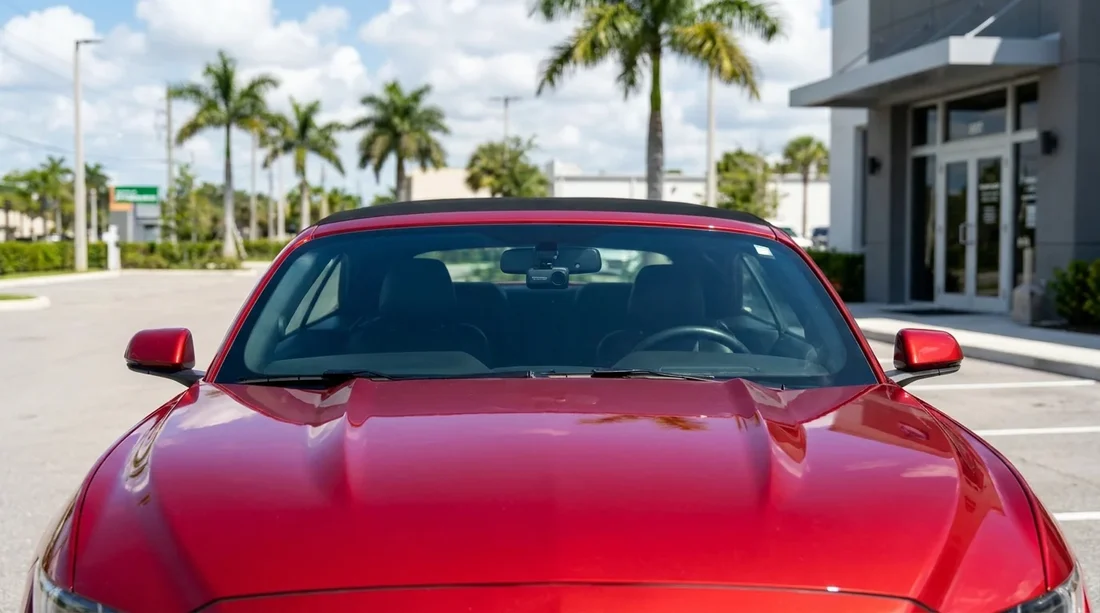
Florida drivers must maintain a clear view. A dashcam placed high and tucked behind the rear-view mirror is often the least intrusive position. Avoid placing the camera low on the windscreen, in the middle of the glass, or anywhere it blocks your field of vision.
Also consider airbags. Many vehicles have curtain airbags along the A-pillars and side areas, and some have passenger airbags that can deploy with force across the dashboard. Do not route cables across airbag covers or wedge a mount where it could become a projectile. If you use a power cable, keep it tight and away from steering controls, pedals, and airbag seams.
Adhesive mounts deserve extra care. Some adhesives can mark glass, leave residue, or lift window tint film. That becomes a damage and cleaning issue under the rental agreement. Suction mounts reduce the risk of residue, but can still fall if not installed properly, so test the hold before you start driving.
If you plan to use a heavier camera or a dual front-and-rear unit, ask whether a rear camera is permitted and where it can be fitted. In some vehicles, rear visibility is already limited, particularly larger SUVs, and you do not want to create an obstruction while trying to improve evidence capture.
Audio recording and privacy, the biggest legal pitfall
Florida is a “two-party consent” state for recording oral communications, meaning you generally need consent from all parties to record a conversation when there is an expectation of privacy. A dashcam that captures audio inside the cabin can therefore create risk if you record passengers without their consent, even if your intent is innocent.
To reduce risk, consider disabling audio recording, especially when you will have passengers. If you do keep audio on, tell everyone in the vehicle clearly and get their agreement before you set off. This matters for friends and family, and it is even more important if you are driving colleagues or clients.
Privacy also matters outside the vehicle. Recording public roads is usually acceptable, but you should not point a camera into private property where people expect privacy. Most forward-facing dashcams focus on the road scene, which keeps you away from the grey areas.
What to ask before you leave the pick-up desk
Use this short checklist of questions to protect yourself from agreement disputes and misunderstandings:
1) Is a personal dashcam permitted under this rental agreement? You want a clear yes or no. If the answer is “yes, but”, ask what the “but” is.
2) Are suction mounts allowed on the windscreen? If they say no, ask if a dashboard friction mount is acceptable, provided it does not obstruct airbags.
3) Are adhesive pads or tape strictly prohibited? Many companies treat adhesive as potential damage. If prohibited, do not negotiate with improvised solutions.
4) Can the camera be powered from the 12V socket or USB port? Confirm you may use existing power ports, and avoid hardwiring, which can be treated as unauthorised modification.
5) What is the policy if the mount leaves residue or marks? Knowing this helps you choose the least risky mounting option.
Practical tips to avoid breaching your car hire contract
Choose a simple setup. A small forward-facing camera with video-only recording is usually sufficient for documenting incidents and is easier to mount safely. If you are using a camera with a screen, consider turning the screen off while driving to reduce distraction and reflections at night.
Do a quick “no-damage” install. Clean the mounting area with a dry microfibre cloth, not chemical cleaners, unless you know they are safe for tinted glass. Press the suction mount firmly, lock it, and tug gently to confirm it will not fall. Route cables along edges without pinching them in doors.
Take photos of your setup before you drive away. If a staff member later questions the position, you have a record showing it was placed high, did not obstruct the driver’s view, and avoided safety systems.
When you return the vehicle, remove everything. Take the camera, mount, cables, and any memory cards. Wipe the glass lightly to remove any ring marks from suction cups. This reduces the chance of cleaning fees and protects your privacy.
What about sharing footage after an incident?
If there is a collision or dispute, footage can be helpful, but treat it as sensitive data. Provide relevant segments to law enforcement or insurers if requested, and avoid posting identifiable footage of individuals online. Posting publicly can escalate privacy issues and may complicate claims discussions.
If you are unsure, keep the original files intact and make a copy to share. Do not edit clips in a way that could raise questions about authenticity. Timestamp accuracy also matters, so set the correct time zone when you first power on the device in Florida.
FAQ
Can a rental company in Florida ban me from using a dashcam? Yes. Even if dashcams are generally legal, a rental agreement can restrict accessories that attach to glass, use adhesives, or risk vehicle damage. Confirm at pick-up.
Is it safer to record without audio in Florida? Usually, yes. Florida’s consent rules can make in-cabin audio risky if all occupants have not agreed. Video-only recording is simpler from a privacy perspective.
Where is the best place to mount a dashcam in a Florida rental car? High on the windscreen, tucked near or behind the rear-view mirror, is often best. Ensure it does not obstruct your view and does not interfere with airbags or driver-assistance sensors.
Will I be charged if my dashcam mount leaves marks? Potentially. If a mount leaves residue, damages tint, or marks trim, it may be treated as cleaning or damage under the car hire terms. Use non-damaging mounts and remove everything before return.
What should I do if the agent is unsure about dashcams? Ask them to check the written policy or contact a supervisor. If you cannot get a clear answer, do not install adhesive mounts, and consider using no-audio, non-marking placement only if permitted.