


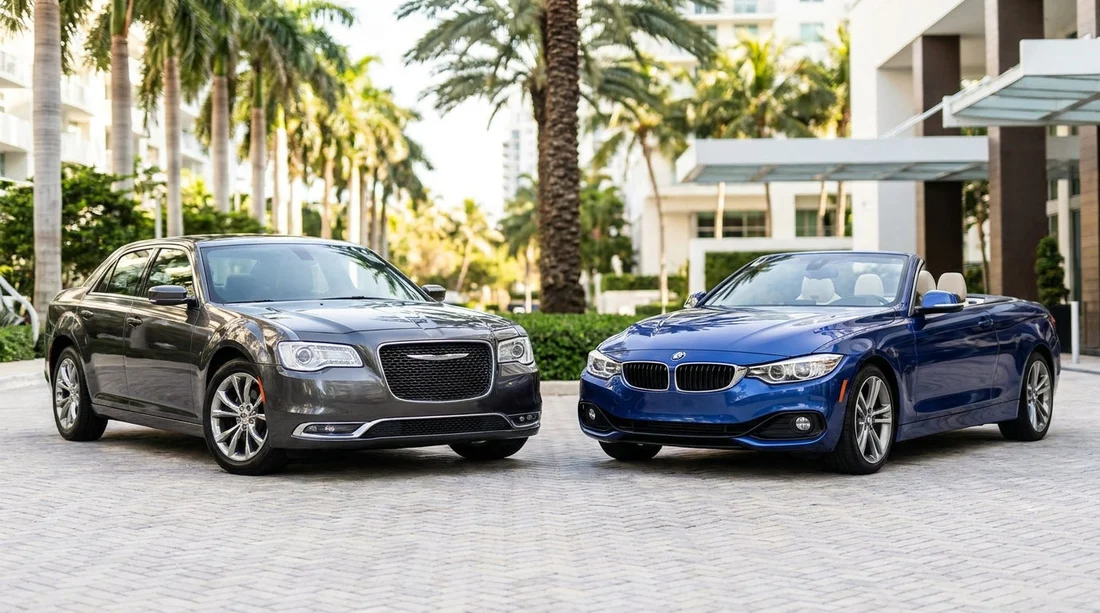
Quick Summary:
- Premium is a full-size upgrade, luxury prioritises badge and materials.
- Premium often has bigger boots, luxury may trade space for style.
- Luxury usually adds driver tech, premium focuses on everyday comfort.
- Upgrades depend on availability, choose by luggage and feature needs.
When you compare premium and luxury categories for car hire in Miami, the difference is less about “better” and more about what the vehicle is designed to deliver. Premium generally means a larger, well-equipped mainstream model with strong comfort and practicality. Luxury is more likely to focus on badge, cabin materials, refinement, and high-end technology, sometimes at the expense of luggage space or rear-seat room.
Because rental fleets vary by season and supplier, it helps to treat “premium” and “luxury” as broad classes rather than specific makes. Understanding typical size, features, and luggage capacity makes it easier to choose the right category before you arrive, whether you are collecting near the airport or in the city centre. If you are planning collection points, see options for Miami Airport car rental or downtown Miami car hire.
How rental companies define “premium” vs “luxury” in Miami
In Miami, “premium” commonly sits above standard and full-size categories, but below dedicated luxury and speciality lines. You can expect a comfortable, often powerful car with more equipment than a typical mid-size, and usually with room for four adults plus luggage.
“Luxury” usually indicates a higher-tier vehicle where brand positioning, cabin craftsmanship, and overall refinement are key. That might mean a luxury saloon, a high-spec SUV, or a premium-brand coupe depending on fleet mix. Importantly, luxury does not automatically mean larger than premium. Some luxury models are mid-size on the outside, prioritising a quieter ride, better materials, and more advanced infotainment.
Typical size and seating comfort
Premium class: Think of a full-size saloon or a roomy crossover from a mainstream brand. The big advantage is predictable comfort: wider seats, more rear legroom than compact categories, and a stable ride for longer drives to the Keys or up to Fort Lauderdale. In many fleets, premium is chosen by travellers who want space and ease rather than a specific badge.
Luxury class: You are more likely to get a vehicle with a quieter cabin, more supportive seating, and a more refined suspension tune. However, luxury cabins can be designed with a sportier feel, so rear space might not be as generous as you would expect. If you are travelling with tall adults in the back, check whether “premium full-size” could actually be the more comfortable fit.
Features and technology you can reasonably expect
Features vary, but there are patterns.
Premium cars typically include modern essentials: automatic transmission, strong air conditioning, Bluetooth, and a decent infotainment screen. Many will have powered seats, keyless entry, and more driver assistance than lower categories. The focus is on making the drive relaxed and straightforward, especially in Miami traffic and multi-lane highways.
Luxury cars more often add a step-up in materials and tech: higher-quality upholstery, premium audio, larger displays, and more advanced driver aids. You may see features like adaptive cruise control, 360-degree camera systems, lane centring assistance, or enhanced parking support more often in luxury. If you value a quieter cabin for calls and navigation prompts, luxury is usually more consistent.
One practical point for Miami is smartphone integration and charging. While many premium cars now include Apple CarPlay or Android Auto, luxury fleets tend to have it more consistently, plus faster USB-C charging. If this matters for your trip planning, treat it as a “nice to have” unless your booking explicitly lists it.
Luggage space and boot practicality
Luggage space is where expectations can be mismatched. A “luxury” label can suggest a big car, but some luxury models have smaller boots, more sloped rear ends, or less usable space because of design priorities.
Premium: Usually a better bet for suitcase volume. A full-size saloon often takes two large suitcases plus two carry-ons, sometimes more depending on the boot shape. Premium crossovers can be even easier to load, especially with bulky beach items or a pushchair.
Luxury: A luxury saloon can be similar to premium for boot space, but a sportier luxury vehicle may have a tighter opening or less depth. Luxury SUVs may offer excellent space, but not all luxury class bookings guarantee an SUV.
If you are travelling as a family or with a lot of luggage, consider whether an SUV category is a more reliable solution than relying on “luxury” alone. For travellers who want height, easier loading, and flexible cargo space, look at SUV rental in Miami.
Upgrade expectations and what “or similar” means
Most rental bookings are class-based, which means you reserve a category, not a specific model. “Or similar” is key: you should expect a vehicle with comparable size and features, but not necessarily the same trim, engine, or exact luggage capacity.
Premium to luxury upgrades: Travellers sometimes assume paying for premium means they will be upgraded to luxury. In practice, upgrades depend on availability and operational needs. If the premium line is low, you might receive a different category, but it is not guaranteed. Likewise, a luxury booking does not always mean the highest-spec trim within that model line.
A more reliable approach is to choose the class that matches your non-negotiables. If you must have maximum boot space for four suitcases, premium full-size or an SUV class can be safer. If you care most about cabin refinement, premium audio, and a more prestigious badge, luxury is the more direct match.
Premium vs luxury: which is better for common Miami trips?
Airport arrival with luggage: Premium can be ideal when you want quick loading and predictable space after a flight. If you are collecting at the airport, start with the practicalities of bags and passenger count, then consider the upgrade to luxury if you value quieter comfort. See car rental at Miami Airport for location context.
Group travel: If you have more than four adults, neither premium nor luxury saloons may be ideal. In that case, a people carrier or van class can be a better match for seat access and baggage. Consider van rental in downtown Miami if you need extra seating and cargo flexibility.
How to choose the right class before you book
Start with three quick checks:
1) Passenger reality: Count adults, not just seats. Four adults plus luggage often pushes you towards premium or SUV, even if a standard car technically fits four.
2) Luggage type: Hard-shell suitcases take more usable volume than soft bags. If you have large cases, premium full-size or SUV tends to be more forgiving than a sporty luxury model.
3) Feature priorities: If your must-haves are advanced driver aids, premium audio, and a quieter cabin, luxury is the safer bet. If your must-haves are straightforward comfort, space, and easy loading, premium may deliver better value.
If you are comparing suppliers and pick-up points around Miami, it can help to review what is available in the area. For additional context on city collection, see car hire in downtown Miami.
FAQ
Q: Is premium always bigger than luxury for car hire in Miami? A: Often, but not always. Premium is frequently full-size, while luxury can be mid-size with higher-end materials and technology.
Q: Will luxury always have more luggage space than premium? A: No. Some luxury vehicles prioritise design and performance, which can reduce boot opening size or usable capacity compared with premium.
Q: Can I expect leather seats in premium class? A: Sometimes, but it is not guaranteed. Luxury class is more consistent for upscale upholstery and higher-grade interior finishes.
Q: Are upgrades from premium to luxury guaranteed? A: No. Upgrades depend on availability at pick-up, and reservations are typically for a category, not a specific model.
Q: What if I need space for five to seven passengers? A: Consider a van or people-carrier class rather than premium or luxury saloons, as you will get easier access and more practical cargo room.






























































































