


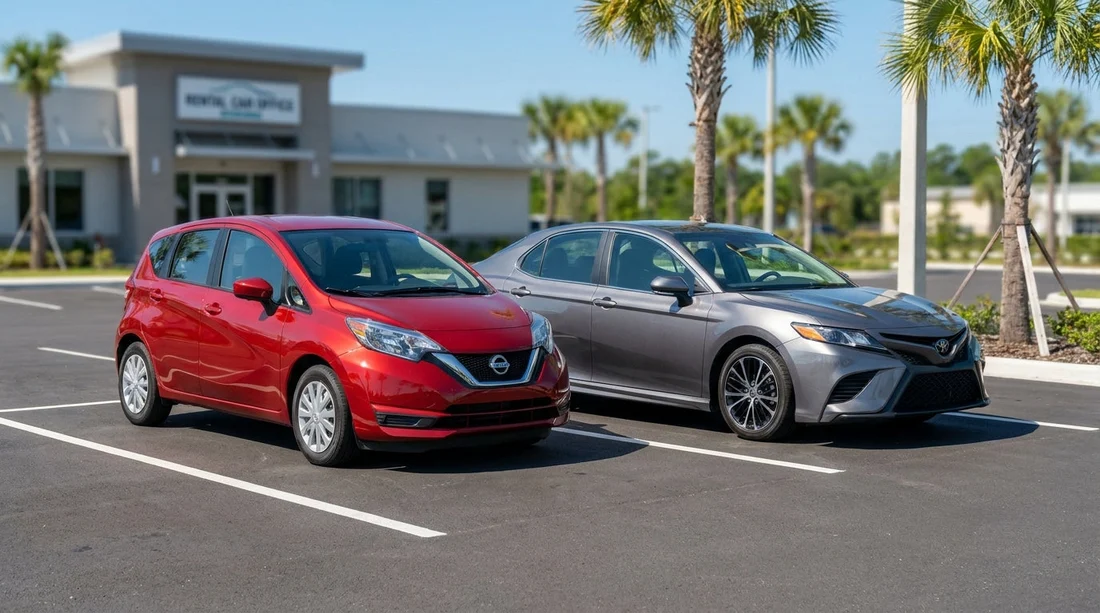
Quick Summary:
- Choose compact for easier parking and lower fuel use in cities.
- Pick intermediate for more rear legroom and a larger boot.
- Expect intermediate to cost more during holidays and busy travel dates.
- Match the category to luggage, passengers, and driving distance before booking.
When you browse car hire options in Florida, “compact” and “intermediate” can look very similar on a results page. Both sit in the everyday, easy-to-drive end of the fleet, and the exact model can vary by supplier and location. The real difference is usually a small step up in overall size, boot capacity and long-distance comfort, with a corresponding step up in price.
Florida is a great place to notice these differences because trips often mix city driving with motorways and longer day runs, for example Miami to the Keys, or Orlando to the Gulf Coast. Choosing the right category before you confirm your car hire helps avoid common frustrations like luggage not fitting, rear passengers feeling cramped, or paying for space you do not need.
If you are collecting near a major hub such as Miami Airport, category availability can be broad, but during holidays and events the gap in price and supply between compact and intermediate often widens. Understanding what typically changes between the two classes makes it easier to choose confidently.
What “compact” usually means for car hire in Florida
A compact car hire category is generally a smaller, lighter vehicle designed for everyday practicality. In Florida fleets, compacts are often four-door cars with seating for five on paper, although four adults is usually more comfortable for longer rides. Compacts tend to be easier to manoeuvre in tight multi-storey car parks, and less stressful around dense areas like South Beach or downtown streets.
From a size standpoint, a compact is typically a step above an economy car, but still on the smaller side. You can expect a relatively short overall length, a tighter turning circle, and a cabin that prioritises front-seat comfort over rear-seat space. For couples or two friends travelling with moderate luggage, a compact can be a sensible balance of cost and convenience.
Boot space in a compact is usually adequate for everyday bags, but it can be the deciding factor if you have multiple suitcases. Many compacts manage one large suitcase plus one smaller case, or two medium cases, depending on the shape of the boot. The opening can also be narrower than on larger categories, which matters for hard-shell suitcases, pushchairs, or bulky beach gear.
What “intermediate” usually means for car hire in Florida
An intermediate car hire category is typically a mid-size vehicle, noticeably roomier inside and often slightly longer and wider. The extra centimetres translate into better rear legroom, a broader back seat, and more breathing space for shoulders and elbows. If you are spending time on I-95, Florida’s Turnpike, or driving out of Orlando on longer day trips, that extra comfort can feel significant.
Boot space is the most practical upgrade. Intermediates commonly accommodate two large suitcases or a larger combination of cases and soft bags. For families, that can mean fewer compromises, such as not needing to stack items in the rear footwells or keep luggage on the back seat where it reduces comfort and visibility.
Intermediates are still easy to drive, but the size increase can be noticeable when parking in busy areas. If your Florida itinerary includes frequent stops in popular neighbourhoods, for example around Miami Beach, you may value the compact’s easier parking. If you expect more motorway miles and fewer tight parking situations, intermediate often feels more relaxed.
Passenger comfort: where you feel the difference most
Passenger comfort is not only about how many seats the car has, but how usable those seats are for real people over real distances. With compact cars, the front seats are typically fine for adults, but the rear seat can feel narrow and short on legroom, especially if front passengers are tall. For short transfers and city driving, that may be perfectly acceptable. For a week of longer drives, it can become tiring.
Intermediate categories tend to offer better rear-seat legroom and a slightly higher level of ride comfort. That can be useful when travelling with adults in the back, using a child seat, or carrying extra items such as a cooler. If your Florida plans include theme parks, shopping stops, and evenings out, an intermediate can make the in-and-out experience easier, especially with children or older travellers.
Typical price differences in Florida
As a rule, compact is cheaper than intermediate for car hire in Florida, but the difference is not fixed. Prices change daily based on demand, season, and pickup location. At busy locations and popular dates, intermediate categories can carry a bigger premium because they are popular with families and longer-distance travellers.
In shoulder seasons, you may see a smaller gap, making intermediate feel like a worthwhile upgrade. In peak periods, compact may represent better value if you are comfortable travelling light and prioritise easy parking. If you are comparing options around central areas like downtown Miami, it is common to see city convenience reflected in rates, so the relative difference between categories can matter more to your total spend.
Also remember that the category price is only one part of overall trip cost. A slightly larger car may use a bit more fuel, and parking can sometimes be tighter or more expensive depending on where you go. On the other hand, paying a little more for intermediate can prevent the knock-on costs of needing extra transport or changing plans because luggage does not fit comfortably.
Which category suits common Florida trip types?
City-focused breaks: If your days are centred on urban areas, restaurants, and short drives, compact is often the simplest. It is easier to park, and it feels less bulky in busy traffic. This can be especially relevant in beach and nightlife zones, where parking spaces can be tight and garages can be narrow.
Family holidays and theme parks: Intermediate is commonly more comfortable, particularly with children, child seats, and extra day bags. It is not a large car, but the additional space can make the trip calmer. If you are heading towards Orlando parks, you might also compare supplier availability in that area, for instance via Disney Orlando options.
Travelling with lots of luggage or bulky items: Intermediate is usually the safer choice. If you already know you need even more room, you might consider stepping up beyond intermediate. For travellers who require maximum passenger and luggage capacity, a larger option like a people carrier can be more suitable, and Hola has location pages such as minivan rental in Doral where availability can differ by date.
How to choose between compact and intermediate before you confirm
Start with the number of adults who will sit in the car most days, not just occasionally. Two adults with light luggage often suit compact. Three or four adults, or two adults with children and child seats, usually feel better in intermediate.
Next, list your luggage in real terms, including suitcase sizes and any bulky extras. If you are unsure, assume you will accumulate more items during your Florida stay. Intermediate gives you more flexibility for shopping and beach gear without sacrificing passenger space.
Finally, consider where you will park. If your itinerary includes lots of busy areas and garages, compact is the easier day-to-day experience. If motorway comfort and boot space matter more, intermediate is usually worth the extra cost when the price difference is reasonable.
FAQ
Is an intermediate car much bigger than a compact in Florida? Usually it is a noticeable step up rather than a dramatic jump. You often gain rear-seat legroom and a larger boot, while the car remains easy to drive.
Will two large suitcases fit in a compact boot? Often not comfortably. Many compacts handle one large suitcase plus a smaller bag, while intermediate categories are more likely to take two large suitcases.
Are compact cars cheaper to run for fuel in Florida? Typically yes, because they are lighter and may have smaller engines. The real-world difference depends on driving style, traffic, and the exact model provided.
Which is better for Miami Beach parking, compact or intermediate? Compact is usually easier for tight spaces and narrow garages. Intermediate can still work, but it may take more patience in busy areas.
Does the model I receive always match the category name? Car hire is normally booked by category, not a guaranteed model. You receive a car with similar size and features to that class, subject to availability.






























































































