


Quick Summary:
- Check tyre pressure, tread depth, sidewall damage, and matching tyre sizes.
- Photograph dashboard warnings with ignition on, note mileage and fuel level.
- Confirm TPMS, ABS, and brake warnings clear after starting the engine.
- Record any faults on the rental agreement before leaving the car park.
Picking up a car hire in New York can feel rushed, especially at busy airport lots and city locations. A two minute check of tyres and dashboard warning lights can prevent safety problems on the road, and it also helps ensure any pre-existing alerts are documented before you drive away.
This counter-side checklist focuses on what you can reliably check yourself, without tools, and how to record what you find. It is aimed at the moment just before departure, when you can still ask for a different vehicle or have the issue noted on the paperwork.
If you are collecting near the airport, you may be comparing options across nearby pickup points. Hola Car Rentals has guidance pages for common pickup areas like car rental at Newark Airport and related car hire pages that help you plan the practicalities of collection and return.
Tyres first: the quickest safety check you can do
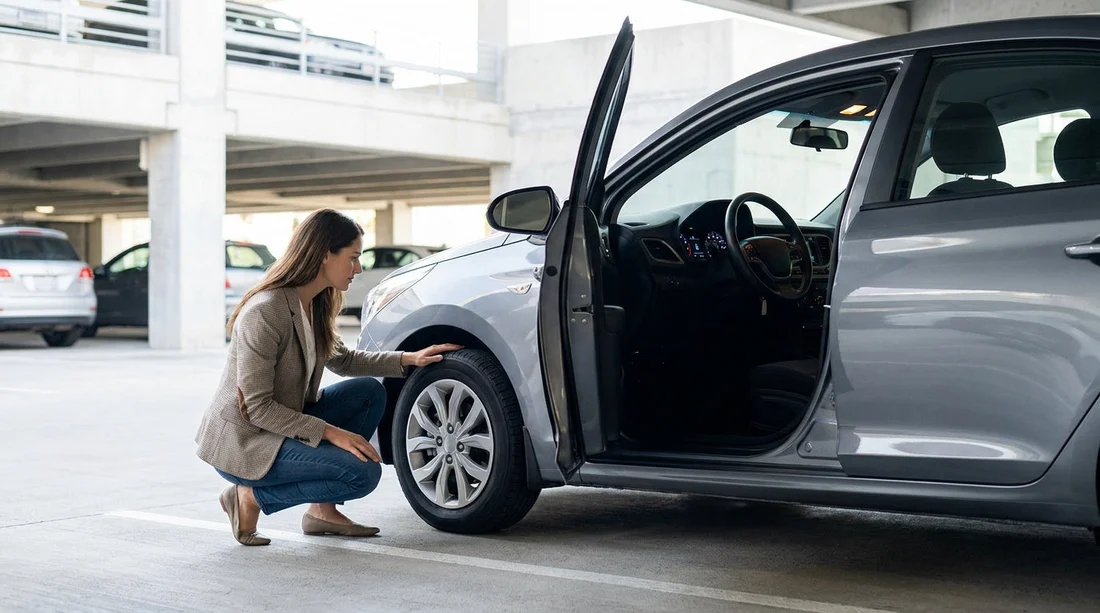
Tyres are your only contact with the road. Many issues are visible in seconds, and tyre-related faults often show up as warning lights shortly after you set off. Do a simple walk-around, front left, rear left, rear right, front right, plus the spare if accessible.
1) Tyre pressures and the TPMS light
You typically will not have a pressure gauge at the counter, but you can still spot obvious underinflation. Look at the tyre’s lower sidewall where it meets the ground. If it looks squashed or bulging compared with the other side, report it before leaving.
Then use the dashboard. With the ignition on, most cars briefly illuminate warning lights, including the tyre pressure monitoring system (TPMS). After starting, the TPMS light should go out. If it stays on, photograph it and report it before leaving, because you cannot know whether it is a sensor fault or genuinely low pressure without a proper check.
2) Tread depth and uneven wear
You do not need a dedicated tread gauge to spot tyres that are near the limit. Look for the tread wear bars in the grooves. If the tread is close to being level with the bar, the tyre is worn. Uneven wear also matters, because a badly worn inner edge can point to alignment issues.
If you are handed a car with visibly low tread on any corner, ask for a tyre change or another vehicle, and ensure the condition is recorded on the agreement.
3) Sidewall damage, bulges, and cuts
Sidewall condition is a key safety indicator. Look for bulges or bubbles, cuts, cracking or dry rot, and scuffing from kerb strikes. If you see a bulge, do not drive off. Photograph the damage close up and in context, showing the wheel and the car’s licence plate or rental number if visible.
4) Matching tyres and correct size
Check that tyres match across the axle, and ideally all four. Mismatched sizes or very different tread patterns can affect handling and confuse traction systems. You can confirm the size by reading the sidewall code, such as 225/60R18.
If you are collecting an SUV or minivan, mismatches can matter more due to drivetrain and stability systems. If you are considering a larger vehicle, it can help to understand what is typically supplied at locations offering SUV rental near Newark or minivan hire near Newark.
Warning lights: what to look for before you roll
Warning lights can be misunderstood because many illuminate briefly during the system check. Your goal is to identify lights that stay on after the engine is running normally. Do this while the car is still parked at the pickup location.
1) Take a clear photo, then confirm which lights remain on
With the ignition on, take a quick photo of the instrument cluster. Then start the engine and take a second photo after 10 seconds. Include the odometer reading in at least one photo, and capture any message centre text.
2) Red vs amber: how to interpret urgency
In most vehicles, red warnings indicate stop now or do not drive, while amber indicates caution and service soon. For a rental, treat both seriously at pickup. Examples that typically justify refusing to depart include red brake warnings, red oil pressure warnings, or an overheating temperature warning.
Amber lights that still need documenting include TPMS, ABS, traction control, check engine, and airbag or SRS. If it is on at pickup, it must be recorded.
3) ABS, traction control, and stability control
These systems help maintain control during emergency braking and slippery conditions. If ABS or stability control lights remain on after starting, the vehicle may revert to basic braking and lose electronic assistance.
Do a simple stationary check: press the brake pedal firmly. It should feel solid and not sink to the floor. A sinking pedal or a brake warning light is a reason not to depart until the provider confirms the issue is resolved.
How to document issues properly at the counter side
The most common mistake is mentioning a problem verbally but leaving without having it written down. Take photos in good light, then ask staff to note the issue on the rental paperwork or in the check-out report, and request confirmation that the note is saved to your booking.
If you are picking up around New York but the vehicle is from the Newark area, you may see references to New Jersey in the booking documents. Hola Car Rentals maintains specific pages for these common arrangements, such as car hire in Newark and budget car hire in New Jersey.
A quick departure routine you can repeat every time
Start the engine, wait 10 seconds, and confirm no red warnings remain. Check that TPMS, ABS, traction control, airbag, and check engine lights are off. If anything feels wrong before you exit the car park, return immediately and have it logged.
Taking these steps may feel cautious, but it is a practical habit for car hire in New York, where traffic density and rough surfaces can expose small defects quickly.
FAQ
Should I check tyre pressure on a rental car if the TPMS light is off? Yes. The TPMS light being off is reassuring, but it is not a full inspection. Still look for obvious underinflation, sidewall bulges, and uneven wear before departure.
What warning lights should make me avoid driving away? Treat red brake, red oil pressure, or temperature warnings as do-not-drive signals. Also avoid departing with an airbag warning or any warning you cannot get documented and explained.
How do I prove a warning light was already on at pickup? Take a clear photo or short video of the dashboard after starting the engine, including the odometer. Then ensure the issue is written into the check-out notes or agreement.
Is uneven tyre wear a real concern for short New York trips? Yes. Uneven wear can indicate alignment or suspension issues, which can affect handling during sudden lane changes, wet roads, and braking in traffic.
What if the car has no spare tyre? Confirm whether there is an inflator and sealant kit, and that it is present in the boot. If you will be driving longer distances, consider requesting a vehicle with a spare, or document the equipment provided.






























































































