


Quick Summary:
- Match the quoted total to the agreement, line by line, before signing.
- Confirm insurance options and excess amount, and decline any duplicate cover.
- Verify fuel policy wording, refill charges, and whether prepaid fuel is selected.
- Check toll programme terms, daily fees, and ensure opt-out is recorded.
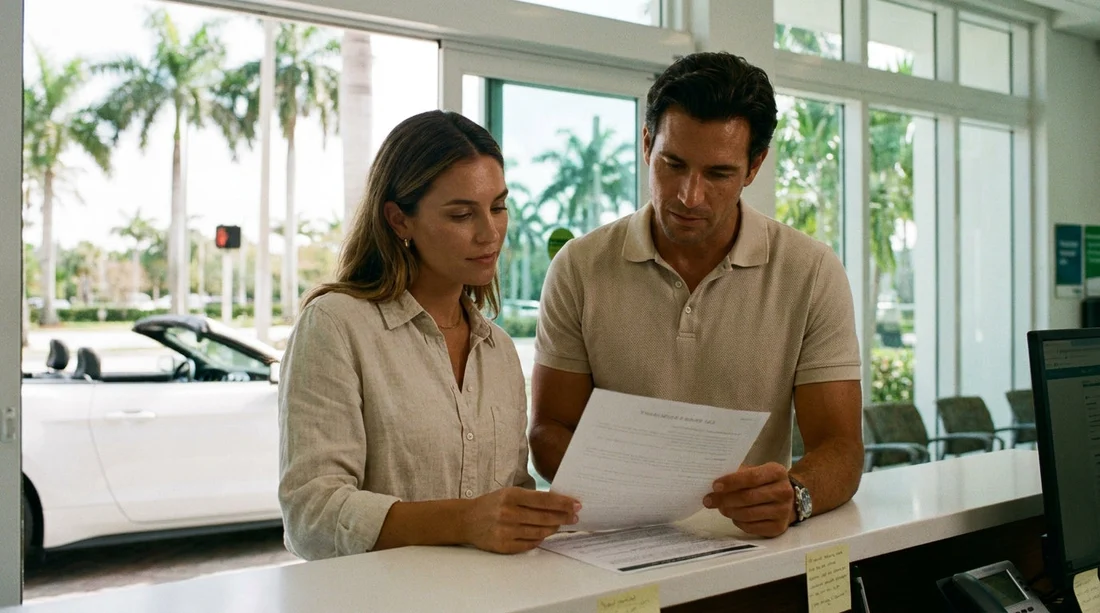
At pick-up in Miami, the car hire agreement is the final document that controls what you pay, not the initial search result or even the agent’s verbal explanation. Most surprise costs come from small tick boxes and short abbreviations that look routine when you are tired from travel. A quick, consistent review of the same line items each time is the easiest way to avoid unrequested extras.
This checklist focuses on the most common add-ons in Miami: insurance products, fuel options, toll packages, and upgrades. It also covers a few extra fields that often trigger fees, such as additional drivers, prepaid deposits, and return-time rules. If you know where these appear on the agreement, you can spot them quickly.
If you are collecting near the airport or west of Downtown, the location and provider can influence which options appear by default. For example, travellers comparing Payless car hire in Miami with other desks may see different toll or fuel defaults depending on the branch. The goal is not to guess the right choice, but to ensure the agreement reflects the choice you actually made.
1) Start with the totals and currency, then work backwards
Before reading fine print, locate the agreement’s summary table and confirm four basics: currency, rental period dates and times, vehicle group, and the total due now versus due at return. If your original quote was in pounds but the desk prints in dollars, make sure you understand the conversion and that taxes are not being duplicated.
Next, scan for lines that have a daily rate where you did not expect one. Unrequested extras usually show as a per-day amount rather than a single fixed charge. If the total looks higher than expected, ask the agent to point to the exact lines that changed, then decide whether to remove them before signing.
2) Insurance and protection products, confirm what is included and what is optional
Insurance is the number one source of “I did not ask for that” disputes. On a US car hire agreement, insurance products can be listed as abbreviations, and multiple items can stack together. Look for a section labelled “Cover”, “Protection”, “Waiver”, or similar, then confirm what is included, the excess or deductible, third-party liability, and any paid roadside assistance.
If you are picking up around the western suburbs, comparing desk terms can help you recognise which lines are optional. For instance, travellers collecting via car rental in Doral may see different default protection bundles than Downtown branches, so it is worth reading the insurance block carefully each time.
3) Fuel policy, translate the shorthand into real cost
Fuel charges can swing your final bill more than you expect, especially with “prepay” or “return empty” offers. On the agreement, confirm the fuel policy wording and the selected option, and check for any refuelling service charge or inflated per-gallon price if you return short.
In Miami, it is easy to refuel near major routes, but allow time for traffic. Returning to a beach area can be slower than expected. If you are hiring near the coast, look closely at the policy, as shorter local rentals sometimes have different fuel options. A useful comparison point is Budget car hire in Miami Beach, where customers often prioritise quick returns and need the fuel policy to be unambiguous.
4) Tolls and toll programmes, avoid paying twice
Miami driving often involves toll roads, and toll handling is another common source of surprise. On the agreement, toll-related items can appear as “toll pass”, “toll programme”, “plate pass”, “toll convenience”, or “cashless tolling”. Confirm how tolls are charged, whether the plan is opted in or declined, and what administrative fees apply if tolls are billed later.
If you are staying in a central business area and doing short hops, these fees can add up fast. People collecting near National car hire in Brickell often encounter daily toll access fees on agreements, so it is worth checking that the plan matches your expected driving pattern.
5) Upgrades and vehicle group, confirm what you are accepting
Upgrades are not always bad, but they should always be explicit. Look for lines such as “upgrade”, “vehicle class change”, or a revised daily rate, and confirm the agreement states the vehicle group you will receive and the total change in price. Also check whether an upgrade automatically added extra products that should remain optional.
If you are considering a bigger car for luggage or family comfort, compare against an SUV-specific option like SUV rental in Coral Gables so you can judge whether the price difference is reasonable for your trip.
FAQ
What is the fastest way to spot unrequested extras on a Miami car hire agreement?
Check the per-day line items first, then compare the printed total to your expected total. Most add-ons, like protection bundles and toll plans, show as daily charges.
Can I decline insurance at the counter if I already have cover?
Usually yes, but you must ensure the agreement shows the relevant products as declined, not just discussed. Also confirm the deductible on any included waiver so you understand your risk.
What does a toll programme charge typically include?
It commonly includes an access or convenience fee plus the toll amounts. The key is whether the access fee applies only on toll-use days or on every rental day.
How do I avoid fuel service charges?
Choose a full-to-full policy where possible, then refill close to the return area and keep the receipt. Ensure the agreement does not include prepaid fuel unless you want it.
Should I accept a vehicle upgrade offered at pick-up?
Only if the agreement clearly states the new vehicle group and the exact price difference. Also check it did not automatically add extra protection, toll plans, or paid equipment.






























































































